
By Kenneth Williams-
The leadership crisis engulfing Wisconsin’s public university system has intensified, as top officials seek to remove a sitting president who is refusing to resign despite mounting pressure behind closed doors.
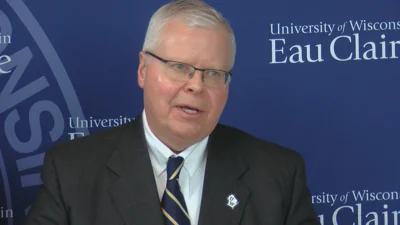
At the center of the dispute is Jay Rothman, president of the Universities of Wisconsin, who says he has been told to step down or face termination but has not been given a clear explanation for the board’s loss of confidence. According to reports, Rothman has rejected calls for his resignation, framing the situation as both unjustified and procedurally flawed.

AD: Capeesh Restaurant
The standoff has raised urgent questions about governance, transparency, and political influence within one of the largest public higher education systems in the United States, which serves more than 160,000 students across multiple campuses.
The conflict came into sharper focus after Rothman disclosed that members of the Universities of Wisconsin Board of Regents privately urged him to resign during recent meetings. In letters obtained by journalists, Rothman said he was presented with an ultimatum: step aside voluntarily or risk being fired.
What has made the situation especially contentious is Rothman’s insistence that no substantive reasons have been provided for the board’s apparent lack of confidence. In his correspondence, he described the process as “nearly (if not completely) indefensible,” arguing that he had repeatedly asked for specific concerns but received none.

AD: Oysterian Sea Food Restaurant And Bar
The Board of Regents has remained largely silent in public, issuing only brief statements acknowledging that discussions about leadership are ongoing while declining to comment on personnel matters. That silence has fuelled speculation about internal divisions and possible political dynamics influencing the decision-making process.
An emergency closed‑door meeting of the University of Wisconsin Board of Regents underscored the gravity of the leadership dispute, with regents convening privately on Wednesday night to discuss personnel matters related to Rothman’s future.
According to reports, Rothman said in a letter that he was explicitly told his options were to resign or retire and that if he did not agree to step down, the board “was prepared to terminate my employment despite all that has been accomplished.”
Rothman’s refusal to step down marks a rare and highly visible challenge to the authority of a governing board in public higher education. Unlike many leadership transitions that occur quietly, this dispute has unfolded publicly through letters, media reports, and mounting institutional tension.
The episode also echoes past governance disputes within the Wisconsin system, where disagreements between regents, administrators, and political actors have occasionally spilled into public view. However, it is unusual for a sitting system president to openly resist removal in such direct terms.
Beyond the immediate leadership drama, the standoff comes at a pivotal moment for the Universities of Wisconsin. The system has been navigating a series of complex challenges, including declining enrollment at some campuses, financial pressures tied to state and federal funding, and politically charged debates over free speech and diversity initiatives.
Rothman, who was chosen as president of the Universities of Wisconsin in 2022 after a long career as the chair and CEO of the Milwaukee‑based Foley & Lardner law firm, came to the role without prior experience administering higher education.
In letters to the Board of Regents, he has framed the current turmoil as evidence that the university system needs continuity at the top rather than sudden leadership change, arguing that his administration has worked to address fiscal challenges and navigate demographic headwinds.
Under his tenure, the system has focused on efforts to increase state funding amid federal cuts and has overseen the closure of eight branch campuses in response to declining enrollment, challenges he says demonstrate the need for stability rather than upheaval.
One particularly sensitive issue looming over the system is the upcoming leadership transition at its flagship campus in Madison. With the chancellor of the University of Wisconsin–Madison set to depart, Rothman warned that removing the system president simultaneously could create further instability at a critical time.
The governance dispute also highlights broader tensions in public higher education, where boards often composed of political appointees hold significant power over institutional leadership. Critics argue that such structures can lead to conflicts driven as much by ideology or external pressure as by performance metrics.
While no explicit reasons for the board’s dissatisfaction with Rothman have been publicly confirmed, the absence of a clear rationale has itself become a focal point of criticism.
In a letter obtained by Wisconsin Public Radio, Rothman said he has been given no reason why the Board of Regents wants him to leave and that when he asked for specific concerns, he was told only that each regent has their own perspective without any “tangible reasons” for the finding of no confidence.
Similarly notes that Rothman said the board has not provided any substantive reasons for its position, a lack of transparency that has raised questions about the governance process and undermined confidence among observers who argue that such a significant leadership dispute merits clearer explanation.
Rothman’s stance suggests he is prepared to force the issue into the open rather than quietly stepping aside. By refusing to resign “as a matter of principle,” he has effectively compelled the board to either articulate its concerns publicly or proceed with a dismissal that may invite further scrutiny.
The outcome could have lasting implications not only for Rothman’s tenure but also for how leadership disputes are handled across the broader landscape of American higher education. If the board moves forward with termination, it may set a precedent for more assertive intervention by governing bodies.
If Rothman prevails or negotiates a compromise, it could reinforce the limits of board authority when faced with resistance from top executives.
While the Universities of Wisconsin remain in a state of uncertainty, with faculty, students, and policymakers watching closely as the confrontation unfolds. The next moves by the Board of Regents and whether they choose transparency or continued silence are likely to determine not only Rothman’s future but also the credibility of the institution’s governance at a critical juncture.

AD: Heritage And Restaurant Lounge Bar