
By Martin Cole-
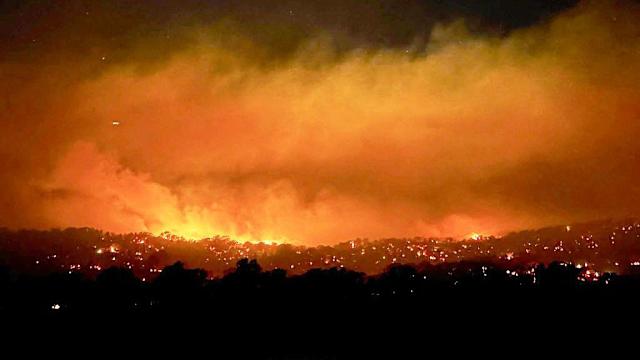
Victoria is confronting one of its most harrowing fire emergencies in years as a sudden wind change and extreme hot weather have ignited fresh outbreaks across the state. Dozens of fires are active, and authorities are scrambling to protect towns and rural communities amid blistering temperatures and ferocious gusts.
Central to the crisis is a devastating fire near Longwood East where three people, including a child, remain missing after their home was destroyed, intensifying concern among emergency crews and local families.

AD: Capeesh Restaurant
The scale of the fire threat has prompted unprecedented warnings, evacuation orders, and urgent response efforts stretching across multiple regions as Victoria endures a “catastrophic” fire danger day.
The current crisis arrives as a severe heatwave sweeps southern Australia, pushing inland temperatures well above 40 degrees Celsius in many locations.
In central Victoria, authorities described conditions as some of the most dangerous seen in years, reminiscent of the infamous Black Summer fires of 2019 and early 2020 when bushfires devastated large swaths of southeastern Australia.

AD: Oysterian Sea Food Restaurant And Bar
Emergency services and fire authorities have repeatedly stressed the danger posed by the combination of dry vegetation, relentless heat, and the newly shifted winds that rapidly extend fire fronts. While afternoon progressed, several grassfires and bushfires have jumped containment lines and raced across tinder-dry landscapes despite extensive firefighting efforts.
Emergency Management Victoria has issued multiple warnings through the VicEmergency platform, urging residents to act swiftly if they have not already relocated to safer areas.
Police confirmed that two adults and a child who were last seen at a property later destroyed by fire remain unaccounted for, and search efforts continue amid hazardous conditions.
Fire behaviour experts have warned that wind gusts, sometimes exceeding 90 kilometres per hour in open country, are contributing to erratic fire spreads and rapid changes in flame direction. These conditions have made it extremely difficult for crews to hold containment lines, and aircraft operations are frequently grounded when winds reach dangerous levels.
Local residents who evacuated earlier spoke of surreal scenes as they watched embers and smoke consume landscapes that, just days before, had been quiet farmland and forest. One resident described the moment a wall of fire crested a nearby ridge and hurtled toward his property, leaving destruction in its wake.
Further igniting anxiety, several smaller fires have ignited in alpine areas, parts of East Gippsland and scattered across central Victoria, leading to emergency warnings in towns that had hoped to remain safe from the worst of the weather.
At Ruffy, a small community near Longwood, dozens of homes and community buildings have been destroyed, and firefighters reported that much of the main street had been reduced to charred remains.
Power infrastructure across the state has also been hit, with tens of thousands of properties left without electricity as vegetation contacts lines and network assets are damaged or pre-emptively shut down to reduce risk. These outages have hampered communications and mobility, complicating both evacuation efforts and the logistics of fire response teams.
Victoria’s premier has urged residents not to wait to leave if they are in danger zones. Emergency services emphasise that the combination of heat, wind and dry fuel means fires are not only fast-moving but at times unpredictable in behaviour.
Officials have stressed that for those who have already evacuated, the best course is to remain in safe accommodation until authorities confirm conditions have eased.
The extreme fire conditions have drawn attention from national leaders, with the prime minister urging Australians across affected states to prepare for the worst as the heatwave expands. Firefighting resources from other states, including New South Wales, have been mobilised to assist Victoria’s already stretched crews.
Across the state, local councils and emergency management teams have established relief hubs where displaced residents can access support, supplies and information. In areas such as Strathbogie and Mansfield, evacuation centres are staffed with volunteers assisting families who have lost homes or are awaiting news about missing loved ones.
Financial assistance and disaster payments have also been activated to help people begin to deal with immediate impacts.
Amid emergency operations, authorities have implemented total fire bans and declared that much of the state’s land area is under either catastrophic or extreme fire danger ratings. These classifications reflect the highest level of risk, where any ignition whether sparked naturally or by human causes can erupt with little warning and grow rapidly beyond containment.
Meteorological services have emphasised that while a cool change and some easing of temperatures may occur later in the day, the transition brings its own hazards. Lingering high winds may carry embers across considerable distances, lighting new fires in landscapes that remain parched from prolonged dry conditions.
Authorities have also warned that possible thunderstorms and lightning, even with minimal rainfall, could spark fresh ignitions across already stressed regions.
In an effort to reduce risk, local officials have urged residents to maintain clear communication with friends and relatives and to register on safety frameworks so loved ones can know their status if they relocate. Community groups and non-profit organisations have been mobilising to provide logistical support, offering food, water and shelter as required.
Officials have reiterated that the situation remains highly dynamic. While winds shift and heat persists, fire behaviour is expected to remain volatile. Authorities have continued to broadcast regular updates and emergency warnings, urging anyone in threatened areas to take official advice seriously and to act promptly if ordered to relocate.
The crisis unfolding in Victoria highlights the profound challenge of managing natural disasters amid extreme weather patterns, drawing comparisons with the devastating fire seasons of the past and underscoring the increasing volatility that communities face.
While crews and residents await changes in weather patterns that might relieve pressure on the landscape, the immediate focus remains clear: protect life, locate the missing, and contain fires where conditions allow.

AD: Heritage And Restaurant Lounge Bar