
By Theodore Brown-
Washington has repeatedly shown interest in acquiring or dominating Greenland, but most important is the strategic logic drives that impulse.
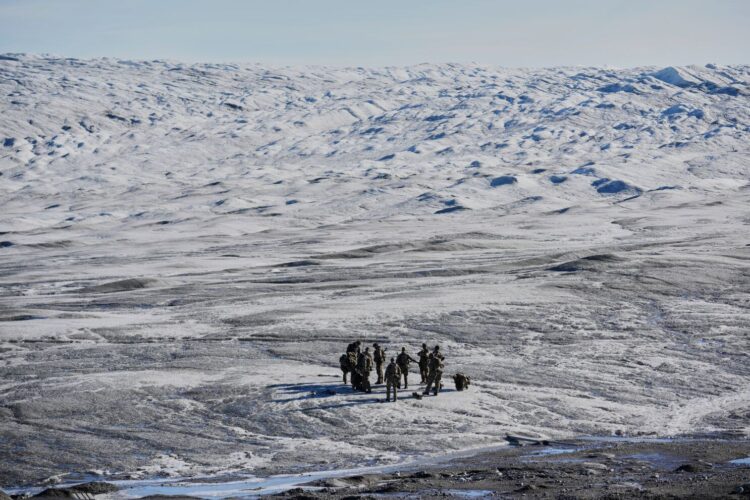
Greenland, a vast expanse of ice and rugged coastline largely above the Arctic Circle, may look remote and inhospitable on the world map. Yet for Washington, Greenland is central to enduring national security planning, geopolitical competition, and economic strategy.

AD: Capeesh Restaurant
Interest in the island is not a passing fascination or a whim of a single political leader. It is rooted in geography, military positioning, emerging trade routes, and resource potential that make Greenland one of the most strategic pieces of real estate on the planet.
Through history and into the present, U.S. leaders have repeatedly returned to the question of how to secure influence in the Arctic, often courting controversy with Denmark and Greenlandic authorities.
The idea that the United States once attempted to purchase Greenland decades ago may seem almost surreal. Yet, that is exactly what happened after World War II when American officials offered Denmark an enormous sum in gold for outright acquisition.

AD: Oysterian Sea Food Restaurant And Bar
Denmark declined, and the offer faded into Cold War history, but the strategic rationale was clear even then: Greenland sat astride critical air, missile, and sea routes between North America and Eurasia, channels that would dominate any large‑scale military confrontation in the northern hemisphere.
Modern geopolitical contestation has only sharpened these dynamics. While the Arctic ice melts and trade routes once obscured by frozen sea become increasingly navigable, Greenland’s location between North America and Europe has taken on new urgency.
In a world where economic influence often follows trade connectivity, control over the gateways to Arctic passages presents a source of enduring strategic leverage.
That said, geography is just one piece of the puzzle. Beneath Greenland’s icy crust lie untapped resources coveted by modern economies. Rare earth minerals, a suite of elements crucial to advanced electronics, electric vehicles, and military hardware, are concentrated in deposits across the island.
According to surveys conducted by geological authorities, Greenland hosts dozens of critical minerals vital to national security and technological competitiveness.
While extraction remains challenging due to climate and environmental constraints, potential access to these resources looms large in strategic calculations, particularly as the U.S. seeks to diversify supply chains away from competitors with stronger processing dominance.
Military Imperatives and the Arctic Chokepoint
Many U.S. defence planners, Greenland’s significance in the modern security environment is tied directly to defence infrastructure and early warning systems that keep the nation and its allies prepared in an era of rapid technological change.
This remote site, the United States and its NATO partners operate crucial missile detection systems and space surveillance equipment that watch the northern skies for ballistic threats, including potential launches from Arctic‑approaching trajectories.
The strategic value of such facilities is rooted in the physics of modern warfare. A missile fired from the Eurasian landmass toward North America over the polar region follows the shortest possible route between continents, making surveillance in the Arctic a priority.
Greenland also anchors the so‑called GIUK gap, a maritime choke point formed by Greenland, Iceland, and the United Kingdom that is critical for monitoring and controlling naval movements between the North Atlantic and Arctic Oceans.
During the Cold War, this corridor was essential in tracking Soviet submarines, and it has regained prominence as Russia rebuilds its northern naval forces and China seeks a greater Arctic presence. Maintaining influence over this corridor aids NATO and U.S. ambitions to project power and limit adversary access to transatlantic supply lines.
The island’s strategic architecture is not limited to a single facility. Satellite monitoring, airborne surveillance, ground sensors, and allied operations all paint a picture where Greenland functions almost as a natural military asset.
The United States continues to invest in these capabilities and works with partners to expand surveillance coverage, though the extent of influence is dictated by treaties and Greenland’s status as a semi‑autonomous territory under the Kingdom of Denmark.
In simple terms, having ever‑greater access to Greenland’s strategic positions is a goal that has endured longer than many other elements of global military planning.
Geopolitics, Sovereignty, and the New Arctic Competition
While geography and defence imperatives provide part of the explanation for U.S. interest in Greenland, global competition elevates the stakes.
While Greenland is increasingly seen outside its ice‑covered stereotype, rival powers have also made inroads toward Arctic influence. Russia, with its sprawling northern coastline, has been upping its military presence and reopening or expanding bases in Arctic regions.
China, which self‑identifies as a “near‑Arctic state,” has invested heavily in Arctic research, proposed new shipping routes under its “Polar Silk Road,” and pursued interests in Greenlandic mineral projects. With Washington’s perspective, allowing either power to secure long‑term footholds in Greenland would create enduring strategic risks.
This rival interest helps explain why the U.S. has recently engaged more directly with Greenlandic officials, at times drawing concern from Copenhagen. While Denmark retains control over Greenland’s defence and foreign relations, figures within Greenland’s political scene have sought more autonomy and direct engagement with outside partners.
Some voices in Nuuk advocate for negotiations that involve Greenland directly, citing frustration with Denmark’s handling of external relations. Such proposals have pushed discussions on future relationships with the United States into public view, although any alteration in sovereignty would require complex legal and political processes.
The push and pull around Greenland have even drawn commentary from European leaders wary that American ambitions could destabilise alliances. Denmark and other NATO allies have reaffirmed Greenland’s right to self‑determination and maintained that sovereignty cannot be traded or undermined without consent.
Underlying all these manoeuvres is climate change, which acts as both a catalyst and a complicating variable. Greenland’s ice sheets are thinning at unprecedented rates, exposing mineral wealth and opening formerly inaccessible reaches of the Arctic to potential transit and economic activity.
While some of these changes promise commercial opportunity, they also forecast a new era in global competition over Arctic access, resources, and influence.
Nations with Arctic ambitions are eyeing routes that could reduce shipping times between major markets in Asia, Europe, and North America, and Greenland’s position adjacent to those routes places it at the heart of emerging strategic frameworks.
Amid global power calculations, the people of Greenland have their own concerns and aspirations. Many Greenlanders push for greater autonomy and even eventual independence from Denmark, a goal rooted in both cultural identity and historic grievances over governance.
While some see deeper ties with the United States as a means to greater economic development or security guarantees, others caution against substituting one distant power for another.
The island’s population is small around 56,000 people but its agency in determining future partnerships remains a key element in the evolving conversation.
The broader question of whether the United States could or should control Greenland in a formal sense ignores the legal realities of modern international law and alliance structures such as NATO.
Any shift in sovereignty would require not just Danish consent but also the assent of the Greenlandic people themselves, a prospect loaded with political, ethical, and legal complexities that extend far beyond raw strategic interest.
Even so, efforts to deepen influence through economic investment, enhanced diplomatic ties, and security cooperation will likely continue as long as the Arctic remains contested space.
In the final analysis, Washington’s long‑running focus on Greenland is less about a frozen island jutting into the Arctic and more about enduring currents in international relations: the pursuit of security advantage, the management of rival powers, and the drive to safeguard access to resources and strategic vantage points in a changing world.
Greenland, once an afterthought on world maps, now sits at the crossroads of some of the most consequential forces shaping global geopolitics in the 21st century.

AD: Heritage And Restaurant Lounge Bar