
By Ben Kerrigan-
President Volodymyr Zelenskyy has weathered countless tests since Russia launched its full-scale invasion of Ukraine in 2022, from relentless missile attacks to gruelling battles along the front line. But one of his latest decisions has triggered an unexpected challenge far from the battlefield.
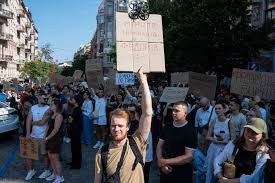
The dismissal of UKraine’s Defense Minister Mykhailo Fedorov, a widely respected reformer credited with accelerating Ukraine’s military innovation, prompted rare wartime protests across the country as hundreds of Ukrainians gathered to voice opposition to the move. The demonstrations underscored growing concerns over the future direction of the country’s defense strategy and the political tensions unfolding behind the scenes.

AD: Capeesh Restaurant
The protests unfolded in Kyiv and several other cities as citizens carried signs demanding Fedorov’s return and warning against weakening Ukraine’s defense capability. Many demonstrators, the issue extended beyond the fate of a single minister. It reflected fears that years of technological progress and reform could be disrupted at a critical moment in the war, when Ukrainian forces are attempting to maintain momentum against Russia’s larger military.
Fedorov, only 35 years old, became one of the most recognisable faces of Ukraine’s wartime modernization efforts. Before becoming defense minister earlier this year, he led the country’s digital transformation initiatives and helped build systems that integrated technology into public services. After taking charge of the Defense Ministry, he focused on expanding drone production, encouraging military innovation, and streamlining procurement processes.
His supporters argue that those efforts helped improve Ukraine’s ability to counter Russian forces with domestically developed technologies rather than relying solely on foreign military assistance.

AD: Oysterian Sea Food Restaurant And Bar
The government described the cabinet reshuffle as an effort to strengthen Ukraine’s wartime leadership and improve coordination as the country continues to confront Russia’s invasion. President Volodymyr Zelenskyy defended the move, saying changes were needed after what he described as irreconcilable differences within the defence leadership.
Reports said the dismissal followed growing disagreements between Defense Minister Mykhailo Fedorov and Commander-in-Chief Gen. Oleksandr Syrskyi over military reform, procurement, and the pace of technological modernisation, including the expansion of drone capabilities and other battlefield innovations.
Many Ukrainians, the timing of the dismissal proved especially unsettling. The country continues to face relentless Russian missile and drone attacks while simultaneously preparing for another difficult winter.Removing one of the architects of Ukraine’s rapidly expanding drone program raised questions about whether political disagreements could interfere with military effectiveness at a decisive stage of the conflict.
Public demonstrations have become uncommon in Ukraine since martial law was imposed following Russia’s invasion. Security concerns and national unity have generally outweighed political disagreements, making Thursday’s rallies particularly notable.
Protesters gathered outside government buildings carrying banners reading “Bring Back Fedorov” and “Do Not Destroy Defense Capability,” reflecting concerns that the dismissal could undermine military reforms achieved during the war. Many participants described Fedorov as more than a government official. They viewed him as a symbol of a younger generation of Ukrainian leaders determined to modernize state institutions while embracing new technologies.
His emphasis on drone warfare, digital innovation, and reducing bureaucracy resonated with soldiers, volunteers, and technology specialists who have played increasingly important roles in Ukraine’s defense. The protests also demonstrated the willingness of ordinary Ukrainians to publicly question government decisions despite the extraordinary pressures of wartime.
While demonstrators stressed that they continued to support Ukraine’s resistance against Russia, they argued that supporting the country also meant holding leaders accountable for decisions affecting national security. That distinction highlighted the resilience of Ukraine’s democratic traditions even during an ongoing conflict.
Political analysts say Zelenskyy now faces a delicate balancing act. Throughout the war, his leadership has relied heavily on maintaining public confidence while coordinating closely with military commanders and international allies. Although cabinet reshuffles are not unusual during prolonged conflicts, replacing a highly popular defence minister introduced an element of uncertainty that could influence public trust if the reasons behind the decision remain unclear.
Adding to the controversy, senior military figures and defense officials reportedly resigned or publicly criticised the decision, suggesting that concerns extended beyond civilian protesters. Such reactions reinforced perceptions that the reshuffle reflected deeper disagreements over the future direction of Ukraine’s armed forces rather than a routine personnel change.
The dismissal occurred as Zelenskyy unveiled broader changes within his government, including the appointment of Serhii Koretskyi as Ukraine’s new prime minister. Koretskyi, previously known for leading state-owned energy company Naftogaz, inherits a government facing immense challenges that extend well beyond military operations.
Protecting Ukraine’s energy infrastructure, sustaining economic activity, managing international assistance, and preparing for another winter of Russian attacks now rank among the administration’s highest priorities. Zelenskyy defended the reshuffle as an effort to strengthen the government rather than weaken it. He argued that new leadership would improve efficiency and ensure closer cooperation between civilian authorities and military commanders.
The president has repeatedly emphasised that Ukraine must remain adaptable as the war evolves, particularly as new technologies reshape modern combat and Russian attacks continue across multiple fronts.
Still, critics fear that replacing officials closely associated with innovation could slow the momentum that has characterized Ukraine’s rapid expansion of drone production and battlefield technology. Those concerns have resonated internationally, where Ukraine has earned recognition for developing cost-effective technological solutions that have influenced modern warfare far beyond its borders.
The demonstrations also carried symbolic significance. Since Russia’s invasion, Ukraine has presented itself not only as a nation defending its territory but also as one defending democratic institutions and public accountability. The willingness of citizens to peacefully protest a government decision even during wartime illustrated that democratic debate remains active despite extraordinary national circumstances.
Whether the protests will alter the government’s decision remains uncertain. Parliament continues to consider the broader cabinet reshuffle while the military presses ahead with operations against Russian forces. Meanwhile, demonstrators hope their message will encourage greater transparency and preserve reforms they believe have strengthened Ukraine’s defence.
The controversy surrounding Fedorov’s dismissal has become more than a dispute over one minister’s future. It has evolved into a broader conversation about leadership, innovation, and public trust during one of the most consequential periods in the nation’s history.

AD: Heritage And Restaurant Lounge Bar