
By Aaron Miller-
Washington, D.C. — February 20, 2026 — The United States Supreme Court delivered a high-stakes ruling Friday that dealt a major legal blow to one of former President Donald Trump’s signature economic initiatives: his sweeping global tariff program.
In a 6–3 decision, the Court found that Trump had exceeded his constitutional authority by using emergency powers to impose broad tariffs on imports without congressional approval.

AD: Capeesh Restaurant
The ruling has ignited a storm of political reactions that sharply divide along ideological lines — from fierce denunciations by Trump and his allies to celebratory statements from lawmakers across the aisle who view it as a reaffirmation of constitutional limits on executive power.
‘Deeply Disappointing’ and a ‘Disgrace’ to the Nation
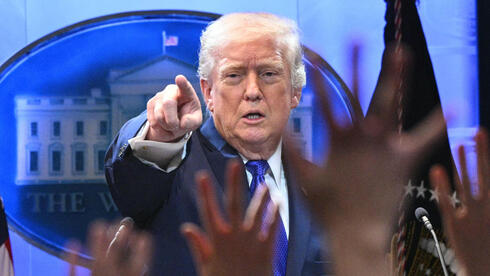
In an unusually combative response from the White House briefing room, President Trump labelled the Court’s verdict “deeply disappointing” and said he was “absolutely ashamed” of the justices who joined the majority.

AD: Oysterian Sea Food Restaurant And Bar
He went further, describing the decision as a “disgrace to our nation” and accusing certain members of being swayed by foreign interests—a claim not backed by evidence in the Court’s opinion.
The U.S president said he was “absolutely ashamed” of the Republican appointees on the court who’d failed to back his signature policy.
“They’re just being fools and lap dogs for the RINOs and the radical left Democrats … they’re very unpatriotic and disloyal to our Constitution,” Trump said, employing an acronym indicating that the three conservatives who’d ruled against him — Chief Justice John Roberts, and his two appointees, Justice Neil Gorsuch and Justice Amy Coney Barrett — were “Republicans In Name Only.”
Trump’s frustration extended to personal criticism of justices appointed by Republican presidents who voted with the majority.
He praised dissenting justices Clarence Thomas, Samuel Alito and Brett Kavanaugh for their opposition, but lambasted Neil Gorsuch and Amy Coney Barrett, both Trump appointees, for failing to defend his tariff authority.
Rather than back down, Trump urged the implementation of a 10% global tariff under a separate statutory authority (the Trade Act of 1974) and hinted at pursuing other statutes to maintain his broader trade strategy.
Vance Calls Ruling ‘Lawlessness’ from the Court
In a defiant attack against The Supreme Court decision, Vice President J.D. Vance, who is a key Trump ally and a central figure in the administration — offered one of the starkest reactions from Republicans supportive of the tariff strategy.
Vance publicly described the Supreme Court’s decision not merely as mistaken, but as “lawlessness from the court, plain and simple.” This language echoed a broader critique within the Trump coalition that sees the judiciary as hampering executive authority, particularly on economic and trade policy.
Vance’s comments reflect a deeper ideological posture within parts of the GOP leadership that questions judicial restraints on presidential actions — a stance that is itself fuelling debates about the balance of power among the branches of government.
Not all Republicans lined up behind Trump’s fierce response. Several senior GOP figures, including former Vice President Mike Pence, applauded the Supreme Court’s assertion of constitutional limits on tariff power.
Pence described the ruling as a victory for the separation of powers, underscoring that tariffs are a form of tax and therefore a legislative, not executive, authority.
Democrats and other critics of Trump’s tariff policy — including former House Speaker Nancy Pelosi — also praised the decision. Pelosi called the tariffs “reckless, unconstitutional and costly,” saying the ruling upheld the Constitution’s requirement that Congress, not the executive branch, levy taxes and duties.
Many progressives framed the ruling as a check on executive overreach and a protection for consumers and global trade stability, arguing that the tariff regime had risked higher prices for American families and fractured international economic relations.
The underlying case centered on Trump’s use of the International Emergency Economic Powers Act (IEEPA) — a law originally intended for national emergencies like financial blockades or sanctions — to justify broad tariffs on goods from more than 100 countries.
The Court majority held that Congress never granted the President such sweeping authority to impose taxes unilaterally, a finding rooted in the Constitution’s allocation of taxing power to Congress.
Legal observers have flagged that this decision will influence future disputes over executive power, particularly in trade and economic policy — areas historically prone to tension between branches of government.
Trump’s vow to pursue alternative statutory routes to maintain tariffs, coupled with Vance’s sharp accusations of judicial “lawlessness” — signals a continuing clash over constitutional authority.
Meanwhile, lawmakers from both parties have indicated they may push Congress to clarify trade powers or legislate new frameworks for presidential tariff authority.

AD: Heritage And Restaurant Lounge Bar