
By Theodore Brown-
The Trump administration has terminated a series of federal civil rights agreements designed to protect transgender students in U.S. schools, marking a significant shift in how anti-discrimination law is interpreted in education.
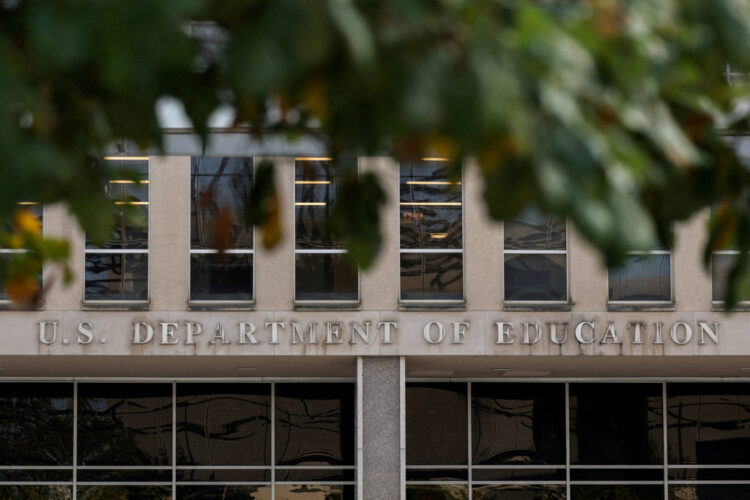
The move, announced Monday by the Department of Education, affects multiple school districts and a college that had previously agreed to adopt policies safeguarding transgender students’ rights under Title IX.

AD: Capeesh Restaurant
These agreements, established during earlier administrations, required schools to address issues such as harassment, pronoun usage, and access to facilities consistent with students’ gender identity. By rescinding them, federal officials say they are restoring what they view as the “original meaning” of Title IX, which prohibits sex-based discrimination in federally funded education programs.
According to a reports, the administration will no longer enforce six settlements involving districts in California, Delaware, Pennsylvania, and Washington, as well as Taft College. These agreements had been reached following investigations into alleged discrimination against transgender students and required institutions to implement reforms.
A Reversal of Title IX Interpretation
At the heart of the decision is a long-running legal and political dispute over the meaning of Title IX. Passed in 1972, the law prohibits discrimination “on the basis of sex” in federally funded education programs, according to the U.S. Department of Education.

AD: Oysterian Sea Food Restaurant And Bar
However, legal analysis notes that Title IX has evolved significantly in its application, expanding beyond its original scope and being shaped through regulatory changes and enforcement practices over time.
Because the statute itself does not explicitly define “sex,” its interpretation has remained contested, with successive administrations taking sharply different positions on whether the law extends to gender identity.
Under the Obama and Biden administrations, federal agencies interpreted Title IX to extend protections to transgender students, requiring schools to accommodate them in areas such as bathroom access, sports participation, and the use of chosen names and pronouns.
The current administration has rejected that interpretation. Officials argue that earlier policies amounted to an overreach that imposed obligations on schools not supported by statutory language.
In a statement accompanying the decision, the Department of Education described the prior agreements as the product of a “distorted” reading of the law and said their removal would lift “unlawful burdens” on educational institutions.
This policy shift is part of a broader effort by the administration to redefine federal standards on gender identity. Since returning to office, President Donald Trump has issued executive orders directing agencies to recognise only two sexes male and female and to align federal policy accordingly.
The termination of the agreements also signals a change in enforcement priorities. The Department’s Office for Civil Rights, which previously monitored compliance with the settlements, will no longer oversee these cases or require follow-up actions from the affected schools.
Backlash and Legal Uncertainty
The decision has drawn swift criticism from civil rights organizations, LGBTQ+ advocates, and some education leaders, who argue it removes critical protections for a vulnerable group of students. Advocacy groups warn that without federal oversight, transgender students may face increased harassment, exclusion, and barriers to equal participation in school life.
Opponents of the move say the terminated agreements were not merely symbolic but provided concrete mechanisms for addressing discrimination. In some cases, they required staff training, policy revisions, and formal procedures for handling complaints related to gender identity.
Critics also contend that the administration’s interpretation of Title IX conflicts with court rulings and evolving legal standards that have increasingly recognized gender identity as part of sex discrimination. They argue that dismantling these protections could expose schools to new lawsuits and create confusion over compliance obligations.
Supporters of the policy change, however, maintain that it restores clarity and respects the rights of states and local districts to set their own policies. They argue that expanding Title IX to include gender identity undermines protections for cisgender female students, particularly in areas such as athletics and privacy in shared spaces.
The broader national context underscores the significance of the decision. The administration has pursued multiple initiatives related to transgender issues in education, including investigations into schools that allow transgender athletes to compete on girls’ teams and threats to withhold federal funding from institutions that do not comply with its interpretation of the law.
Legal experts say the rollback is likely to face challenges in court, as advocacy groups and affected students seek to reinstate protections. The outcome could hinge on how federal courts interpret Title IX in light of recent precedents and ongoing disputes over gender identity rights.
While immediate impact will be felt in the districts directly affected by the terminated agreements, where previously mandated policies may no longer be enforced at the federal level. More broadly, the move signals a continued shift in federal education policy that could reshape how schools across the country address issues of gender identity and discrimination.
While the debate intensifies, schools, students, and policymakers are left navigating a rapidly changing legal landscape one that reflects deeper divisions over the meaning of equality, identity, and civil rights in American education.
The uncertainty is not merely theoretical; it is playing out in classrooms, administrative offices, and courtrooms across the country, where decisions about policy now carry heightened legal and social consequences.
School leaders must weigh whether to maintain existing protections for transgender students or revise policies to align with shifting federal guidance, often under pressure from parents, advocacy groups, and state officials who hold sharply differing views.
To students, the stakes are deeply personal. Transgender students in particular may face inconsistent rules depending on where they live, with access to facilities, participation in activities, and recognition of their identity varying from one district to another.
This patchwork of policies risks creating unequal educational environments, raising concerns among educators about fairness, safety, and student well-being. At the same time, other students and families have voiced competing concerns about privacy and fairness, underscoring how the issue has become a focal point in broader cultural debates.
Policymakers, meanwhile, are confronting mounting pressure to clarify the law, even as legal challenges loom. Courts are likely to play a decisive role in determining how Title IX is ultimately interpreted, but rulings may take years to settle the issue.
Until then, uncertainty will persist, leaving schools to operate in a shifting landscape where the boundaries of rights and responsibilities remain contested and subject to change.

AD: Heritage And Restaurant Lounge Bar