
By Aaron MIller-
Justices signal deep scepticism as constitutional battle over the 14th Amendment unfolds
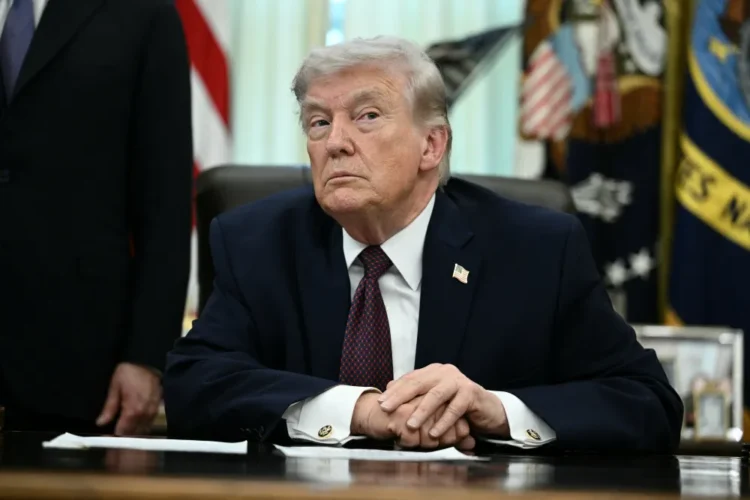
In an extraordinary and unprecedented moment in modern American legal and political history, Donald Trump personally attended a hearing at the Supreme Court of the United States as it considered the constitutionality of his administration’s attempt to end automatic birthright citizenship.

AD: Capeesh Restaurant
The case—widely regarded as one of the most consequential of the decade—centres on an executive order signed by Trump on his return to office in 2025. That order seeks to deny citizenship to children born in the United States unless at least one parent is a citizen or lawful permanent resident, directly challenging more than a century of legal interpretation of the 14th Amendment.
The nation’s highest court heard arguments for over two hours that cut to the core of American identity, constitutional interpretation, and presidential power. But while the stakes were monumental, early signals from the bench suggested deep scepticism toward the administration’s position.
Trump’s presence in the courtroom marked a striking departure from long-standing norms. No sitting U.S. president had previously attended Supreme Court oral arguments, underscoring both the symbolic and political weight of the case. ()

AD: Oysterian Sea Food Restaurant And Bar
Seated quietly in the public gallery alongside senior officials, Trump did not address the court, nor was his presence formally acknowledged by the justices. Yet his attendance sent a clear message: this legal battle lies at the heart of his administration’s immigration agenda.
Observers described the moment as both theatrical and strategic. While Trump remained silent, his appearance reinforced his long-standing campaign rhetoric challenging what he has repeatedly described as a misinterpretation of birthright citizenship.
At the centre of the case is a single, contested phrase in the 14th Amendment: “subject to the jurisdiction thereof.”
The Trump administration argues that this clause has been interpreted too broadly for over a century. Representing the government, Solicitor General D. John Sauer contended that children of undocumented immigrants or temporary visa holders should not automatically qualify for citizenship because their parents do not owe full allegiance to the United States.
This interpretation would mark a dramatic departure from established precedent, including the landmark 1898 case of United States v. Wong Kim Ark, which affirmed that nearly all individuals born on U.S. soil are citizens.
Challengers, led by the American Civil Liberties Union (ACLU) and a coalition of states, argued that the Constitution’s text, history, and consistent judicial interpretation leave little room for doubt. They warned that adopting the administration’s position could create a class of stateless individuals and destabilise the legal foundation of citizenship.
Throughout the hearing, several justices—across ideological lines—appeared unconvinced by the government’s arguments.
Chief Justice John Roberts reportedly described aspects of the administration’s reasoning as “quirky,” raising concerns about its consistency with longstanding legal doctrine.
Other conservative justices, including Neil Gorsuch and Amy Coney Barrett, pressed the government on the practical consequences of its proposal, questioning how such a policy could be implemented without widespread disruption.
Liberal justices were equally direct, focusing on the potential human and legal fallout. Justice Elena Kagan highlighted the risk of creating a population of individuals born in the United States but denied citizenship—an outcome critics argue would be both unprecedented and destabilising.
The tone of questioning suggested that the court may be reluctant to overturn more than a century of settled law, though some justices also probed the challengers’ arguments, indicating that the final outcome remains uncertain.
Much of the hearing focused on historical interpretations of the 14th Amendment, which was ratified in 1868 in the aftermath of the Civil War.
The amendment was designed to guarantee citizenship to formerly enslaved people and their descendants, ensuring that no state could deny basic rights based on race or origin. Legal scholars widely agree that its framers intended to establish a broad and inclusive definition of citizenship.
The Trump administration, however, has argued for a narrower reading rooted in 19th-century legal concepts of allegiance and jurisdiction. Critics say this approach selectively interprets history to justify a modern political objective.
Justices spent considerable time examining historical cases, statutes, and debates, reflecting the complexity of interpreting a constitutional provision written more than 150 years ago.
The Case carries profound real-world implications.
If the executive order were upheld, it could affect hundreds of thousands of children born each year in the United States. Opponents warn that many could be left without citizenship in any country, creating legal and humanitarian challenges on an unprecedented scale. ()
Supporters of the policy argue that it would deter illegal immigration and align citizenship rules more closely with those of other countries. They contend that birthright citizenship acts as an incentive for people to enter or remain in the U.S. unlawfully.
The court must now weigh these competing arguments, balancing constitutional interpretation with practical consequences. Trump’s decision to attend the hearing reflects the broader political significance of the case.
Throughout his political career, he has made immigration a central issue, often focusing on border security and citizenship policies. The birthright citizenship order represents one of the most ambitious attempts to reshape U.S. immigration law through executive action.
His appearance at the court—though silent—served to emphasise his personal investment in the outcome. It also highlighted ongoing tensions between the executive branch and the judiciary, particularly following recent rulings that have gone against his administration.
After leaving the courtroom early, Trump offered no immediate public comment, though he later reiterated his views on social media, criticising the current interpretation of birthright citizenship.Outside the court, the hearing drew demonstrations from both supporters and opponents of the policy.
Advocacy groups, including immigration rights organisations, warned that the executive order threatens fundamental constitutional protections. Protesters carried signs defending the 14th Amendment and calling for the court to uphold established precedent.
Advocates of the policy argued that the current system is outdated and needs reform, framing the case as a necessary step toward restoring what they see as the original intent of the Constitution.
The intensity of public reaction shows the broader cultural and political divisions surrounding immigration in the United States.
Legal experts caution that the court’s decision may not be straightforward.
While early questioning suggested scepticism toward the administration’s arguments, some justices also explored alternative ways to resolve the case. One possibility is that the court could avoid a sweeping constitutional ruling by focusing on statutory law or narrower legal grounds. ()
Another option would be to strike down the executive order while leaving open questions about the precise scope of the 14th Amendment, potentially setting the stage for future legal battles.
A ruling is expected by the summer of 2026, and it could have far-reaching implications not only for immigration policy but also for the limits of presidential power.
The case represents a critical test for the Supreme Court itself.
In recent years, the court has faced increasing scrutiny over its role in politically charged disputes. Its decision in this case will be closely watched as an indicator of how it navigates questions of constitutional interpretation, precedent, and executive authority.
For some observers, the hearing also highlighted the delicate balance between law and politics. Trump’s presence in the courtroom—while constitutionally permissible—raised questions about the symbolic relationship between the branches of government.amentally redefined.

AD: Heritage And Restaurant Lounge Bar