
By Aaron Miller-
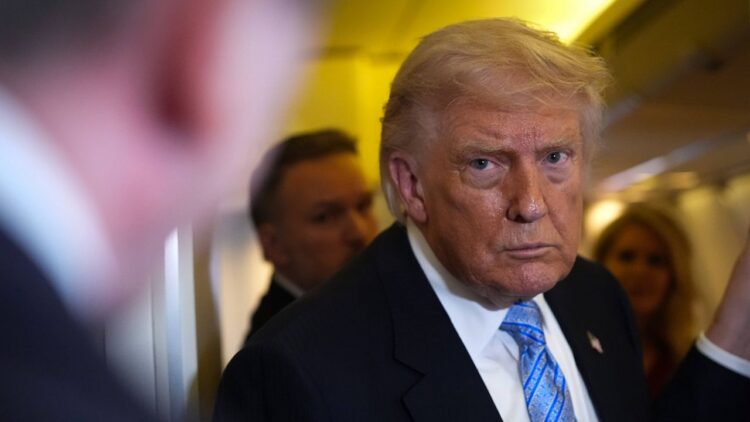
President Donald Trump has suffered a significant constitutional defeat after the United States Supreme Court rejected his attempt to curtail birthright citizenship, reaffirming one of the oldest and most enduring principles of American constitutional law.
In a 6–3 decision, the nation’s highest court struck down the President’s executive order that sought to deny automatic US citizenship to children born on American soil whose parents were either in the country unlawfully or were present on temporary visas. The ruling preserves a constitutional protection that has existed for more than 120 years and represents one of the most consequential judicial rebukes of Mr Trump’s immigration agenda.

AD: Capeesh Restaurant
Reacting to the judgement on social media, Mr Trump described the decision as “too bad for our country” and suggested that Congress should now seek to legislate an end to automatic birthright citizenship, signalling that the issue is unlikely to disappear from the political landscape despite the court’s ruling.
The judgement reinforces the constitutional principle that nearly every child born within the United States automatically becomes an American citizen, regardless of the immigration status of their parents. The doctrine, known as birthright citizenship, has long distinguished the United States from many other countries that confer nationality primarily through descent rather than place of birth.
At the heart of the dispute lies the Fourteenth Amendment to the US Constitution, ratified in 1868 in the aftermath of the American Civil War. Adopted during the Reconstruction era, the amendment was designed to guarantee citizenship to formerly enslaved people and to prevent states from denying them equal legal status.

AD: Oysterian Sea Food Restaurant And Bar
Its Citizenship Clause declares that:
“All persons born or naturalized in the United States, and subject to the jurisdiction thereof, are citizens of the United States.”
For generations, those words have been interpreted as providing automatic citizenship to virtually everyone born on American soil, with only limited exceptions, such as the children of foreign diplomats.
The principle was firmly established in 1898 when the Supreme Court ruled in United States v. Wong Kim Ark that a child born in San Francisco to Chinese immigrant parents was entitled to US citizenship under the Fourteenth Amendment. That landmark judgement has served as the constitutional foundation for birthright citizenship for more than a century and has repeatedly been treated as settled law.
Mr Trump’s executive order sought to reinterpret that constitutional guarantee by excluding children born to parents who were either residing in the United States unlawfully or were in the country temporarily, including some visa holders. Supporters argued that the Constitution had been interpreted too broadly for decades and that automatic citizenship encouraged unlawful immigration and so-called “birth tourism.”
Opponents, however, maintained that such a fundamental constitutional protection could not be altered by executive action. They argued that any attempt to redefine citizenship in this way would require either a constitutional amendment or a dramatic reversal of long-established Supreme Court precedent. The Supreme Court has now emphatically sided with that latter view.
Although the Court’s conservative majority has frequently delivered victories for Mr Trump on issues ranging from presidential immunity to executive authority, this decision illustrates the constitutional limits on presidential power. The ruling makes clear that executive orders cannot override rights explicitly protected by the Constitution as interpreted through longstanding judicial precedent.
Constitutional scholars have long regarded the Fourteenth Amendment as one of the cornerstones of American civil rights. Beyond establishing birthright citizenship, it also underpins many of the Supreme Court’s most significant rulings on equality, due process and equal protection under the law.
The political debate surrounding birthright citizenship has intensified over the past decade as immigration has become one of the defining issues in American politics. Critics contend that automatic citizenship creates incentives for illegal immigration and places additional pressure on public services. Supporters argue that ending the principle would create a permanent class of children born in the United States but denied the rights and protections of citizenship, fundamentally altering the nation’s understanding of equality before the law.
Mr Trump’s response suggests that he intends to continue pursuing the issue through the legislative process. By urging Congress to act, he has acknowledged that constitutional change may now require lawmakers rather than unilateral executive action. However, any legislation attempting to restrict birthright citizenship would almost certainly face immediate legal challenges, with opponents arguing that Congress cannot enact laws that conflict with the Constitution as interpreted by the Supreme Court.
Amending the Constitution itself would be an even steeper challenge. Constitutional amendments require approval by two-thirds of both houses of Congress and ratification by three-quarters of the states—a threshold that has historically proved extraordinarily difficult to achieve.
For now, the Court’s ruling preserves legal certainty for millions of Americans and maintains a constitutional doctrine that has remained largely unchanged since the nineteenth century. Immigration advocates welcomed the judgment as a decisive affirmation of constitutional protections, while critics of birthright citizenship are likely to intensify political efforts to revisit the issue through Congress.
The decision is also a reminder that, even during periods of intense political division, the Supreme Court continues to play its historic role as the final interpreter of the Constitution. While presidents may seek to reshape policy through executive orders, those powers remain constrained by constitutional boundaries that cannot easily be redrawn.
For Mr Trump, the ruling represents a significant setback in one of the signature policy areas of his presidency. For the Court, it reaffirms a constitutional principle that has survived civil war, reconstruction, sweeping social change and more than 150 years of legal scrutiny.
Whether the political battle over birthright citizenship is truly over remains doubtful. But for now, the Constitution—as interpreted by the Supreme Court—continues to guarantee that, with few exceptions, those born on American soil are citizens of the United States from the moment of birth.

AD: Heritage And Restaurant Lounge Bar