
By `Theodore Brown-
A wave of coordinated U.S. and Israeli strikes targeting Iran’s critical infrastructure has escalated tensions in the Middle East to a precarious new level, as President Donald Trump presses toward a self-imposed deadline demanding Tehran reopen the strategically vital Strait of Hormuz.
Oil facilities, railway networks and major bridges have all been hit in recent hours, marking one of the most expansive phases of the conflict since hostilities began earlier this year.

AD: Capeesh Restaurant
The strikes come amid an ultimatum from Trump warning of devastating consequences if Iran fails to comply. According to multiple reports, the attacks have already affected key transport routes and energy infrastructure, raising fears of broader regional conflict and global economic disruption.
In Tehran and other major cities, the sound of explosions and the sight of damaged infrastructure have become increasingly common. Iranian authorities have condemned the attacks as acts of aggression and warned of immediate retaliation, while international observers express concern that the targeting of civilian-linked infrastructure could violate international law.
The scope of the strikes reflects a shift in strategy. Earlier phases of the conflict focused primarily on military installations, but recent operations have expanded to include transportation and energy networks, which are critical to both civilian life and military logistics.

AD: Oysterian Sea Food Restaurant And Bar
Israeli officials confirmed that bridges and rail lines were struck in several cities, including Tehran, Qom and Tabriz, arguing that these routes are used to move troops and weapons.
Reports also indicate that U.S. strikes have targeted sites near Iran’s key oil export infrastructure, including areas around Kharg Island, a hub that handles a significant portion of the country’s crude exports. While some officials have suggested efforts were made to avoid directly damaging oil production facilities, the proximity of the strikes has heightened concerns about global energy supply.
Markets have already reacted to the intensifying conflict. Oil prices have surged past $110 per barrel as investors brace for potential disruption to the Strait of Hormuz, through which roughly a fifth of the world’s oil supply passes. Financial markets have also shown signs of strain, reflecting fears that the conflict could spiral into a broader regional war.
Infrastructure Under Fire
The latest strikes have focused heavily on Iran’s transport and logistics networks, underscoring their strategic importance in both military operations and daily civilian life. Israeli forces have acknowledged targeting railway bridges and tracks, with warnings issued to Iranian civilians to avoid train travel due to the risk of further attacks.
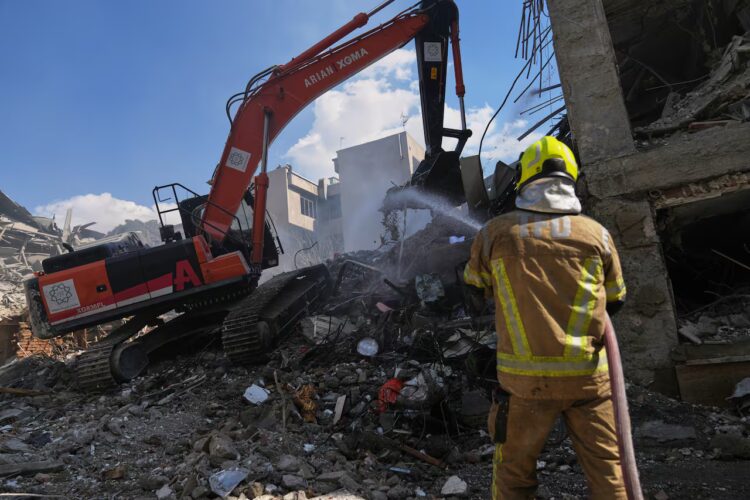
Images and reports from inside Iran show damaged rail lines and collapsed bridge segments, disrupting travel and supply chains across multiple provinces. In some areas, traffic has been brought to a standstill as authorities attempt to assess the damage and restore basic services.
The targeting of these networks has drawn criticism from humanitarian organisations, which warn that such strikes can have far-reaching consequences for civilian populations.
The escalation follows earlier incidents, including a deadly strike on a bridge in Karaj that reportedly caused civilian casualties. That attack, part of a broader campaign against infrastructure, highlighted the risks associated with expanding military objectives beyond traditional targets.
Energy infrastructure has also come under increasing pressure. Although officials have indicated that major oil production sites were not directly hit in the latest strikes, the broader campaign has raised fears that future operations could target these facilities if diplomatic efforts fail.
Trump has previously threatened to strike Iran’s power plants and oil infrastructure if Tehran does not meet U.S. demands, signalling a willingness to escalate further.
Iranian officials have responded by urging citizens to protect critical infrastructure, including power plants, with human chains and other demonstrations of solidarity. The calls reflect both the symbolic and practical importance of these facilities, which are essential to the country’s economy and daily life.
The cumulative impact of these strikes is already being felt across the region. Disruptions to transportation networks complicate the movement of goods and people, while the threat to energy infrastructure adds another layer of uncertainty to an already volatile situation. Analysts warn that continued attacks could lead to long-term damage that extends far beyond the immediate conflict.
While the deadline set by Trump approaches, the risk of a dramatic escalation continues to grow. The U.S. president has issued stark warnings, including a statement that “a whole civilization will die” if Iran fails to comply with demands to reopen the Strait of Hormuz and curb its military activities.
The rhetoric has drawn sharp criticism from political leaders, legal experts and international organisations, many of whom argue that such threats could inflame tensions and undermine diplomatic efforts. Calls for de-escalation have come from multiple countries, but progress toward a negotiated solution remains elusive.
Iran, for its part, has rejected the ultimatum and vowed to respond to any further attacks. Officials in Tehran have framed the conflict as a defence of national sovereignty, while also signalling readiness for prolonged confrontation. The government has mobilised public support through rallies and messaging that emphasises resilience in the face of external pressure.
The broader conflict, which began earlier this year with coordinated U.S. and Israeli strikes, has already drawn in multiple actors across the region. Iranian missile attacks have targeted Israel and other countries, while allied groups have engaged in cross-border hostilities, raising fears of a wider war.
Diplomatic efforts have struggled to keep pace with the rapidly evolving situation. Attempts to broker a ceasefire or secure agreements on key issues such as the Strait of Hormuz have faltered, with major powers divided on how to respond. Russia and China have opposed certain U.S.-backed initiatives, while European nations have called for restraint and renewed negotiations.
Civilians across the region consider the stakes are increasingly clear. In Iran, the threat of further strikes has created an atmosphere of uncertainty and fear, particularly in urban areas where infrastructure has been targeted. In neighbouring countries, concerns about spillover effects and economic disruption are mounting. The combination of military escalation, heated rhetoric and fragile diplomacy has created a volatile situation with potentially far-reaching consequences.

AD: Heritage And Restaurant Lounge Bar