
By Lucy Caulkett-
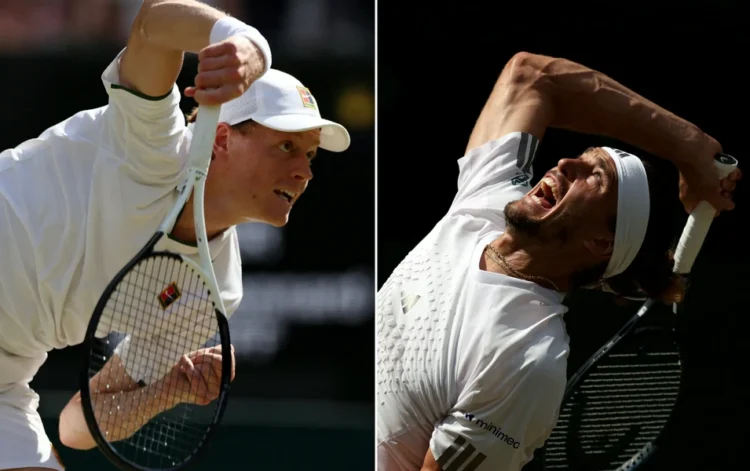
Jannik Sinner moved within touching distance of another Wimbledon crown after producing a decisive surge against Alexander Zverev in a gripping men’s singles final on Centre Court, delivering the kind of composed, high-quality tennis that has become synonymous with his rise to the summit of the sport.
With the championship hanging in the balance, Sinner delivered the decisive break of serve in the third set after an opening two sets separated only by tiebreaks, putting himself in command of the Wimbledon final. The Italian continued to apply pressure with consistent returning and solid baseline play, while Zverev was unable to regain the initiative as the match entered its closing stages. Sinner’s ability to seize the key moments left him on the brink of another Grand Slam title, with momentum firmly in his favour.

AD: Capeesh Restaurant
The atmosphere inside the All England Club reflected the significance of the Wimbledon men’s singles final, with Centre Court spectators responding loudly to the dramatic momentum swings and high-quality rallies between Sinner and Zverev. The match unfolded, the tension grew with every crucial point, highlighting why Wimbledon remains the sport’s most prestigious stage for championship tennis. The closely contested battle between the world No. 1 and one of the ATP Tour’s leading contenders added another memorable chapter to the tournament’s rich history.
The opening exchanges showcased exactly why both players had earned their place in the championship match. Zverev arrived carrying tremendous confidence after an outstanding fortnight, using his towering serve and penetrating groundstrokes to keep Sinner under constant pressure. His ability to dictate points from the baseline allowed him to match the Italian shot for shot during the early stages.
Sinner, however, demonstrated the qualities that have elevated him to the pinnacle of men’s tennis. Rather than forcing spectacular winners at every opportunity, he patiently constructed rallies, absorbing Zverev’s power before redirecting the pace with remarkable accuracy. Every service hold became a psychological victory, while each return game hinted that the breakthrough was only a matter of time.

AD: Oysterian Sea Food Restaurant And Bar
Sinner and Zverev engaged in a series of extended baseline rallies that showcased the quality of their shot-making and defensive resilience, with Centre Court responding enthusiastically to the momentum shifts throughout the match. Neither player was willing to concede easy points, resulting in a fiercely contested final that highlighted why both had reached the championship match.
The defining moment arrived when Sinner capitalised on a slight dip in Zverev’s serving rhythm. After applying relentless pressure throughout several return games, the Italian finally earned the opportunity he had been patiently constructing. A sequence of deep returns forced Zverev onto the defensive before Sinner struck with a clinical winner that secured the all-important break. That breakthrough transformed the complexion of the match.
Suddenly, Sinner’s confidence visibly increased. His movement became even more fluid, his serving more authoritative and his shot selection almost flawless. Zverev continued to battle courageously, refusing to allow the contest to slip away without resistance, yet every game demanded immense physical and mental energy.
The German repeatedly attempted to shorten rallies by attacking the net and unleashing aggressive first serves, but Sinner consistently found passing shots and returns that neutralised those tactics. His anticipation proved exceptional, allowing him to read Zverev’s intentions before producing another pinpoint response.
Centre Court sensed the shift immediately. Every winner from Sinner generated louder applause, while every missed opportunity for Zverev appeared increasingly significant. Tennis often turns on only a handful of points, and this final was no exception. Sinner’s calm demeanour contrasted sharply with the mounting pressure facing his opponent.
Between points, the Italian maintained his familiar composed expression, showing little emotion regardless of whether he won a spectacular rally or escaped a difficult service game. That emotional discipline has become one of his greatest strengths throughout his rise to Grand Slam success. With Zverev, the challenge became increasingly complicated.
The German continued producing moments of brilliance, including several thunderous aces and exquisite backhand winners, but consistency ultimately remained the deciding factor. Every slight lapse invited punishment from a player whose ability to convert opportunities has become among the finest on the ATP Tour. The match progressed beyond the three-hour mark, physical endurance became another crucial element.
Long rallies tested both competitors, yet Sinner continued covering every corner of the court with remarkable efficiency. His movement allowed him to extend points until openings inevitably appeared. Within the scoreline, the final represented another significant moment in the changing landscape of men’s tennis. With the era dominated by Roger Federer, Rafael Nadal and Novak Djokovic gradually giving way to a new generation, Sinner and Zverev showcased the extraordinary depth now defining the ATP Tour.
Sinner entered the final carrying the weight of expectation as defending champion and world No. 1, while Zverev sought another historic milestone following his impressive resurgence during the 2026 season. Their contrasting styles produced an enthralling tactical battle that highlighted the evolution of modern tennis.
Throughout the championship, Sinner had displayed exceptional consistency, navigating a demanding draw with clinical efficiency. His semifinal victory demonstrated both his confidence and his ability to perform on the sport’s biggest stages, setting up a blockbuster meeting with Zverev. The German’s own path to the final included commanding victories that reinforced his status among the world’s elite and suggested he possessed every weapon necessary to challenge for the title. The Wimbledon final ultimately became a contest defined by resilience as much as power. Both players produced moments of breathtaking brilliance, but Sinner’s remarkable ability to remain composed during the defining points increasingly separated the two competitors.
Every championship carries defining moments, and Sinner’s crucial break could prove to be the decisive sequence remembered by fans long after the final point is played. It reflected not only technical excellence but also tactical intelligence, patience and unwavering belief in his game plan.Should Sinner complete the victory, it would further cement his status as the dominant force in men’s tennis and reinforce his growing collection of Grand Slam titles. With Zverev, despite any disappointment, reaching another Wimbledon final represents another significant achievement in a career that continues to evolve.
Regardless of the final outcome, spectators were treated to a championship match worthy of Wimbledon’s rich history. It combined power with precision, drama with discipline and showcased two outstanding athletes performing at the highest level of their sport. Sinner stood on the brink of another Wimbledon triumph following that pivotal service break, Centre Court witnessed the qualities that define champions: composure under immense pressure, relentless consistency and the courage to seize the biggest moments when they matter most.

AD: Heritage And Restaurant Lounge Bar