
By Tony O’Reilly-
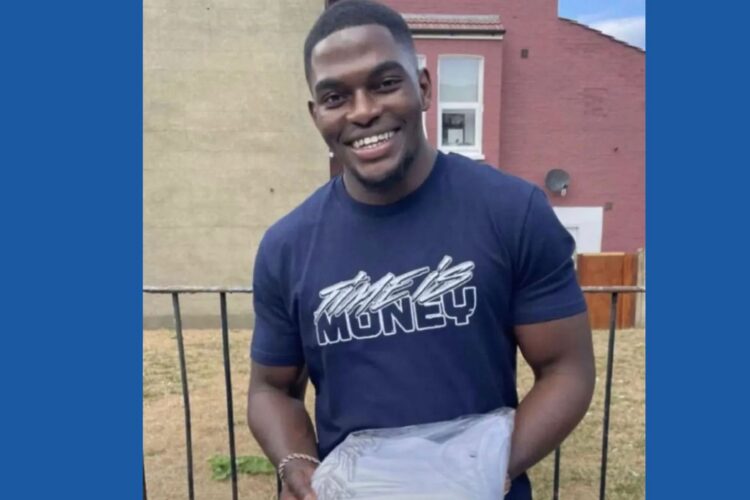
The Independent Office for Police Conduct (IOPC) has confirmed that Metropolitan Police Sergeant Martyn Blake, the firearms officer who shot and killed Chris Kaba(pictured) in south London in 2022, will not face misconduct proceedings, bringing to a close nearly four years of legal and disciplinary uncertainty surrounding one of the UK’s most high-profile police shootings. The decision follows Blake’s acquittal on a charge of murder at the Old Bailey in 2024 after a jury unanimously cleared him over the fatal shooting of the 24-year-old. Kaba was shot in Streatham during an armed police operation after attempting to drive away from officers and ram his vehicle through police cars. The incident sparked widespread public debate about police accountability, the use of lethal force, and the scrutiny faced by firearms officers.
The IOPC said disciplinary proceedings had initially been paused in January pending changes to legislation governing police misconduct cases involving the use of force. Those reforms, introduced in June, replaced the previous civil law test with a criminal law standard. Under the revised rules, conduct that does not meet the threshold for criminal liability should not ordinarily amount to misconduct.

AD: Capeesh Restaurant
After reviewing the implications of the new legislation, as well as representations made by both Sgt Blake and the family of Chris Kaba, the watchdog concluded that the disciplinary proceedings should be withdrawn.
Amanda Rowe, the IOPC’s Director of Engagement, said the organisation had sought throughout the process to avoid unnecessary delays but believed it was appropriate to pause proceedings until the legal changes were fully understood. She said that after considering both the revised policy framework and submissions from the interested parties, the IOPC had informed Sgt Blake and the Kaba family that the disciplinary case would not continue.
The announcement effectively concludes all disciplinary action against the officer, although questions surrounding Kaba’s death are not entirely over. A coroner will now decide whether an inquest into the shooting should take place, potentially providing a further public examination of the circumstances surrounding the incident.

AD: Oysterian Sea Food Restaurant And Bar
The decision was welcomed by Metropolitan Police Commissioner Sir Mark Rowley, who described it as the end of “almost four years of uncertainty” for Sgt Blake, who has previously been publicly identified only by his operational call sign NX121.
Sir Mark said the prolonged accountability process had placed enormous strain not only on the officer but also on his family and colleagues within the Metropolitan Police’s firearms command. He acknowledged the continuing grief experienced by Chris Kaba’s relatives, saying the force recognised the profound impact of his death on his family.
However, the commissioner argued that following Blake’s unanimous acquittal at the Old Bailey and in the absence of evidence that he had failed in his professional duties, the officer should never have faced a misconduct hearing. He described the outcome as a significant moment that should prompt wider reform of the police accountability system.
According to Sir Mark, while no police officer should ever be considered above the law, the current framework for holding officers accountable is fundamentally flawed. He criticised a process that can leave officers facing multiple, overlapping investigations over several years, including criminal proceedings, disciplinary hearings, civil litigation and coronial inquests.
He argued that while members of the public accused of criminal offences are generally tried once before the courts, police officers can face repeated scrutiny through several legal and regulatory processes, often with significant personal and professional consequences. Describing such prolonged uncertainty as “disgraceful,” Sir Mark said the system places lives on hold for years and has a profound impact on officers and their families.
The Metropolitan Police Federation, which represents rank-and-file officers in London, also welcomed the IOPC’s decision. Chairwoman Paula Dodds said police officers are rightly held to high standards of accountability but stressed that Sgt Blake had already undergone years of legal scrutiny following the shooting.
She said the federation was pleased the matter had now concluded and that the officer could continue serving the public without the disciplinary proceedings continuing to hang over him.
Political support for the decision also came from City Hall Conservative leader Susan Hall AM, who sharply criticised both the investigation and London’s policing oversight.
Hall argued the investigation should never have been initiated and accused the Mayor of London and the IOPC of failing to provide sufficient support to frontline police officers, particularly specialist firearms officers who routinely confront dangerous situations. She claimed Sgt Blake had been let down throughout the process and called for those responsible to be held accountable.
Despite the support from police leaders and Conservative politicians, the IOPC’s decision has drawn strong criticism from campaign groups and organisations representing bereaved families.
The Justice for Chris Kaba Campaign described the outcome as a significant blow to Kaba’s family, while the charity Inquest warned it risked undermining public confidence in police accountability.
Temi Mwale, speaking on behalf of the Justice for Chris Kaba Campaign, said the decision sent what she described as a dangerous message about police accountability and the use of lethal force.
Deborah Coles, Executive Director of Inquest, argued the outcome reinforced perceptions that police officers can act with impunity, expressing concern about the implications for families seeking justice following deaths involving state authorities.
The shooting of Chris Kaba has remained one of the most controversial policing incidents in recent years. It also triggered wider debate within policing over the willingness of firearms officers to undertake armed duties while facing the prospect of lengthy criminal and disciplinary investigations.
Following Blake’s murder charge in 2023, dozens of Metropolitan Police firearms officers temporarily withdrew from armed duties in protest over concerns about legal protections for officers making split-second decisions during dangerous operations. The government subsequently reviewed police accountability arrangements, leading to the legislative changes now reflected in misconduct proceedings involving the use of force.
The revised legal test introduced in June is intended to align disciplinary standards more closely with criminal law, ensuring that officers who are found not to have committed criminal offences are not automatically subjected to misconduct proceedings based on the same use-of-force decisions.
For supporters of the reform, the changes provide greater certainty for officers working in high-risk roles. Critics, however, fear the revised framework could make it harder to hold police officers accountable in cases involving serious injury or death.
While the withdrawal of misconduct proceedings closes one chapter in the case, the prospect of an inquest means further public scrutiny of the circumstances surrounding Chris Kaba’s death may still lie ahead. For Sgt Blake, however, the IOPC’s decision marks the end of a lengthy disciplinary process that followed his acquittal, while for Kaba’s family and campaigners, it is a decision that is likely to deepen continuing concerns about accountability and justice in deaths following police use of force.

AD: Heritage And Restaurant Lounge Bar