
By Tony O’Reilly-
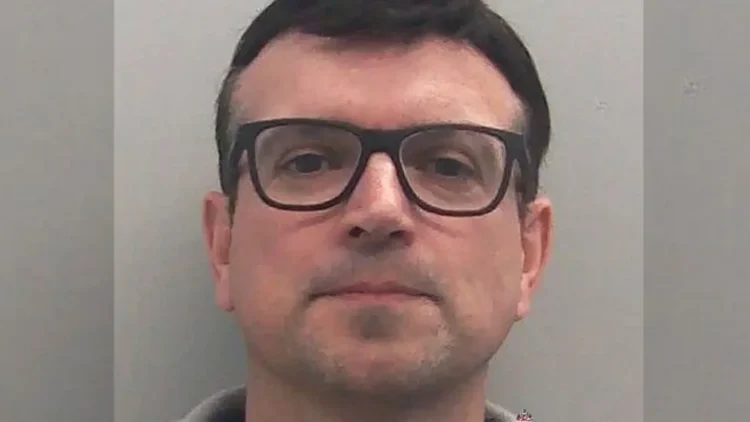
The jailing of a former senior police officer for rape and sexual assault has reignited concerns over police vetting, internal accountability and the culture within forces entrusted with protecting the public. Glen Mahony, 54, a former chief inspector with the Civil Nuclear Constabulary (CNC), was sentenced to 10-and-a-half years in prison after being convicted of two counts of rape and one count of sexual assault, in a case that has drawn further attention to the troubling conduct and institutional culture surrounding some serving officers.
Mahony’s conviction is particularly disturbing given his senior position within the force, his previous association with convicted murderer Wayne Couzens and revelations about his involvement in WhatsApp groups containing sexist and misogynistic messages. The case raises uncomfortable questions about how effectively police organisations identify inappropriate attitudes, challenge misconduct and ensure that those entrusted with positions of authority meet the standards expected of them.

AD: Capeesh Restaurant
Mahony joined the CNC in 2006 and steadily progressed through its ranks, becoming a sergeant in 2011, an inspector in 2016 and chief inspector in 2020. At the height of his career, he was the third most senior officer in the force’s south division, overseeing operational policing across nuclear facilities including Dungeness, Sizewell and Hinkley Point power stations, as well as the nuclear research centre at Harwell.
It was at Dungeness that Mahony worked alongside Couzens, who served as a constable at the nuclear facility between 2012 and 2018 before transferring to the Metropolitan Police. Couzens is now serving a whole-life sentence for the rape and murder of Sarah Everard in March 2021, a crime that exposed serious failures within the police service and triggered widespread public concern about the safety of women and the standards expected of serving officers.
Mahony was reportedly quick to tell Kent Police officers following his arrest in March 2022 that he had been Couzens’s overall manager, although not his direct line manager. During his sentencing at Maidstone Crown Court, however, Judge Gareth Branston rejected Mahony’s suggestion that he had been targeted because of his association with the convicted murderer. “You were not targeted. You were arrested because of what you did,” the judge told him.

AD: Oysterian Sea Food Restaurant And Bar
The court heard that Mahony had raped his victim twice while she was asleep and unable to consent. His actions left her suffering panic attacks, nightmares and lasting psychological trauma, with the consequences continuing to affect her ability to work and her confidence. In an impact statement read to the court, the victim described feeling worthless and said Mahony’s actions had robbed her of her self-esteem. “His actions didn’t just hurt me at the time but have continued to do so each day. He has stolen my confidence,” she said.
Yet beyond the criminal conviction itself, further revelations about Mahony’s conduct have raised questions about the environment in which he operated as a senior police officer. An investigation by the CNC’s professional standards department found that he had participated in two WhatsApp groups in which sexist and misogynistic messages were exchanged. Mahony himself sent offensive messages and failed to challenge or leave the groups when other members shared similarly disturbing material. The revelations are particularly concerning given the wider controversy surrounding another WhatsApp group involving Couzens and six other officers who transferred from the CNC to the Metropolitan Police. Messages shared within that group were found to contain sexist, misogynistic, racist and violent material, prompting renewed scrutiny of the attitudes and behaviour tolerated within policing circles.
The fact that such conversations involved officers from two police organisations raises questions that go beyond individual misconduct. It demands scrutiny of whether inappropriate attitudes were being challenged, whether professional standards departments were responding effectively to warning signs and whether police leadership was sufficiently alert to the risks posed by a culture in which degrading attitudes towards women could be shared among colleagues.
Mahony was suspended on full pay in March 2022, following his arrest, but resigned in January 2025, the day before a disciplinary hearing was due to take place. The CNC subsequently confirmed that he would have been dismissed for gross misconduct had the proceedings been completed. His departure before the hearing also highlights the importance of ensuring that disciplinary processes provide proper accountability and transparency, even when officers leave the service before their cases are concluded.
The wider issue is whether police vetting and oversight arrangements are sufficiently robust to identify individuals whose behaviour and attitudes are incompatible with the responsibilities of policing. While there is no evidence in the information available to establish that Mahony’s original recruitment checks failed or that his later criminal conduct could have been predicted, his progression through the ranks, participation in misogynistic exchanges and eventual conviction raise legitimate questions about the effectiveness of ongoing scrutiny within police organisations.
Vetting should not be regarded as a one-off exercise conducted when an individual first applies to join the police. It must be reinforced through effective supervision, continuous professional standards monitoring, credible internal reporting mechanisms and a workplace culture in which inappropriate behaviour is challenged rather than ignored. Officers who display misogynistic attitudes should not be shielded by rank, seniority or professional relationships, and allegations of misconduct must be taken seriously before they develop into wider institutional scandals.
For women and other vulnerable members of the public, the consequences of failures in police accountability are particularly profound. Police officers are given considerable authority and are expected to exercise it with integrity, restraint and respect for the law. When individuals entrusted with protecting the public are convicted of serious sexual offences, the damage extends far beyond the immediate victims. It undermines confidence in the very institution expected to provide protection.
Kent Police Detective Chief Inspector Tracy Evans described Mahony’s actions as utterly disgraceful, particularly his decision to take advantage of a woman while she was asleep and at her most vulnerable. CNC Chief Constable Simon Chesterman also condemned the former officer’s conduct, describing his crimes as despicable and acknowledging that such behaviour undermines the trust and confidence of the public, particularly women, in the police service.
The challenge for police leadership now is to demonstrate that these cases are prompting meaningful action rather than another round of expressions of regret. The questions surrounding Mahony and his association with Couzens cannot be answered by focusing exclusively on the individuals convicted of crimes. They must also prompt an examination of recruitment standards, internal culture, supervision and the willingness of officers to report colleagues whose behaviour falls below the standards expected of the service.
The public deserves to know not only whether police forces are adequately checking the backgrounds of those they recruit, but also whether they are capable of recognising and confronting dangerous attitudes among officers who have already been admitted into their ranks. A police badge is a position of public trust, not a guarantee of integrity. Ensuring that those who wear it deserve that trust must remain a responsibility that police forces cannot afford to neglect.
AD: Heritage And Restaurant Lounge Bar