
By Aaron Miller-
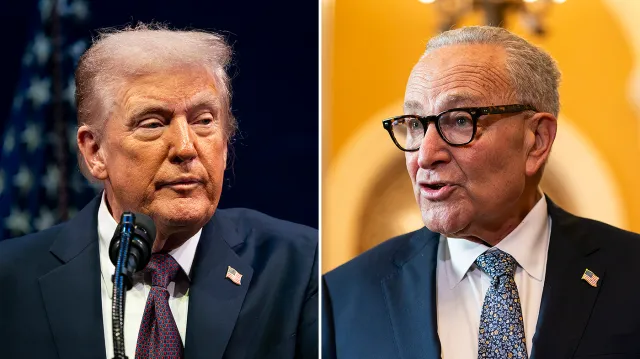
In a sharply worded statement from the nation’s capital, Senate Minority Leader Chuck Schumer on Monday described ongoing negotiations over Department of Homeland Security (DHS) funding as “constructive,” even as he accused former President Donald Trump of attempting to undermine the talks by attaching unrelated political demands. Schumer’s remarks came amid a growing political impasse that has extended an already protracted partial shutdown of the DHS, disrupted airport security operations, and heightened tensions within the Republican Party over how best to proceed.
The negotiations are intended to lift a partial funding lapse at the DHS that has left agencies such as the Transportation Security Administration (TSA) and Federal Emergency Management Agency (FEMA) operating without full appropriations for weeks. While lawmakers from both parties acknowledge that the situation is untenable, their strategies for resolving it have diverged sharply.

AD: Capeesh Restaurant
Schumer emphasised that Senate Democrats have engaged in “productive and serious discussions” aimed at reaching an agreement without reopening other contentious policy fights.
But he blamed Trump for “sabotaging negotiations” by pushing Republicans to withhold support for a funding deal unless they also agree to pass the controversial SAVE America Act, a voting and election reform package that Democrats vehemently oppose.
“In our discussions, Democrats have repeatedly shown we are willing to find common ground and fund DHS,” Schumer said in a press availability on Capitol Hill. “Unfortunately, President Trump is the one standing in the way, telling Republicans not to make a deal unless they also pass unrelated, divisive legislation that has nothing to do with funding homeland security.”

AD: Oysterian Sea Food Restaurant And Bar
His comments reflect growing frustration among Senate Democrats, who argue that tying DHS funding to unrelated political priorities only deepens the stalemate.
The funding standoff marks the latest chapter in a broader struggle over immigration enforcement, election policy, and government spending that has repeatedly brought Congress to the brink.
Talks to end the 38‑day partial shutdown of the DHS have hit fresh roadblocks after Trump urged Republican lawmakers to hold out for passage of the SAVE America Act, saying the GOP should not finalise any deal with Democrats without also passing the bill that would impose stricter voting laws and other conservative priorities.
Schumer and other Democratic leaders have maintained that they are prepared to support DHS funding but reject any linkage to unrelated partisan legislation. They argue that essential public safety functions such as airport security, border patrol, disaster response, and cybersecurity should not be held hostage to ideological demands outside the DHS’s core mission.
Democrats have also sought changes to immigration enforcement policies as part of broader DHS discussions, a point of contention that has complicated negotiations.
The House and Senate have proposed different funding approaches over the past weeks, with some GOP lawmakers favouring partial funding bills that would keep most DHS functions operational while carving out contentious components like U.S. Immigration and Customs Enforcement (ICE) for separate debate.
However, Trump’s insistence on attaching the SAVE America Act to any deal has dissuaded more moderate Republicans from embracing those proposals, fearing political blowback or legal entanglements.
Meanwhile, the impacts of the funding lapse are being felt across the country. TSA agents have gone without pay for weeks, prompting resignations and absenteeism that have slowed airport security lines at major hubs nationwide, while FEMA’s long‑term recovery projects have been paused.
The mounting operational strains have increased pressure on both parties to break the impasse, but deep ideological divisions continue to frustrate swift resolution.
Schumer’s accusation that Trump is actively sabotaging negotiations reflects deeper partisan fault lines that extend far beyond the fiscal dispute. The minority leader and other Democratic lawmakers see the Trump‑anchored strategy as a politically motivated effort to force through policy goals that cannot secure majority support on their own merits.
Many Democrats argue that election reform measures such as those contained in the SAVE America Act should be debated and passed on their own schedule rather than being used as leverage in a critical national security funding fight.
Republican leaders have reacted to the deadlock with consternation, divided between loyalty to Trump’s directives and pragmatic concerns over the continuing shutdown’s impact. Senate Majority Leader John Thune and other GOP negotiators have expressed scepticism about tying DHS funding to unrelated legislation, noting that doing so reduces the likelihood of a bipartisan compromise.
This divide has left lawmakers struggling to present a unified Republican strategy, even as the fiscal deadline looms and essential services remain underfunded.
Public sentiment has been shaped by the ongoing disruptions, with travellers facing longer security delays and federal employees growing increasingly frustrated by the uncertainty.
Business leaders, airline executives, and transportation officials have joined bipartisan calls for a swift resolution, warning that continued funding delays could have broader economic consequences and erode public trust in government stability.
Looking Ahead
Lawmakers from both sides face mounting pressure to deliver results as negotiations go on. Schumer’s claim that talks are “constructive” suggests a willingness among Senate Democrats to engage in meaningful compromise so long as that compromise does not involve sacrificing core priorities or ceding to what they see as political brinkmanship.
Whether Republicans ultimately align with that approach remains uncertain, particularly as Trump’s influence continues to shape the GOP’s negotiating posture.
Observers note that the dispute over DHS funding is emblematic of wider ideological battles playing out across Washington, where fiscal decisions are increasingly entangled with broader social and political agendas.
With the funding deadline drawing near, both parties are confronted with a stark choice: find common ground that preserves national security functions and ends the partial shutdown or allow the impasse to persist, risking further operational strain and political fallout.
What happens next will likely be watched closely by Americans frustrated with the prolonged funding crisis, federal employees awaiting pay, and lawmakers seeking to navigate one of the most contentious fiscal fights of the year.
In the meantime, Schumer’s public rebuke of Trump amplifies the deep rift at the heart of the negotiations a rift that could determine not only the fate of DHS funding but also the broader trajectory of congressional compromise in an era of heightened political polarisation.

AD: Heritage And Restaurant Lounge Bar