
By Theodore Brown-
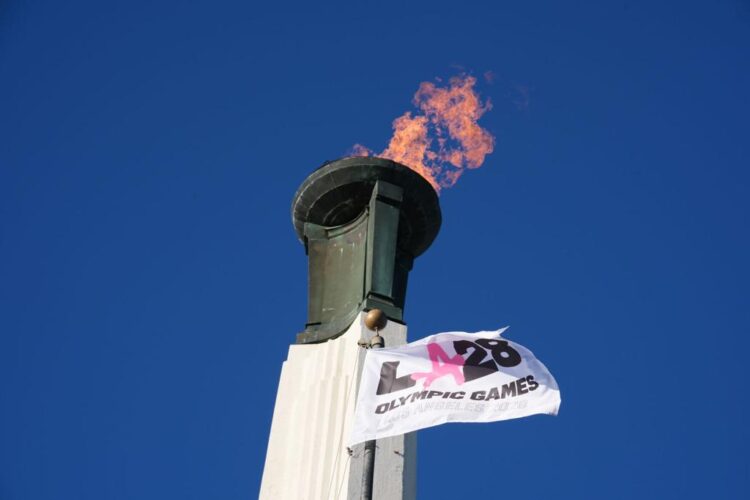
In a dazzling display of colour and creativity, organisers of the upcoming 2028 Olympic and Paralympic Games in Los Angeles have unveiled an official visual identity that draws directly from the region’s natural and cultural landscape. Dubbed “Superbloom,” the branding was revealed Monday as a bold, floral‑inspired look intended to capture the spirit, energy and optimism of both the Games and the host city. The vibrant design is set to appear across venues, signage, uniforms, digital platforms and broadcasts in the years leading up to and during the Games.
The Superbloom identity takes its inspiration from a rare California phenomenon: when unusually wet winters trigger waves of wildflowers across hillsides and deserts, producing awe‑inspiring bursts of colour that can last for weeks. Organisers said they chose this theme to symbolise diversity, unity and the sense of possibility the Games hope to convey.

AD: Capeesh Restaurant
“The Superbloom mirrors the spirit of the Olympic and Paralympic Games,” said Ric Edwards, LA28’s vice president of brand design, explaining that “when the conditions are right, everything comes together and something extraordinary happens.”
Central to the identity are 13 distinct floral motifs representing the people, cultures, and landscapes of Southern California. The colour palette, influenced by the Bird of Paradise Los Angeles’s official city flower includes bold shades that echo local flora and urban vibrancy.
These graphic elements will be incorporated into every touchpoint of the LA28 Games, from ceremony backdrops and venue facades to athlete credentials and digital interfaces.

AD: Oysterian Sea Food Restaurant And Bar
Designers have emphasised that the visuals are not static but flexible, capable of adapting to different environments while maintaining a cohesive look and feel.
A Visual Metaphor for Culture and Community
The Superbloom branding is more than a logo; it’s a storytelling tool that reflects Los Angeles’s unique identity. In a region known for its cultural diversity home to communities from around the globe and speaking hundreds of languages the floral imagery serves as a metaphor for how disparate elements can flourish together as part of a larger whole.
Organisers said the early launch of the identity will give partners and cities ample time to integrate the look into public spaces, fan experiences, and marketing campaigns far ahead of the Games.
Unlike traditional Olympic branding that centres on standard iconography such as torches or athlete figures, LA28’s Superbloom design leans into abstraction and emotion. The visual language borrows from LA’s street art, signage styles, and graphic culture, connecting the Games to everyday experiences across neighbourhoods from Downtown to Venice Beach.
Through embracing such a locally grounded visual system, the organisers hope to cultivate a sense of community ownership encouraging residents to see themselves reflected in the event’s imagery long before the first torch is lit.
Public reaction to the branding has been enthusiastic, with fans and design critics praising the bold colours and dynamic shapes as fresh and distinctive. Social media channels quickly filled with commentary celebrating the identity’s vibrancy, while also speculating how it might translate into merchandise, installations, and public art.
Many observers noted that the Superbloom concept aligns with broader trends in global design, where flexibility and expression often take precedence over rigid logo conventions.
While the Superbloom visuals reflect the present cultural moment, they also pay homage to Los Angeles’s Olympic legacy. Design teams studied the city’s earlier Games particularly those in 1932 and 1984 as touchstones for blending tradition with innovation.
Through building on past influences while introducing something distinctly contemporary, LA28 aims to create a visual identity that feels rooted in history yet unmistakably forward‑looking.
To many Angelenos, the Superbloom theme has resonated as a fitting representation of Southern California’s natural beauty and cosmopolitan spirit.
Comments on community forums noted that by integrating local flora and colour references, the identity gives the Games a tangible sense of place, rather than a generic global aesthetic. Some design enthusiasts praised the concept as one of the most original Olympic visual systems in recent memory.
Beyond aesthetics, the Superbloom branding dovetails with LA28’s broader strategic goals for the 2028 Games namely, promoting inclusion, sustainability, and community engagement. Organisers have stressed that the Games are not simply a sporting event but a cultural moment that will leave a lasting legacy on the region.
To youth sports programmes and public art projects to environmental initiatives tied to local ecosystems, the Superbloom identity reflects a focus on celebrating human potential in harmony with nature.
Setting The Stage For A Global Celebration
With just over two years remaining before the world’s athletes gather for the opening ceremonies in July 2028, the unveiling of the Superbloom identity marks a milestone in Los Angeles’s preparations. The city will become only the third in history to host the Olympics three times, and for the first time, it will host the Paralympic Games as well.
While years of planning and construction continue, the visual identity will serve as a ubiquitous symbol of the Games appearing on public transit, digital platforms, broadcast graphics, promotional campaigns, and around competition venues. It represents both the artistic soul of Los Angeles and the collective aspirations of athletes and spectators alike.
Whether in the hills where wildflowers bloom or the streets where culture converges, LA28’s Superbloom branding offers a vivid preview of how the city hopes to take the world stage in 2028.
Some critics have questioned whether the floral motif can sustain relevance across diverse global audiences, but organisers remain confident that its flexibility and emotional resonance will help bridge cultural divides.
The Superbloom concept, they say, embodies not just the aesthetic of a moment in time but the enduring promise of the Olympic and Paralympic movement: growth, renewal, and unity through sport.
With anticipation builds and the Superbloom visuals begin to permeate Los Angeles’s urban environment, residents, visitors, and the global audience will be watching closely to see how this bold branding translates into a lived experience.
The unfolding of the identity is not merely about aesthetics; it is about creating a narrative that resonates with millions, inspiring connection, celebration, and participation across the city.
With murals on Downtown buildings to dynamic projections on public spaces and stadium facades, the Superbloom identity is intended to transform ordinary cityscapes into immersive experiences that evoke the joy, energy, and diversity of the Olympic and Paralympic Games.
Its vibrant palette, inspired by California’s rare and beautiful wildflower blooms, acts as a metaphor for potential, growth, and the beauty of coming together, much like athletes converging from around the world to compete in the spirit of excellence and camaraderie.
The visual language of Superbloom is designed to extend beyond the Games themselves, influencing urban art, digital media, and cultural programming in the years leading up to 2028. Residents can expect to encounter installations and interactive displays that not only reflect the athletic achievements that will unfold during the Games but also the city’s unique cultural identity and natural landscapes.
To international visitors and spectators, the branding will serve as a vibrant welcome, providing an immediate sense of Los Angeles’s creativity, optimism, and capacity to host a global event that celebrates both human achievement and shared experience.
Moreover, the Superbloom identity emphasizes inclusivity and connection. By drawing on abstract forms that suggest movement, growth, and transformation, the branding symbolises the convergence of diverse communities, disciplines, and perspectives.
It encourages Angelenos and visitors alike to see themselves as participants in a collective celebration, whether through volunteering, attending events, engaging with digital activations, or simply moving through the city’s enhanced public spaces.
In this way, the Superbloom concept becomes more than a logo it becomes a lens through which Los Angeles and the world can experience the Olympic and Paralympic Games as a living, evolving story of human achievement, culture, and connection.

AD: Heritage And Restaurant Lounge Bar