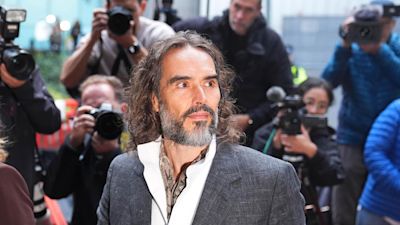
Russell Brand’s defence has launched a forceful challenge to the allegations against him, arguing that the six women who have accused the comedian of sexual offences may have been influenced by media coverage, while questioning why they did not immediately confront him over the alleged incidents.
As the high-profile trial enters its final stages at Southwark Crown Court, Brand’s barrister insists that his client’s promiscuous lifestyle should not be confused with criminal behaviour.

AD: Capeesh Restaurant
Russell Brand’s defence team has mounted a robust challenge to the prosecution’s case, questioning the credibility of the women who have accused the former comedian of rape and sexual assault and arguing that their accounts may have been influenced by the media attention surrounding allegations against him.
Brand, 51, is accused of forcing six women into sexual acts and kissing and groping them in an “obsessive” campaign to sleep with 5,000 women. Addressing the jury at Southwark Crown Court on Monday, 2 November, defence barrister Ian Winter KC sought to undermine the prosecution’s arguments by highlighting what he described as inconsistencies and unanswered questions surrounding the six complainants’ allegations.

AD: Oysterian Sea Food Restaurant And Bar
His closing submissions focused particularly on the circumstances in which the women came forward, their subsequent exposure to a 2023 television investigation and the absence of immediate complaints directly to Brand.
Winter argued that the women’s accounts could not be considered entirely independent because they emerged following the broadcast of a Channel 4 Dispatches programme investigating allegations of sexual misconduct against Brand. He suggested that the documentary may have fundamentally influenced how the complainants interpreted and subsequently presented their experiences.
Describing the women as having been brought forward through the programme, Winter told jurors that their accounts were not random or independent. He argued that the investigation had created an environment in which the complainants could reconsider their experiences and interpret events differently after hearing allegations from other women.
In one particularly significant example, the barrister referred to a fifth complainant who alleges that Brand raped her anally at his Hampstead home in 2009, following consensual vaginal sex. According to the evidence presented in court, the woman said watching the documentary had produced a profound change in her understanding of what had happened, making her realise that the experience was not her fault.
Winter questioned what her evidence might have been had she not watched the programme, suggesting that the broadcast could have influenced her recollection and interpretation of the encounter.
The defence also challenged the circumstances surrounding the alleged assaults, arguing that the complainants had not resisted, screamed or attempted to leave during the incidents they described. Winter said it was surprising that none of the women who alleged rape had made their objections known directly to Brand at the time.
Discussing the allegation involving the fifth complainant, he questioned why she had not physically attempted to stop the alleged assault. He also drew attention to a message she reportedly sent to her then-boyfriend several days later, in which she acknowledged that she had made the decision to visit Brand’s home.
However, the defence’s arguments remain submissions to the jury rather than established findings about the truthfulness of the complainants. The central question for jurors is whether the prosecution has proved the alleged offences beyond reasonable doubt, not whether the women immediately reported their experiences or physically resisted.
Winter also sought to place Brand’s sexual history within the context of the allegations, arguing that his client had engaged in extensive consensual sexual relationships during the period covered by the charges, between 1999 and 2009.
Describing it as an unusual feature of the prosecution’s case, he questioned why, among the many women Brand had sexual relationships with during those years, only three of the relevant complainants alleged non-consensual sexual activity. He argued that the prosecution had failed to provide a convincing explanation for why the alleged offences occurred in those particular circumstances while other sexual encounters were consensual.
“What matters is [Brand] had an immense amount of sex and none of it was unlawful,” Winter told the jury, maintaining that sexual promiscuity, however controversial or morally questionable, does not constitute a criminal offence.
He further argued that even manipulative behaviour in the pursuit of consensual sex was not, in itself, unlawful. According to the defence, Brand was someone who sought approval and adoration, and his behaviour should be assessed against the specific allegations rather than broader judgments about his private life. The defence’s submissions follow a forceful closing argument from the prosecution, which presented a markedly different interpretation of the six women’s experiences.
On Friday, prosecutor Riel Karmy-Jones KC urged jurors to believe the complainants, arguing that their accounts revealed similarities in Brand’s alleged behaviour. She said the women had been haunted by their experiences for years and had little to gain from coming forward publicly.
The prosecution rejected the suggestion that the 2023 documentary had manufactured or substantially influenced the allegations. Instead, it argued that the women came forward after recognising similarities between their experiences and those described by others. Karmy-Jones also argued that Brand had treated women as disposable, suggesting that the evidence demonstrated a pattern of behaviour in which charm, compliments and flirtation allegedly gave way to unwanted sexual conduct.
Brand, who took the witness stand during the trial, has denied all the allegations. He told the court that he had never engaged in non-consensual sexual activity and insisted that consent was fundamental to his relationships.
While acknowledging his previous promiscuity and describing aspects of his younger lifestyle as reckless, he rejected claims that he had forced women into sexual encounters. The comedian is facing seven charges involving six women, comprising three counts of rape, three counts of sexual assault and one count of attempted indecent assault. The allegations relate to incidents said to have occurred between 1999 and 2009.
The proceedings have attracted considerable attention, particularly following the 2023 Dispatches investigation and subsequent police inquiries. The Crown Prosecution Service authorised additional charges in December 2025, expanding the case to include allegations involving two further women.
Brand has consistently denied the accusations and pleaded not guilty to all the charges. During his evidence, he also described the personal consequences of the allegations, saying they had damaged his marriage, relationships and professional life. His wife, Laura Brand, appeared as a character witness towards the end of the defence evidence last week, before the trial moved into its closing submissions.
With both sides having now presented their principal arguments, the case is approaching a decisive stage. The defence is seeking to persuade jurors that the prosecution has not adequately established its allegations and that the influence of media coverage must be carefully considered when evaluating the complainants’ evidence. The prosecution, meanwhile, maintains that the women’s accounts are credible and that the evidence supports the charges against Brand.
Once the closing speeches have concluded, the judge will provide the jury with legal directions before the jurors retire to consider their verdicts. The judge has reminded them that the burden of proof rests entirely with the prosecution and that Brand is not required to prove his innocence.
The outcome at the moment remains in the hands of the jury. What began as a series of allegations that emerged into public view following investigative reporting has developed into a closely watched criminal trial, with competing accounts of consent, credibility and the influence of media scrutiny at its centre. The verdict will determine whether the prosecution has established the charges beyond reasonable doubt or whether the defence has successfully exposed sufficient uncertainty to secure Brand’s acquittal.
AD: Heritage And Restaurant Lounge Bar