
By Gabriel Princewill-
Oxford University has confirmed it is working with an academic to ensure that lectures interrupted by protests over trans rights can still take place, after two events were disrupted and the remaining sessions were cancelled.
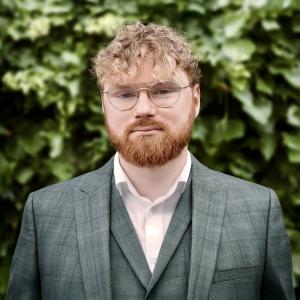
The lectures, delivered by Michael Foran, (pictured)an associate professor at the Faculty of Law, addressed sex, gender identity, and the law, topics that have sparked intense debate in recent years. The disruption comes amid a growing wave of campus protests in the UK focused on controversial issues surrounding transgender rights and single-sex spaces.

AD: Capeesh Restaurant
In recent weeks, Mr Foran’s talks were interrupted when demonstrators entered the lecture theatre. Footage from one of the events shows a protester reading from a phone, accusing the professor of transphobia and citing his work in connection with a Supreme Court ruling from the previous year. That ruling reaffirmed that the legal definitions of “woman” and “sex” under the Equality Act 2010 refer to biological sex.
Following the disruptions, Mr Foran announced over the weekend that he had cancelled the remaining lectures in the series, citing concerns for the safety and uninterrupted experience of attendees, including students. “I have made the decision to cancel the remaining lectures in the series as I cannot guarantee for attendees that further disruption won’t occur,” he wrote on social media.
The University of Oxford expressed concern about the cancellation but reiterated its commitment to freedom of speech, academic freedom, and respectful debate. A spokesperson said: “Members of our academic community must be able to teach, research, speak, and debate within the law, including on issues that are controversial or strongly contested. Equally, we support the right to lawful protest and civil disagreement.”

AD: Oysterian Sea Food Restaurant And Bar
According to the university, the first two lectures in Mr Foran’s series were delivered despite interruptions and proceeded uninterrupted after the initial disturbances. The talks coincided with the publication of Professor Foran’s latest book, and the university said it would work with him to explore ways for the remaining sessions to take place safely.
During the lectures, Professor Foran emphasised that transgender people are entitled to protection from discrimination, harassment, and violations of their human rights, and that they must be treated with dignity and respect. “They are entitled to the full protection of human rights law and the full protection of equality law,” he said. “But these protections do not confer an entitlement to access single-sex sanitary, changing, or showering facilities intended for members of the opposite biological sex.”
The issue has drawn criticism from political figures as well. Suella Braverman, Reform UK’s education spokeswoman, described the protest disruptions as “unacceptable” and said she had written to Oxford Chancellor William Hague, urging him to investigate the matter and ensure that the lectures can proceed peacefully.
This incident is not the first time Oxford University has seen lectures or events disrupted over debates surrounding gender, sex, and free speech. In 2019, a debate on gender-critical perspectives hosted by a student society attracted protests and ultimately led to the temporary cancellation of part of the event after concerns about security and student safety were raised. Similarly, in 2021, a visiting speaker from outside the university had a lecture cut short when demonstrators blocked entry and chanted slogans against their views on biological sex.
Oxford, like many institutions across the UK, has struggled to balance competing demands: protecting academic freedom while ensuring the safety and rights of all students. Universities have a legal duty to uphold freedom of speech on campus, a principle enshrined in the Education (No. 2) Act 1986, which requires institutions to take “reasonably practicable steps” to ensure that lawful speech is not disrupted. However, enforcement can be challenging when protests escalate or involve highly charged political and social issues.
Historical statistics illustrate that Oxford is not alone in facing these challenges. Between 2015 and 2022, universities across the UK reported hundreds of incidents in which guest speakers or academics had their events disrupted, delayed, or relocated due to protests over controversial topics.
Many of these cases involved debates about gender, race, and free speech. For example, data compiled by the Higher Education Policy Institute found that roughly 20% of universities surveyed had experienced at least one significant disruption of lectures or public talks each academic year.
At Oxford, these protests have often been linked to student societies and activist groups committed to highlighting perceived discrimination or transphobia. While protest is recognised as a legitimate form of civil engagement, disruptions that prevent lectures from taking place can have wider consequences for academic discourse. Experts argue that universities must provide clear guidelines and protections to enable controversial but lawful discussions to proceed, without silencing opposing voices.
The balance is delicate. On one hand, universities are committed to diversity, inclusion, and the protection of marginalised groups. On the other, they are obliged to uphold the principle that academic inquiry, even on contested or politically sensitive topics, should not be stifled. In Mr Foran’s case, the issue centres on whether discussions of sex, gender identity, and legal definitions can be held without disruption or intimidation.
Supporters of Professor Foran’s right to speak argue that open debate is essential for higher education, particularly on complex legal matters. But dissenters insist that the framing of such lectures can inadvertently create hostile environments for transgender students and staff, demonstrating the tension between free speech and inclusivity.
The Oxford University spokesperson noted that despite recent disruptions, the institution is exploring ways for the lectures to continue. This could include alternative venues, additional security measures, or the use of online platforms to ensure that students and interested members of the public can engage with the material safely.
The cancellations have sparked wider discussion across academic and political circles. Some commentators emphasise that universities risk creating a culture where the fear of protest or public backlash discourages research and public engagement on sensitive subjects. Others highlight the need to recognise the rights of students to express dissent through lawful means.
Professor Foran’s lectures also intersect with ongoing legal debates in the UK. The Supreme Court ruling cited by protesters last year clarified that, under the Equality Act 2010, references to “woman” and “sex” correspond to biological sex, not gender identity. This legal context has made the subject matter particularly sensitive, and public engagement on it often draws passionate responses from multiple perspectives.
Similar tensions have in past times emerged at other institutions. Cambridge University has faced protests over gender-critical debates, and University College London has seen repeated demonstrations during talks on sex and identity law. Across the country, universities are navigating these disputes while striving to maintain an environment conducive to both academic freedom and inclusive practice.
The wider question for institutions is how they can protect controversial academic inquiry without alienating or endangering members of the community. The Oxford protests demonstrate that this balance is increasingly difficult to achieve, yet is essential for the integrity of higher education and the principles of open debate. The cancellations and disruptions stresses a broader national conversation about the intersection of free speech, academic freedom, and activism on university campuses. While Oxford remains committed to both supporting lawful protest and protecting its academics’ right to speak on contested issues, the recent events highlight the challenges universities face in fostering discussion on sensitive social and legal matters.
A University of Oxford spokesperson told The Eye Of Media.Com: “Freedom of speech and academic freedom are fundamental to the University of Oxford.
“Members of our academic community must be able to teach, research, speak and debate within the law, including on issues that are controversial or strongly contested.
“Equally, we support the right to lawful protest and civil disagreement.
“Despite interruptions by protesters at the start, the first two talks in Professor Foran’s series proceeded and continued uninterrupted.
“We are concerned that the series will not now be completed as planned. The talks were being delivered alongside the publication of Professor Foran’s recent book and the university will work with him to explore how the remaining events can take place.

AD: Heritage And Restaurant Lounge Bar