

By Isabelle Wilson-
A treacherous and unseasonal blizzard near Mount Everest’s eastern face in Tibet has prompted a large-scale rescue effort to save hundreds of individuals, mostly tourists, caught in extreme conditions.
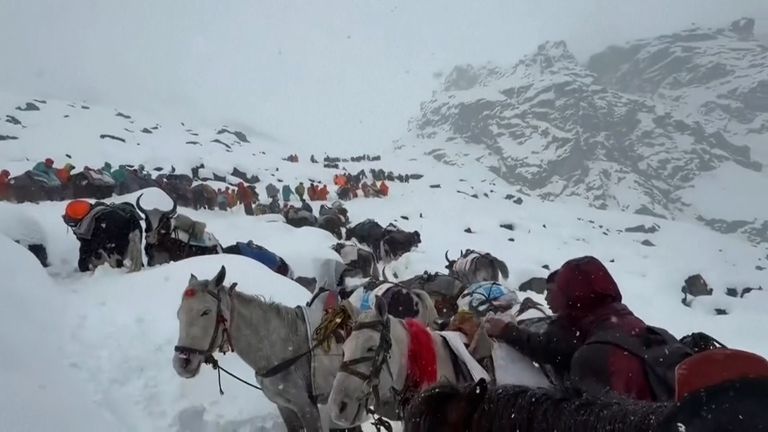
Race to rescue Everest hikers. Pic: Sky News
Initial estimates suggest nearly 1,000 trekkers were stranded in campsites situated at altitudes exceeding 4,900 meters (16,000 feet) after heavy snow and rain battered the Himalayas over the weekend.

AD: Capeesh Restaurant
Chinese state media reported on Sunday that around 350 individuals have been safely brought down to the small township of Qudang, a designated meeting point. Crucially, rescuers have established contact with the remaining 200-plus trekkers still awaiting evacuation.
The sudden and intense snowstorm, which started on Friday evening and continued throughout Saturday, quickly overwhelmed the remote Karma Valley area.
Trekker Chen Geshuang, a member of an 18-person team who reached Qudang, recounted their harrowing experience, stating, “It was so wet and cold in the mountains, and hypothermia was a real risk.” She also noted that the guides claimed the weather was highly irregular for October, saying the adverse conditions happened too suddenly.

AD: Oysterian Sea Food Restaurant And Bar
The local Tingri County Tourism Company immediately suspended ticket sales and entry to the Everest Scenic Area on Saturday night to prevent further entrapment.
Hundreds of local villagers and dedicated rescue teams have been mobilized to clear the thick snow blocking access routes and trails. These ground teams are working tirelessly to assist the trapped groups, who were in the region to take advantage of China’s week-long National Day holiday.
The blizzard’s severity, with many tents reported to have collapsed under the weight of the snowfall, highlights the constant danger posed by extreme high-altitude weather.
Rescue personnel are guiding the remaining trekkers down in stages to ensure their safe descent to Qudang. The focus remains on bringing all personnel—including trekkers, local guides, and support staff—to safety, although it remains unclear if the numbers account for the local workers.
This incident underscores the urgent need for reliable Everest snowstorm warnings and better safety protocols during peak tourist seasons.
Meanwhile, this extreme weather is affecting other parts of the region; neighbouring Nepal has tragically suffered a separate wave of flash floods and landslides. Forty-seven people died in these related incidents, and others are still missing, emphasizing the widespread impact of this unusual precipitation across the Himalayan range.
Rescue efforts continue on the Tibetan slopes to secure the safety of every single individual remaining on the mountain.

AD: Heritage And Restaurant Lounge Bar