
By James Simons-
One of Canada’s largest private English-language schools has shut down after filing for bankruptcy, leaving students facing an uncertain future and adding to growing concerns about the impact of Canada’s dramatic reduction in international student numbers.
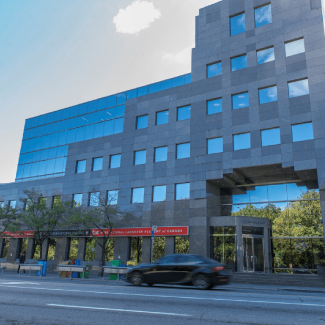
The International Language Academy of Canada (ILAC), which has operated since 1997 with campuses in Toronto and Vancouver, announced the closure on Friday, saying it no longer had the financial resources needed to continue operating.

AD: Capeesh Restaurant
In a statement posted on its website, the academy blamed mounting financial pressures over the past three years, pointing to “significant regulatory changes affecting the sector.”
“Throughout this period, we have done everything possible to ensure the school has the resources it needs to operate, while continuing to offer high-quality education to our students,” ILAC said.
“Despite these best efforts, ILAC no longer has the financial resources necessary to continue operating.”

AD: Oysterian Sea Food Restaurant And Bar
The school added that it understood the impact the decision would have on its community and said it “deeply regret[ted] the challenges” students and others would face as a result of the closure. The number of students affected was not immediately clear.
ILAC said it was working with regulators to support students through what it described as a “difficult transition”. KPMG has been appointed as the school’s insolvency trustee.
The sudden collapse of an institution that has operated for almost three decades comes as Canada’s international education sector faces major changes following a series of federal measures designed to reduce the number of international students entering the country.
The Canadian government introduced an international student cap in 2024, saying rapid growth in the temporary resident population had placed pressure on housing, infrastructure and public services. Further reductions were subsequently announced.
The latest figures from Immigration, Refugees and Citizenship Canada show just how sharply the numbers have fallen.
According to official data, 28,200 new students arrived in Canada between January and July 2026. That compares with 292,875 arrivals recorded during the whole of 2024 and 114,975 in 2025.
The government says new student arrivals between January and July 2026 were 80 per cent lower than during the same period in 2024. The figures underline the scale of the transformation facing businesses that depend heavily on international students.
ILAC’s closure illustrates how those pressures can reach institutions that have operated in the sector for many years.
The academy’s statement did not identify a single event that caused its bankruptcy. Instead, it described three years of increasingly difficult financial conditions and specifically linked those challenges to regulatory changes affecting the sector. The Canadian government, meanwhile, has defended its international student reforms as necessary to bring the temporary resident population to more sustainable levels.
IRCC says the measures are intended to ease pressures on housing and services while maintaining an international education system that remains sustainable. The government has committed to reducing Canada’s temporary population to less than five per cent of the country’s total population by the end of 2027.
The scale of the reduction can also be seen in the number of study permit holders already in Canada. IRCC reported approximately 691,215 study permit holders at the end of 2025, down from 928,430 at the end of 2024 — a decline of about 26 per cent in a single year.
The government has also tightened the rules surrounding international education, including the introduction of an intake cap on most study permit applications in January 2024, higher financial requirements for students and additional measures intended to strengthen oversight of institutions and applications.
The changes have created significant uncertainty across Canada’s education industry. Ontario has been particularly affected, with colleges reducing programmes, cutting staff and responding to declining international enrolment.
The pressures are not limited to traditional colleges and universities, however, with private education providers also exposed to the reduction in international student demand. ILAC’s closure now puts the focus on what happens to students who were enrolled at its Toronto and Vancouver campuses.
The academy said it was working with regulators to ensure students receive support during the transition, but further details about arrangements for affected students were not immediately available.
For students who travelled to Canada from overseas specifically to study English, the consequences could extend beyond the loss of a classroom. Some may have already paid tuition, accommodation and other living expenses, while others may need to determine how the closure affects their immigration or study arrangements.
The bankruptcy also represents a significant moment for a school that had become an established name in Canada’s international education industry.
Founded in 1997, ILAC built its business around international students seeking English-language education in two of Canada’s biggest cities. Its closure demonstrates how quickly changing government policy and falling student numbers can alter the financial landscape for institutions that depend on international enrolment.
Canada’s government has made clear that the era of rapidly expanding international student numbers is over. The country’s 2026 target of 155,000 new international students is less than half the 305,000 target used previously, while the government expects the number of new student arrivals to remain at 150,000 in both 2027 and 2028.
For Canada’s education sector, the question now is how many other institutions will be able to withstand the transition.
ILAC’s bankruptcy does not by itself establish that Canada’s international student restrictions caused the school’s failure. But the academy itself has explicitly attributed its financial difficulties over the past three years to regulatory changes affecting the sector, while official figures show that international student arrivals have fallen dramatically over the same period.
With students, educators, and education providers adjust to Canada’s new immigration landscape, the closure of a school that has operated for nearly 30 years is a stark sign of just how profoundly the country’s international education market is changing.

AD: Heritage And Restaurant Lounge Bar