
By Gabriel Princewill-
King Charles III hosted a vibrant reception at St James’s Palace on Wednesday, celebrating Britain’s Nigerian community — an event that blended culture, diplomacy and symbolism as the United Kingdom prepared to welcome Nigeria’s president for a major state visit.
The gathering, which brought together prominent figures from the Nigerian diaspora alongside diplomats and government representatives from Abuja, was designed to honour the cultural and economic contributions of Nigerians living in Britain ahead of a state visit by Nigeria’s president while strengthening the ties between two nations linked by history, trade and a shared Commonwealth heritage.

AD: Capeesh Restaurant
At the heart of the evening was a sense that this was more than a cultural reception. It was, in effect, the diplomatic overture to the forthcoming state visit of Nigerian President Bola Ahmed Tinubu, whose arrival in Britain is expected to mark a significant moment in the evolving relationship between London and Africa’s most populous nation.
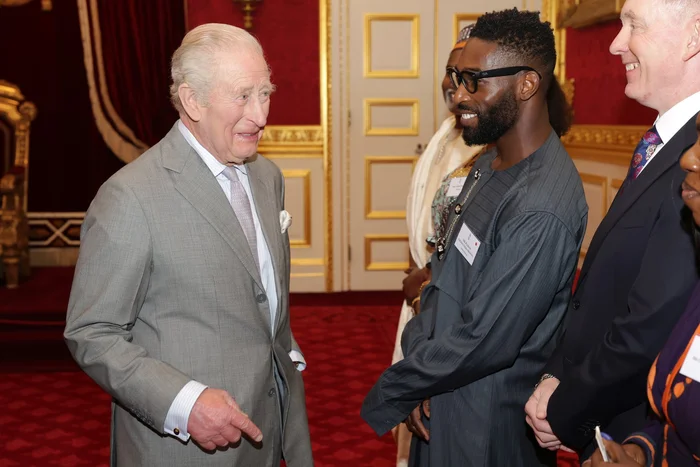
Moving through the reception rooms, the King greeted guests with the measured ease that has defined his decades of public life. Conversations ranged from Nigeria’s vibrant music scene to economic cooperation between the two countries, with the monarch pausing frequently to listen to guests’ stories and reflections about the Nigerian community in Britain.
Among those he met was British-born rapper and entrepreneur Tinie Tempah, whose presence highlighted the remarkable influence of Nigerian culture within Britain’s creative industries. The musician- whose real name is Patrick Chukwuemeka Okogwu. whose chart-topping hits helped bring British hip-hop to a global audience, exchanged a light-hearted moment with the King during their conversation, reflecting the relaxed tone of the evening.

AD: Oysterian Sea Food Restaurant And Bar
The meeting symbolised the journey of the Nigerian diaspora itself. From the early generations who arrived in Britain during the post-war decades to the contemporary wave of entrepreneurs, academics and artists reshaping Britain’s cultural landscape, Nigerians have become one of the country’s most visible and successful immigrant communities.
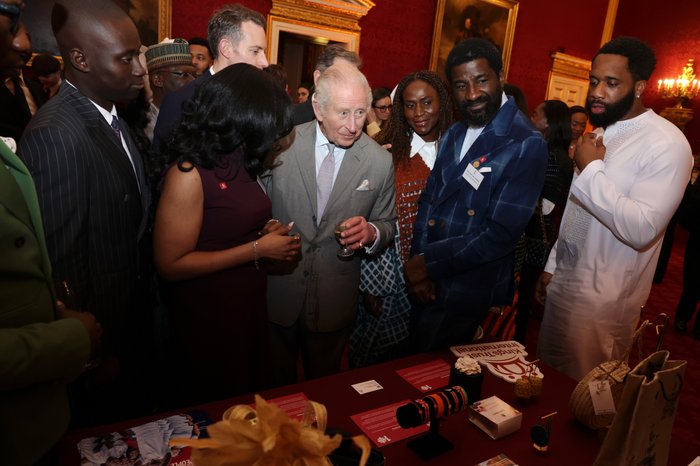
The evening was filled with music, food and conversation reflecting Nigeria’s cultural diversity. Afrobeat rhythms echoed through the palace rooms, while traditional Nigerian cuisine was served to guests who had travelled from across the United Kingdom to attend.
Alongside the cultural festivities, the reception also carried an unmistakable diplomatic purpose. Among the guests were senior representatives of the Nigerian government, including Abike Dabiri-Erewa, Chairman and Chief Executive Officer of the Nigerians in Diaspora Commission, and Yusuf Tuggar, Nigeria’s Minister of Foreign Affairs.
Their presence underlined the strategic significance of the gathering.
Dabiri-Erewa, who has spent years advocating for stronger engagement between Nigeria and its diaspora communities around the world, spoke warmly with guests about the importance of cultural diplomacy and the role Nigerian expatriates play in strengthening the country’s international relationships.
The reception represented recognition at the highest level of the impact Nigerians abroad have had on global culture, business and politics.
Similarly, Tuggar’s attendance emphasised the political dimension of the event. As Nigeria’s top diplomat, his presence at the palace reception signalled that the evening was part of a broader diplomatic effort to reinforce bilateral relations ahead of the presidential visit.
Diplomatic
The state visit by President Tinubu is expected to be one of the most significant diplomatic engagements of the year. Nigeria is Africa’s largest economy and one of its most influential political powers, making its relationship with the United Kingdom strategically important in areas ranging from trade and investment to security cooperation and climate policy.
Royal state visits, with their elaborate ceremonies and centuries-old traditions, remain one of Britain’s most effective instruments of diplomatic soft power. By extending the highest form of ceremonial hospitality to a visiting head of state, the monarchy creates an atmosphere of prestige and goodwill that can shape the tone of political discussions behind closed doors.
The reception celebrating the Nigerian diaspora can be viewed as an early stage in that carefully orchestrated process. It also allowed the King to highlight one of the defining characteristics of modern Britain. Its multicultural identity.
In recent decades, Nigerian culture has had a profound impact on British life. From the explosive popularity of Afrobeat music to the growing prominence of Nigerian-British writers, filmmakers and entrepreneurs, the community has become a vital part of the country’s cultural fabric.
British universities also host tens of thousands of Nigerian students each year, owing to the very high and competitive academic standards in West Africa’s most populous country. Nigerian doctors, engineers and financial professionals also play critical roles across the UK economy.
By celebrating those contributions in the historic surroundings of St James’s Palace, the King was acknowledging both the historical ties between Britain and Nigeria and the contemporary reality of their interconnected societies.
The evening also resonated with the King’s long-standing interest in the Commonwealth — the international network of 56 nations, many of them former British colonies, which he has championed for decades as a platform for cooperation and dialogue.
Nigeria, one of the Commonwealth’s largest members, has always occupied a significant place within that network.
Over the years Charles has visited Nigeria several times, meeting community leaders, environmental activists and young entrepreneurs during trips that reflected his interest in sustainable development and cultural exchange.
Those experiences have shaped his view of Nigeria not merely as a diplomatic partner but as a nation with deep cultural and human connections to Britain. The reception therefore carried a personal dimension as well as a political one.
As guests moved between the palace rooms, the atmosphere remained lively and informal. Conversations flowed easily between Nigerian community leaders and British officials, musicians and diplomats, entrepreneurs and academics. Many spoke about the role the diaspora plays as a bridge between the two countries.
Global Network
Citizens living abroad represent a powerful global network capable of driving investment, innovation and cultural influence. Remittances sent home by Nigerians overseas amount to billions of dollars annually, making the diaspora one of the country’s most important economic lifelines.
For Britain, the Nigerian community has become a dynamic force in business, technology and the arts.
Figures like Tinie Tempah represent only the most visible layer of a much broader success story.
Across Britain, Nigerian-British professionals are prominent in fields ranging from finance and medicine to law and academia. Their achievements have helped reshape perceptions of the diaspora while reinforcing the cultural connections between Britain and Nigeria.
The palace reception captured that spirit of achievement and exchange.
Guests described the evening as both celebratory and meaningful — an opportunity to bring together people whose work spans continents but whose identities remain rooted in shared heritage.
As the evening progressed, the King continued to circulate among the attendees, engaging in conversations that ranged from Nigeria’s music scene to the future of UK-Africa relations.
Observers noted that such interactions are often an understated but essential component of royal diplomacy.
While government ministers handle the formal negotiations between nations, the monarchy’s role lies in creating spaces where cultural connections and personal relationships can flourish.
That soft diplomacy, built through receptions, state banquets and cultural events, has long been one of the Crown’s most powerful tools on the international stage.
It is also a reminder that diplomacy does not exist solely in conference rooms or policy briefings.
Sometimes it unfolds in quieter moments — a conversation between a king and a musician, a handshake between diplomats, or a shared meal celebrating a nation’s culture.
As Britain prepares to welcome President Tinubu in the coming days, the reception at St James’s Palace will likely be remembered as the opening act of a larger diplomatic performance.
When the Nigerian president arrives, he will be greeted with full ceremonial honours in a state visit that will include a carriage procession, military salutes and a state banquet attended by members of the royal family.
Such events, steeped in centuries of tradition, remain powerful symbols of the relationships between nations.
The celebration of the Nigerian diaspora was therefore more than a cultural gathering. It was a statement about the enduring relationship between Britain and Nigeria, one shaped by history but constantly evolving through the contributions of people living and working across both nations.
As the final conversations of the evening unfolded beneath the palace chandeliers, the message behind the event became clear.
The ties between Britain and Nigeria are no longer defined solely by politics or colonial history.
They are evidently shaped by music and migration, by business and education, by the countless individuals whose lives connect the two countries in ways both visible and unseen.
It was a celebration of culture, a gesture of diplomacy and a reminder that the most enduring relationships between nations are often built not just by governments, but by people.

AD: Heritage And Restaurant Lounge Bar
And as Britain prepares to roll out the ceremonial red carpet for Nigeria’s president, the echoes of that evening at St James’s Palace will linger — a prelude to a state visit that aims to strengthen one of the most important partnerships between the United Kingdom and the African continent.