
By Ben Kerrigan-
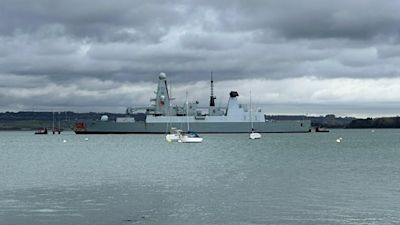
The Royal Navy’s warship HMS Dragon has departed from Portsmouth Naval Base this week, setting sail towards Cyprus and the Eastern Mediterranean amid the escalating conflict in the Middle East. The deployment marks a significant shift in the UK’s military posture, coming after recent attacks on British military assets in the region and as allied forces respond to heightened tensions following the outbreak of war involving Iran. With its advanced air‑defence capabilities, the Type 45 destroyer will play a central role in protecting UK bases and personnel based in Cyprus.
The 152‑metre warship, home to a crew of around 200 sailors, left Portsmouth Harbour on March 10, 2026, sailing into the Solent and beyond as families and well‑wishers waved from the dockside. HMS Dragon’s main task is to bolster air defence around RAF Akrotiri, a UK air base in Cyprus, which was recently targeted by a suspected Iranian‑made drone strike.

AD: Capeesh Restaurant
The move to send the destroyer underlines the UK government’s desire to protect its strategic interests and military personnel in a volatile theatre.
Equipped with the Sea Viper air‑defence missile system, HMS Dragon is designed to detect, track and neutralise threats such as drones, aircraft, and missiles over vast distances. Defence officials highlighted the ship’s ability to fire eight Sea Viper missiles in less than ten seconds, reflecting its role as a linchpin in the Royal Navy’s maritime deterrent.
Preparing the vessel for this mission was a race against time: what would normally be six weeks of maintenance and loading work was compressed into just six days to meet operational needs.

AD: Oysterian Sea Food Restaurant And Bar
The decision to deploy HMS Dragon comes as the conflict in the Middle East has broadened beyond initial combat zones. After joint US‑Israeli military strikes on Iranian targets earlier in late February, regional tensions have surged, prompting attacks and counter‑attacks involving multiple state and non‑state actors.
Cyprus has become a focal point in this regional dynamic: its geographical proximity and the hosting of UK military facilities have elevated its strategic importance for Western defence planning.
Earlier this month, a drone strike damaged the runway at RAF Akrotiri, underscoring how British bases are now within the operational range of increasingly sophisticated missile and drone threats. In response, the UK has not only dispatched HMS Dragon but also bolstered other defensive assets, including counter‑drone helicopters and advanced fighter aircraft already operating in the region.
Critics have questioned why a warship was not deployed sooner, pointing to the readiness issues and maintenance status of the Royal Navy’s fleet. Compared to allied forces such as France and Greece, which sent naval assets earlier, Britain’s response was seen by some commentators as slower than expected, sparking debate about the Royal Navy’s capacity and resources in light of budgetary constraints.
Nonetheless, the Ministry of Defence has defended its actions, emphasising that multiple layers of air defence including ground‑based systems, RAF jets, and now HMS Dragon are contributing to a coordinated effort to safeguard UK interests. Defence Secretary John Healey praised the rapid mobilisation of personnel and technical staff that enabled the destroyer’s deployment on short notice.
While the sailors aboard HMS Dragon, the mission represents both professional duty and personal sacrifice. Loved ones gathered along the waterfront as the vessel slipped away from Portsmouth, acknowledging the uncertainty of the journey ahead. Many expressed pride in their family members’ service, even amid concerns about entering a tense and unpredictable conflict zone.
Allied Presence and the Broader Regional Role
HMS Dragon’s deployment is part of a broader military buildup in the Eastern Mediterranean as Western powers and regional partners adjust to the shifting security landscape. The UK is not acting alone: allied nations have also moved to reinforce defensive positions. For example, French and Greek naval assets have been reported arriving in and around Cypriot waters, complementing the UK’s contribution.
In addition to warships, the UK has positioned counter‑drone helicopters such as the Wildcat and Merlin aircraft in Cyprus, enhancing surveillance and response capabilities against potential aerial threats. These measures aim to create an integrated shield that can detect, deter and intercept hostile activity, whether from drones or ballistic systems.
Analysts note that the UK’s strategic interests in the Eastern Mediterranean extend beyond immediate defence of bases. The region’s proximity to the volatile Levant and Gulf theatre means that Britain alongside NATO allies must balance deterrence with diplomatic engagement to prevent further escalation.
The presence of a Type 45 destroyer, seen as one of the most advanced air‑defence platforms in the world, signals Britain’s intent to be a capable and committed security partner in a complex geopolitical environment.
With Cyprus itself, the presence of allied naval forces brings both reassurance and political sensitivity. The Cypriot government, while generally supportive of security cooperation, has previously expressed disappointment in the slowness of some responses to threats against its territory and bases.
The deployment of HMS Dragon may address some concerns, but also highlights the challenges small states face in balancing sovereignty with reliance on larger powers for defence support.
While HMS Dragon continues its journey toward the Eastern Mediterranean, the region watches closely. The UK government has reiterated that its mission is defensive in nature, focused on protecting personnel and assets rather than direct combat involvement.
Yet the very act of deploying a warship into a theatre of tension speaks volumes about the seriousness with which Britain views the evolving crisis.
The coming days and weeks could see HMS Dragon take up station near Cyprus, joining allied forces in a concerted effort to stabilise a rising conflict that has already drawn in global powers.
With the destroyer navigates the eastern Mediterranean, its presence will serve both as a deterrent and as a reassurance to British and allied personnel stationed in Cyprus, signalling that the UK is prepared to protect its interests and respond to potential threats.
How long the warship will remain on station, or what additional missions it may undertake, will hinge on the evolving dynamics in the Middle East, where tensions remain volatile and incidents can escalate rapidly.
Analysts suggest that the operational flexibility of a Type 45 destroyer allows it to pivot quickly between defensive air‑patrols, escort duties, and surveillance operations, depending on the changing security environment.
Beyond the immediate military implications, the deployment underscores the UK’s commitment to multilateral coordination with NATO partners and regional allies.
HMS Dragon is expected to integrate with French, Greek, and Cypriot naval units, sharing intelligence and providing a layered defence against potential aerial and missile threats.
Its deployment also reflects a broader strategic calculus: ensuring that British forces maintain a credible presence in a region where geopolitical stakes are high and where swift response capabilities may prevent localised incidents from spiralling into larger confrontations.
With the Royal Navy and the Ministry of Defence, the departure from Portsmouth is more than a routine rotation. It highlights the complexities of modern naval operations, where ships must balance readiness, rapid deployment, and technological capabilities against the unpredictability of global crises.
In a world where political, military, and humanitarian considerations intersect, HMS Dragon’s journey to Cyprus epitomises the careful blend of strategic foresight and operational agility required to navigate uncertainty. It is a reminder that even as diplomacy seeks solutions, the presence of capable and responsive military forces remains a cornerstone of national security and international stability.

AD: Heritage And Restaurant Lounge Bar