
By Tony O’Reilly-
In a landmark decision on Friday, the UK High Court ruled that the government’s decision to ban the pro-Palestinian campaign group Palestine Action was unlawful, granting a significant legal victory to the group’s co-founder, Huda Ammori.
The High Court judges found that the Home Office’s proscription of Palestine Action under the Terrorism Act 2000 — a move that placed the organisation alongside recognised terrorist groups — disproportionately interfered with fundamental rights to freedom of expression and assembly.

AD: Capeesh Restaurant
The government, led by then-Home Secretary Yvette Cooper, banned Palestine Action on 5 July 2025, classifying it as a terrorist organisation. That decision criminalised membership or support for the group with penalties of up to 14 years in prison.
The proscription was unprecedented: it was the first time a direct action, civil disobedience group — rather than a violent extremist organisation — was designated under UK terror laws. The move drew immediate criticism from human rights organisations, who described it as a potential abuse of state power and an overreach into protected democratic freedoms.
Ms Ammori, who co-founded Palestine Action in 2020, launched a judicial challenge to the proscription, arguing that the government’s decision lacked proper consultation, was disproportionate, and curtailed legitimate political dissent. Born in Bradford to a Palestinian father whose family was displaced during the 1967 Naksa, Ammori has been a prominent voice in UK pro-Palestinian activism.

AD: Oysterian Sea Food Restaurant And Bar
Her legal action marked the first occasion that a proscribed organisation had
A panel of three judges, led by Dame Victoria Sharp, ruled that parts of the government’s justification for the ban were unlawful and that the imposition of terror-level restrictions on protest activity represented an excessive incursion on civil liberties.
Despite this victory, the proscription technically remains in force for now, as the government has been given time to consider an appeal.
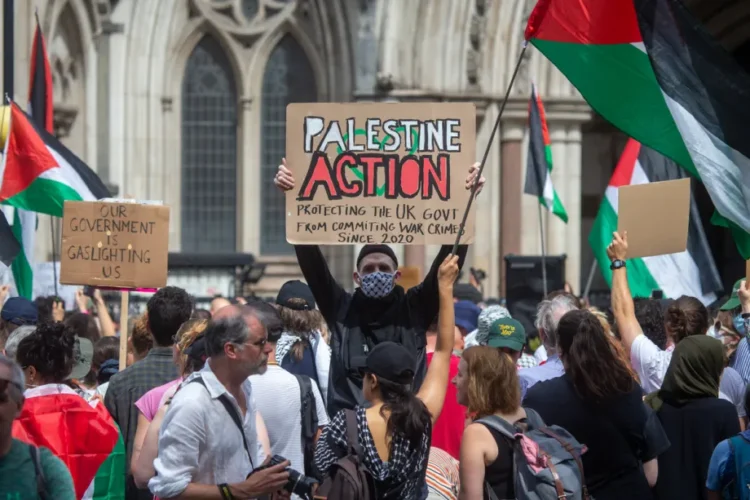
Outside the Royal Courts of Justice, supporters of Palestine Action welcomed the judgment, chanting slogans and hailing the ruling as a “monumental victory for free speech”.
Wider Impact and Political Debate
Since the proscription came into effect, more than 2,000 people were arrested under terrorism laws, including people attending peaceful protests or holding signs supportive of the group’s aims.
Human rights advocates have warned that the government’s approach risked creating a chilling effect on legitimate protest and political debate, particularly around contentious issues such as UK foreign policy and the war in Gaza.
Government officials have in turn defended the ban, citing concerns about escalating direct actions by Palestine Action against UK and Israel-linked defence companies. These actions, including property damage at military facilities, were central to the Home Office’s argument that proscription was justified.
Legal analysts say the ruling could have far-reaching implications — not only for those prosecuted under the ban, but for the scope of anti-terror legislation in the UK. Dozens of pending cases against protesters may now be affected if the proscription is ultimately lifted.

AD: Heritage And Restaurant Lounge Bar