
By Segun Ade-
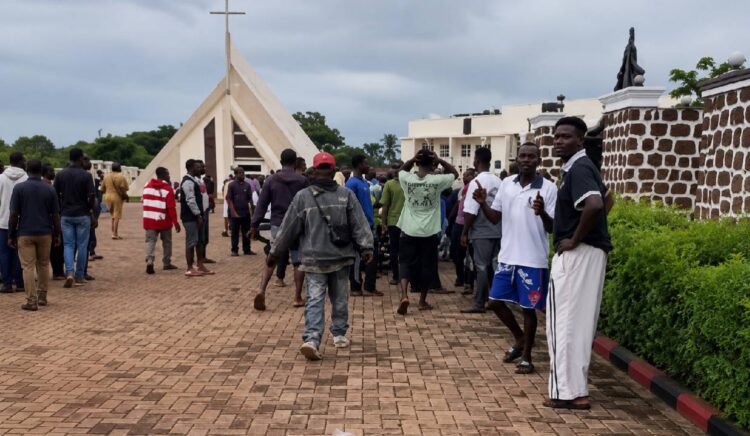
Gunmen attacked mourners in north-central Nigeria after a funeral ceremony, killing at least eight people and injuring five others in the latest outbreak of violence to hit Benue state, according to police.
The assault, which took place in the early hours of Sunday in the Otukpo-Nobi community, has renewed concerns over persistent insecurity in one of Nigeria’s most important agricultural regions, where recurring attacks have claimed hundreds of lives in recent years. While authorities have launched a security response, rights groups and local residents say the violence reflects a broader failure to protect communities from armed raids that continue to devastate lives and livelihoods. Benue State Police Command spokesperson Udeme Edet said the gunmen opened fire on people gathered after a funeral, leaving eight people dead and five others wounded. The attack occurred before dawn, catching residents by surprise and triggering panic throughout the community. In addition to the fatalities and injuries, the attackers reportedly set several thatched houses ablaze and burned a motorcycle before fleeing the area.

AD: Capeesh Restaurant
Police have since deployed additional security personnel to the affected community in an effort to restore calm and prevent further violence. Authorities have not yet established the motive behind the attack, and investigations are continuing. No group has claimed responsibility, and police have not announced any arrests. The absence of a clear explanation has heightened anxiety among residents, many of whom fear that the incident could be linked to the broader cycle of violence that has plagued Benue state for years.
Benue, located in Nigeria’s north-central region, is widely regarded as one of the country’s food baskets because of its fertile land and extensive agricultural production. However, the state has become a flashpoint for recurring conflicts, particularly between farming communities and nomadic herders competing for access to land and water resources.
Population growth, climate pressures, desertification in northern areas and disputes over grazing routes have intensified tensions, with clashes frequently escalating into deadly attacks on villages.

AD: Oysterian Sea Food Restaurant And Bar
The latest assault comes less than a year after another major tragedy in Benue. In the Yelewata community, around 150 people were killed in one of the deadliest attacks recorded in the state, underscoring the scale of the security challenge confronting Nigerian authorities. Such incidents have become increasingly common across parts of north-central Nigeria, where armed groups often raid rural communities, leaving behind destruction, displacement and widespread fear. Apart from the longstanding farmer-herder conflict, criminal gangs operating across the region have also contributed to growing insecurity through kidnappings, armed robberies and attacks on isolated settlements. Residents of many rural communities have repeatedly complained that security forces often arrive only after attacks have occurred, allowing armed assailants to escape without being apprehended.
Human rights organisation Amnesty International Nigeria reported a higher death toll than official police figures, saying at least 10 people were killed in the Otukpo-Nobi attack. Discrepancies between official casualty counts and those reported by rights groups are not uncommon following violent incidents in Nigeria, particularly in remote areas where access is difficult and information emerges gradually. Independent verification of casualty figures often takes time as authorities continue search and recovery operations. Amnesty International said the attack sparked protests by young people in Benue state, with demonstrators expressing frustration over what they see as the government’s inability to end recurring killings, raids and abductions. According to the organisation, many residents believe they have endured years of violence without adequate protection or justice, leaving communities trapped in a cycle of fear and uncertainty.
The rights group said the demonstrations reflected growing public anger over deteriorating security conditions, arguing that repeated attacks have made life unbearable for many people living in Benue. It urged Nigerian authorities to take stronger measures to protect vulnerable communities and prevent further bloodshed, stressing that safeguarding lives and property remains one of the government’s most fundamental responsibilities.
“The government must live up to its main obligation of protecting lives and property,” Amnesty International Nigeria said in a statement responding to the attack.
The attack has added another chapter to a long history of violence affecting communities across the state for residents of Otukpo-Nob. Funeral gatherings are traditionally moments of communal solidarity and mourning, making attacks on such occasions particularly traumatic. Survivors now face not only the emotional toll of losing relatives and neighbours but also the destruction of homes and property that leaves families struggling to rebuild. The burning of thatched houses during the attack has compounded humanitarian concerns, as displaced families may require emergency shelter and assistance. Rural communities in Benue often depend heavily on farming for survival, and repeated attacks disrupt agricultural activities, reduce food production and deepen economic hardship. The destruction of homes, livestock and farming equipment further weakens the resilience of communities already coping with insecurity.
Security analysts have repeatedly warned that sustained violence in Benue threatens not only local populations but also Nigeria’s wider food security. As one of the country’s leading agricultural states, prolonged instability can disrupt planting and harvesting seasons, reduce crop yields and affect food supplies across the country. Farmers who fear attacks may abandon their fields, while displacement forces many families to seek refuge elsewhere, further reducing agricultural output.
The Nigerian government has in recent years announced various security operations aimed at tackling armed violence in Benue and neighbouring states. However, despite periodic deployments of military and police personnel, attacks continue to occur, raising questions about the effectiveness of existing strategies. Community leaders and civil society groups have consistently called for more proactive security measures, improved intelligence gathering and greater accountability for perpetrators.

AD: Heritage And Restaurant Lounge Bar