
By Tony O’Reilly-
Rail passengers across Scotland and northern England are facing significant travel disruption after a major fire near Glasgow Central Station forced the closure of the country’s busiest railway hub, leaving thousands of commuters scrambling for alternative routes and travel updates.
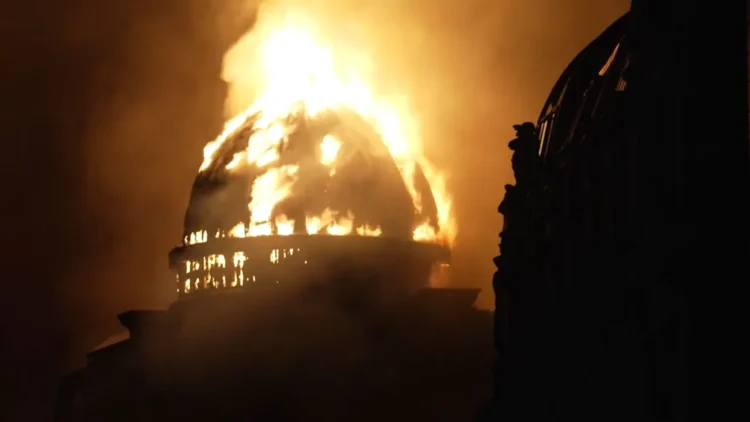
The blaze erupted on the afternoon of 8 March in a commercial building on Union Street in the heart of Glasgow, sending thick plumes of smoke over the city centre and prompting an emergency response that lasted well into the evening. According to reports from Scottish Fire and Rescue Service, crews were alerted shortly before 4pm to a fire affecting the ground floor of a four-storey building near the station.

AD: Capeesh Restaurant
As flames spread through the structure, emergency responders deployed multiple fire engines and high-reach vehicles in an effort to contain the blaze. At its height, more than 60 firefighters battled the flames as parts of the building reportedly collapsed, raising concerns about the safety of nearby infrastructure and forcing authorities to cordon off surrounding streets.
Rail authorities swiftly announced that the station would close “until further notice,” warning passengers that services to and from the high-level platforms had been completely suspended. Even trains operating through the underground platforms were forced to bypass the station without stopping, creating knock-on disruption across the wider rail network.
Officials warned travellers that delays and cancellations would likely continue throughout Monday, urging passengers to check updates before leaving home. For thousands who rely on Glasgow Central as a gateway to cities across the UK, the sudden shutdown created a ripple effect felt far beyond the city itself.

AD: Oysterian Sea Food Restaurant And Bar
While emergency crews worked through the night to bring the blaze under control, the scale of disruption became increasingly clear. National Rail confirmed that the station would remain closed with no immediate estimate for reopening, advising passengers that disruption on routes to, from, and through Glasgow Central could last throughout the day.
Dozens of services were cancelled within hours of the fire breaking out, with operators across the UK rail system forced to quickly revise their schedules. ScotRail announced that no trains would operate to or from the station’s high-level platforms, which normally handle the majority of long-distance and commuter services.
The disruption also affected key cross-border routes. Services run by Avanti West Coast between Glasgow and London were shortened to terminate at stations such as Motherwell or Preston, requiring passengers to make additional connections to reach their destinations. Meanwhile, TransPennine Express cancelled several services linking Glasgow with Manchester and Liverpool.
Commuters across western Scotland felt the immediate impact. Regular routes connecting towns like Paisley, Johnstone and Bishopton to Glasgow’s city centre were severely disrupted, leaving many morning travellers seeking alternative transport options or delaying journeys altogether.
Despite the scale of the incident, emergency officials confirmed there had been no reports of casualties. Firefighters continued to monitor the scene overnight to ensure the blaze was fully extinguished and to assess structural damage to nearby buildings.
Authorities also urged the public to avoid the immediate area surrounding the station while crews worked to secure the site and remove unstable debris. Roads around Union Street and neighbouring thoroughfares were temporarily closed as police maintained a safety perimeter.
The dramatic incident drew swift reaction from political leaders and local officials as emergency services worked to stabilise the situation.
John Swinney expressed concern following the fire and thanked first responders for their efforts in tackling the blaze and protecting nearby buildings. In a public message, he urged residents and travellers to follow official guidance and remain cautious while emergency operations continued.
The fire also raised concerns about the vulnerability of historic city-centre buildings. Some of the affected structures in the area date back to the nineteenth century, reflecting Glasgow’s Victorian architectural heritage. When flames engulfed the Union Street building, witnesses reported hearing loud cracking noises as sections of the structure gave way under the heat.
Local businesses in the surrounding district were temporarily evacuated as a precaution, while several nearby hotels and restaurants closed while authorities assessed the safety of adjacent buildings. Smoke from the fire was visible across large parts of the city centre, prompting warnings for residents to keep windows closed while crews tackled the blaze.
Although early assessments suggested the station itself had not suffered major structural damage, rail officials emphasised that extensive safety inspections would be required before services could safely resume. Engineers from Network Rail were expected to examine the station’s infrastructure, including track, signalling systems and roof structures, to ensure the fire had not caused hidden damage.
With travellers, the closure highlighted the critical role Glasgow Central plays in the national rail network. Handling tens of millions of passengers annually, the station acts as the main transport hub linking Scotland’s largest city to destinations across the UK. Even short disruptions can cascade through the network, affecting journeys hundreds of miles away.
Transport analysts noted that the incident illustrates the fragile balance within modern rail systems, where a single unexpected event can quickly ripple through interconnected routes and schedules. With major operators sharing tracks and stations, disruptions in one location often spread across multiple regions.
Passengers have been advised to monitor travel updates and consider alternative routes where possible. Nearby stations such as Glasgow Queen Street have continued operating, though with increased passenger demand as travellers attempt to reroute their journeys.
With investigations into the cause of the fire begin, city officials and transport authorities are focusing on restoring safe operations at Scotland’s busiest station. The coming days will likely involve structural assessments, debris removal and coordination between emergency services and rail engineers.
Until then, commuters across Scotland remain on alert for continued disruption, waiting for the moment when trains once again begin arriving and departing beneath the iconic glass roof of Glasgow Central Station. To many travellers, the closure has become a stark reminder of how central the station is to the daily rhythm of transport across the country.
Each weekday, tens of thousands of passengers pass through its concourses on their way to work, school, and long-distance destinations, making it one of the busiest railway terminals in the United Kingdom.
With services temporarily suspended or rerouted, rail operators are urging passengers to remain patient as engineers and safety inspectors carry out detailed assessments around the site of the blaze.
Specialists from Network Rail are expected to examine nearby track lines, signalling equipment, and overhead structures to ensure that smoke damage or falling debris has not compromised critical railway infrastructure. These checks are essential before trains can safely return to normal operations.
Transport providers have also been working to manage the sudden shift in passenger demand. Nearby hubs, including Glasgow Queen Street Station, have seen increased foot traffic as commuters attempt to reroute journeys through alternative lines.
Rail staff have been deployed to assist travellers navigating timetable changes, while digital information boards and travel apps continue to relay updates as they become available.
Local authorities say restoring full service remains a top priority, but safety will ultimately determine the pace of reopening. Until officials give the all-clear, the focus remains on stabilising the affected area and ensuring that any structural risks linked to the fire are eliminated.
While passengers waiting for their regular trains to return, the disruption may be temporary, but the impact has already rippled across Scotland’s transport network. Crews work behind the scenes to bring the station back to life, commuters are watching closely, eager for the familiar sound of departing trains to signal a return to normal travel.

AD: Heritage And Restaurant Lounge Bar