

A disturbing level of insecurity plagues minority communities across England and Wales, prompting frightened worshippers to turn to volunteer escorts for safe passage home.
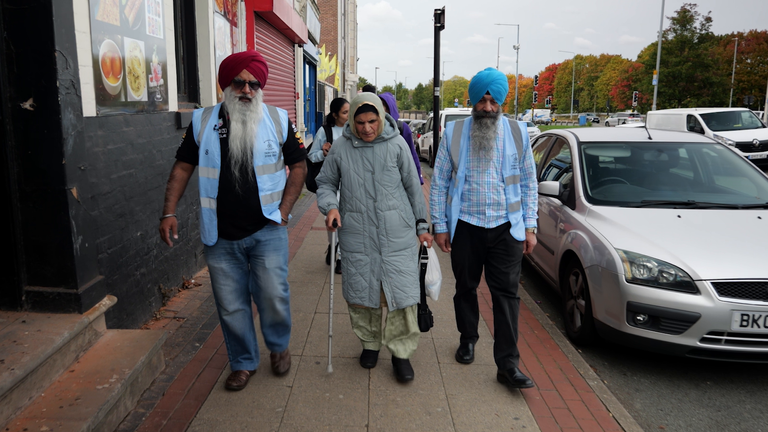
Sarbjit Singh and Mangat Singh walking Resham Kaur home from the gurdwara. Pic: Sky News
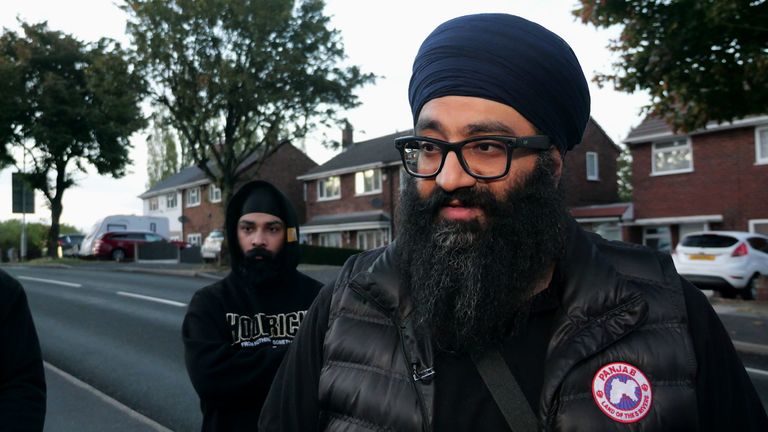
Monty Singh says they are ‘not vigilantes’. Pic: Sky News
Seventy-six-year-old Resham Kaur, a devout Sikh who immigrated to the UK from India at age eighteen, expressed her profound concern, saying, “I don’t remember feeling this unsafe ever before.” Mrs. Kaur waits for two dedicated men to walk her home from the gurdwara, the Sikh place of worship, as anxieties over escalating physical and verbal racial abuse continue to intensify.
She puts on her shoes and reaches for her walking stick before admitting that daily life now includes fear, contrasting sharply with the confidence she felt upon first arriving in the country. “It’s a lot worse now,” she confides, an admission reflecting the disturbing sense of fragmentation many feel is currently dividing Britain’s diverse communities.

AD: Capeesh Restaurant
This rising vulnerability comes alongside new official data revealing that police in England and Wales have a record high number of religious hate crime incidents. Volunteers are now stepping up across the country, unwilling to let this Religious hate crime fear paralyze their communities.
Sarbjit Singh, a bakery worker, and Mangat Singh, who works on a salad farm, regularly dedicate their days off to escorting congregation members to and from the gurdwara in Smethwick, West Midlands. They provide this service because safety concerns have demonstrably caused attendance numbers at the gurdwara to fall dramatically.
Sarbjit emphasized the necessity of their immediate action, saying, “We have to do something. We can’t just sit in silence.” He strongly added that they cannot simply allow the congregation to remain at home due to Religious hate crime fear.

AD: Oysterian Sea Food Restaurant And Bar
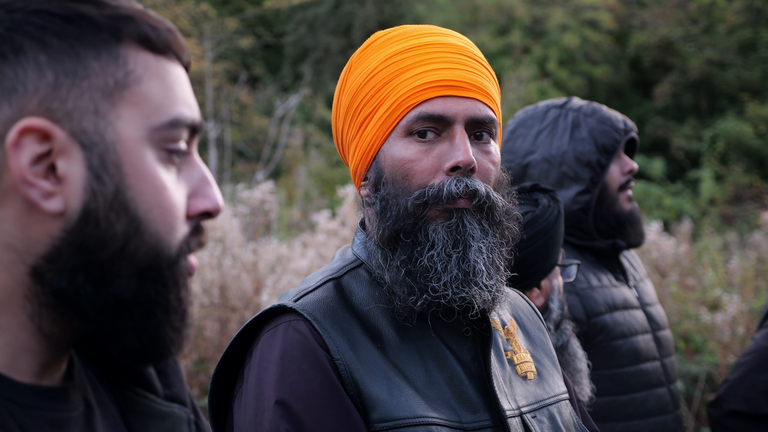
Pic: Sky News
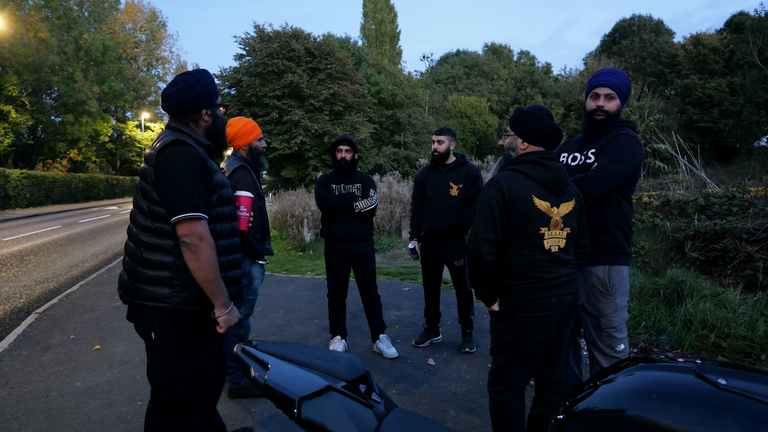
The Oldbury patrol. Pic: Sky News
This grassroots organizing extends beyond simple escorts; other groups of Sikh men are actively joining community patrols along roads in nearby Oldbury. This heightened visibility follows a recent alleged rape of a young Sikh woman and a separate assault on two Sikh taxi drivers in Wolverhampton in August, both incidents authorities are treating as racially aggravated. Monty Singh, participating in the patrols, stressed that they are “not vigilantes,” clearly aiming to support their community and do the right thing.
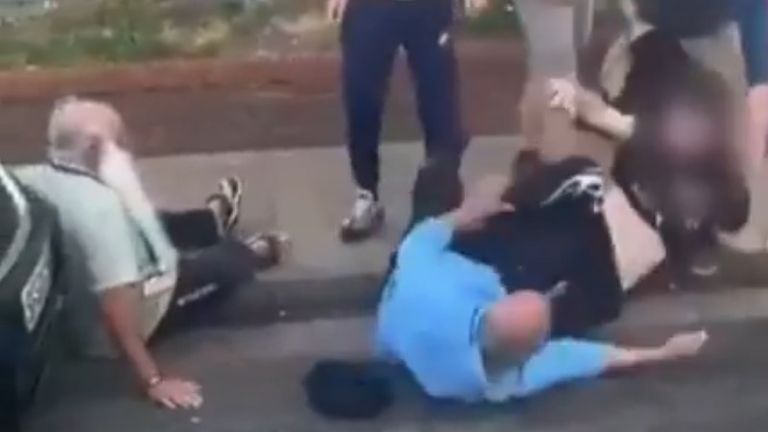
Two Sikh taxi drivers were allegedly assaulted in Wolverhampton in August. Pic: Sky News
Pervinder Kaur, the gurdwara’s vice president, believes that a summer of intense demonstrations outside hotels housing asylum seekers and a renewed national debate about immigration have emboldened racial abusers. “People are more verbal about it now,” she notes, observing that abusers no longer seem scared of consequences, thereby propagating a pervasive Religious hate crime fear.
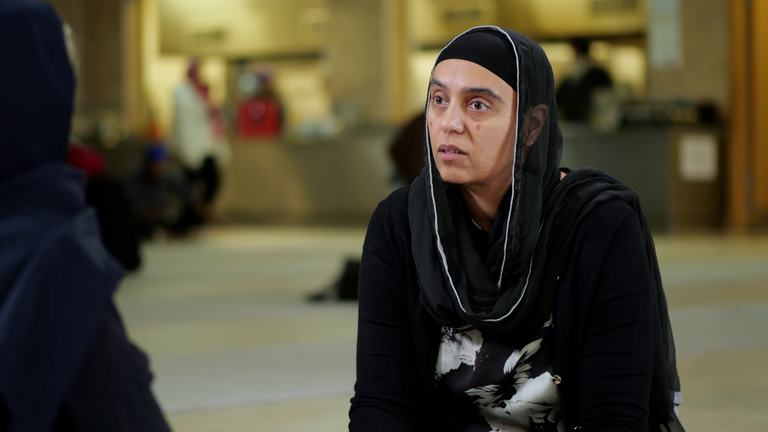
Pervinder Kaur said before the summer people felt safe, but racial abuse is being emboldened. Pic: Sky News
This feeling of vulnerability is tragically common among various minority communities, prompting security measures to also be stepped up at mosques across the country. Imam Adam Kantar, speaking from the Rumi Mosque in Edmonton, north London, mentioned that many people are now limiting their children’s outdoor time after certain hours.
Husbands increasingly prefer to go shopping instead of their wives who wear the hijab, further illustrating the impact of widespread intimidation. Imam Kantar stressed the need to engage with the wider community and consistently demonstrate their love for this country, concluding, “The Union Jack is our flag.”
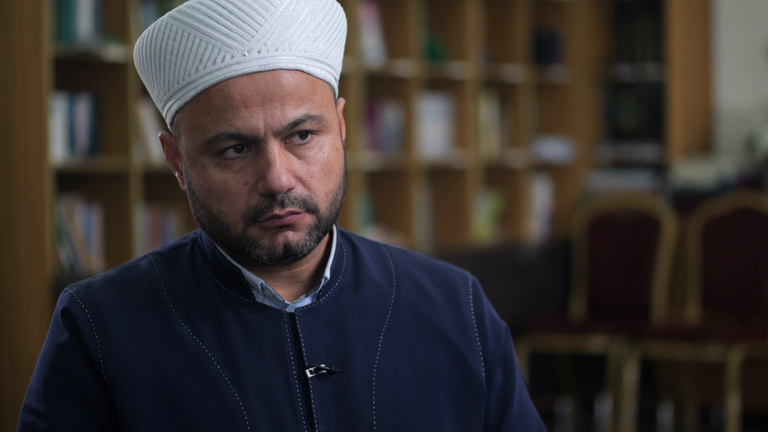
Iman Adam Kantar said ‘the Union Jack is our flag’. Pic: Sky News
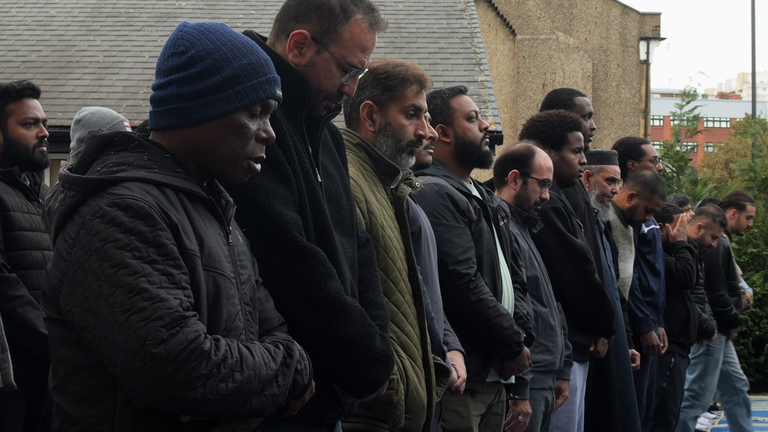
Friday prayers at the Rumi Mosque in Edmonton, north London. Pic: Sky News
Rabbi Josh Levy, the co-lead of Progressive Judaism, who has dedicated years to advancing interfaith dialogue, acknowledged this growing fragmentation, whether it is driven by political concerns or international events. He stated that single individuals or small groups can cause a huge amount of pain and distress, highlighting the vast work still needed to bring national interfaith efforts down to the local community level.

AD: Heritage And Restaurant Lounge Bar

