
By Lucy Caulkett-
A disgraced former police officer has been jailed for 13 months, after being convicted for making and distributing sexual images of children.
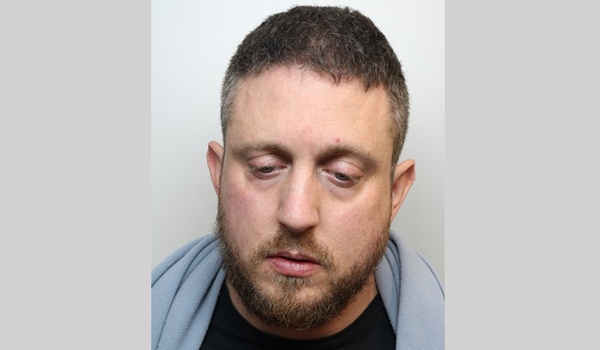
Michael Elmer, 36,(pictured) was sentenced at Exeter Crown Court on 20 April after admitting to a series of offences involving indecent images of children. The crimes of the former Bristol based police officer uncovered following an investigation by Avon and Somerset Police’s Internet Child Abuse Team, included making and distributing indecent images, as well as sharing intimate material for sexual gratification.

AD: Capeesh Restaurant
The charges were grave, and the sentencing response from the court reflected that severity. Judge David Evans described the offences as “deliberate” and indicative of a sexual interest in children, concluding that only a custodial sentence was appropriate.
Elmer’s fall from policing had begun months earlier. Arrested in May 2025 after intelligence was received by specialist investigators, he was quickly suspended from duty. By the time his case reached a misconduct hearing, he had voluntarily resigned, as do many unscrupulous officers have done when evading being confronted officially with their misdemeanours.

AD: Oysterian Sea Food Restaurant And Bar
The outcome of that hearing—gross misconduct—was perhaps inevitable. Had he not stepped down, he would have been dismissed anyway. Instead, he was formally barred from future work in policing, his name added to a national register designed to prevent individuals guilty of serious misconduct from re-entering law enforcement.
The sentence handed down at Exeter Crown Court included not only imprisonment but a 10-year Sexual Harm Prevention Order (SHPO), placing strict limitations on his future activities. Such orders are designed to manage ongoing risk, restricting access to devices, internet usage, and contact with children. They are a recognition that offences of this nature are not isolated acts but part of broader patterns of behaviour that require long-term oversight.
While the legal process has reached a conclusion , in Elmer’s case, the broader implications remain unresolved. His conviction is not an isolated event. It sits within a growing body of cases that have exposed serious misconduct within UK policing, particularly in relation to sexual offences. Each case chips away at public confidence, raising concerns not only about individual wrongdoing but about the systems meant to detect and prevent it.
Deputy Chief Constable Jon Reilly acknowledged as much in the aftermath of the sentencing. He described the offences as “appalling” and warned of the wider impact on trust and confidence in policing. His statement highlighted a tension that has become increasingly difficult for police leaders to manage: how to reassure the public that such cases are exceptions, while acknowledging that their frequency suggests deeper problems.
The severity of Elmer’s case can be placed within a wider historical context. Over the past decade, a number of high-profile prosecutions have revealed patterns of serious misconduct among serving officers.
The case of Wayne Couzens, who in 2021 was convicted of the murder of Sarah Everard, became a watershed moment. Although the nature of Couzens’ crime was different, the underlying issue—abuse of power by a police officer—resonated deeply with the public.
Similarly, David Carrick, who in 2023 admitted to dozens of sexual offences over many years, exposed systemic failures within vetting and oversight processes. His case revealed that allegations and warning signs had been missed or inadequately addressed, allowing him to remain in the force long after concerns had been raised.
While cases involving indecent images of children receive less sustained media attention than those involving physical violence, they are no less serious in the eyes of the law. The creation and distribution of such material contributes directly to the exploitation of children, sustaining networks that depend on demand as much as supply. For a police officer to participate in that ecosystem represents a profound breach of duty..
In 2023 alone, reports indicated that more than 1,000 officers across England and Wales were under investigation for a range of sexual misconduct allegations, though not all resulted in criminal charges.
Convictions specifically for offences related to indecent images of children are less frequently broken out in public datasets, but independent analyses and media reporting suggest that a small but persistent number of officers are convicted each year.
Estimates based on court records and disciplinary proceedings indicate that, over the past decade, several dozen serving or former officers have been convicted of such offences.While this represents a tiny fraction of the overall police workforce, the impact on public perception is disproportionately large.
Part of the challenge lies in the dual identity of police officers as both enforcers of the law and members of the communities they serve. When an officer commits a crime, particularly one involving exploitation or abuse, it raises questions not only about that individual but about the institution that employed them. How were they vetted? What warning signs, if any, were missed? And what safeguards failed?
In Elmer’s case, details of his conduct suggest a pattern of online behaviour that went undetected until external information triggered an investigation. The role of specialised units, such as the Internet Child Abuse Team, has become increasingly important in identifying such activity. These units rely on intelligence-sharing, digital forensics and cooperation with national and international agencies to track offenders who operate in online spaces that can be difficult to monitor.
The fact that Elmer was identified and prosecuted is, in one sense, evidence that these systems can work. But it also raises questions about how long his behaviour may have gone unnoticed, and whether earlier intervention might have been possible.
The impact on policing as an institution is significant. Public trust is not easily measured, but it is widely regarded as a cornerstone of effective law enforcement. Without it, cooperation between police and communities can erode, making it more difficult to prevent and solve crime. Cases like Elmer’s risk reinforcing narratives of institutional failure, particularly when viewed alongside other recent scandals.
Police leaders have increasingly acknowledged the need for reform. Measures introduced in recent years include stricter vetting procedures, improved information-sharing between forces, and the creation of national barred lists to prevent dismissed officers from moving between forces undetected. Elmer’s inclusion on that list ensures he cannot return to policing, but it is a reactive measure rather than a preventative one.
Critics argue that more fundamental changes are needed, including cultural shifts within policing that prioritise accountability and transparency. There have also been calls for greater external oversight, with bodies like the IOPC playing a more proactive role in identifying patterns of misconduct before they escalate into criminal cases.
Cases like that of Elmer presents a difficult reality for the majority of officers, who carry out their duties without incident, such cases present a difficult reality. As Deputy Chief Constable Reilly noted, they risk overshadowing the work of those who are committed to serving their communities. Yet the existence of that majority does not negate the need to address the minority whose actions cause harm.
The legal system, for its part, has demonstrated a willingness to impose significant penalties in cases involving indecent images of children. Custodial sentences, combined with long-term prevention orders, reflect the seriousness with which these offences are treated. But punishment alone does not address the underlying issues that allow such behaviour to occur.
The details of Elmer’s case is likely to become part of a broader conversation about standards in policing. Each new case adds to a cumulative effect, shaping public perception and influencing policy debates. The question is not only how to respond to individual instances of misconduct, but how to prevent them from occurring in the first place.
There is no simple answer. Policing is a complex profession, operating under significant pressures and scrutiny. But the expectations placed on those who wear the uniform are equally high. When those expectations are not met, the consequences extend far beyond the individual.
The conviction of Michael Elmer is both a conclusion and a starting point, because whilst it closes one chapter in a criminal case, it opens another in the ongoing effort to understand and address misconduct within policing.
The challenge for institutions is to ensure that such cases lead to meaningful change, rather than becoming part of a pattern that is acknowledged but not fully resolved. The question for the public remains one of trust. And for policing, the task is to prove that such trust is not misplaced.

AD: Heritage And Restaurant Lounge Bar
-
Share On
- Categories
- Date