

Ireland’s burgeoning drone delivery sector has reached a critical milestone, demonstrating that the future of instant delivery is already airborne. A prominent operator announced they have serviced over unique customer requests using their autonomous aerial vehicles. This achievement positions the country at the forefront of commercial drone operations globally, far exceeding smaller-scale trials seen elsewhere.
The Irish start-up Manna Aero, which has successfully completed over autonomous food delivery flights using specialized drones in locations including West Dublin, Finland, and Texas.
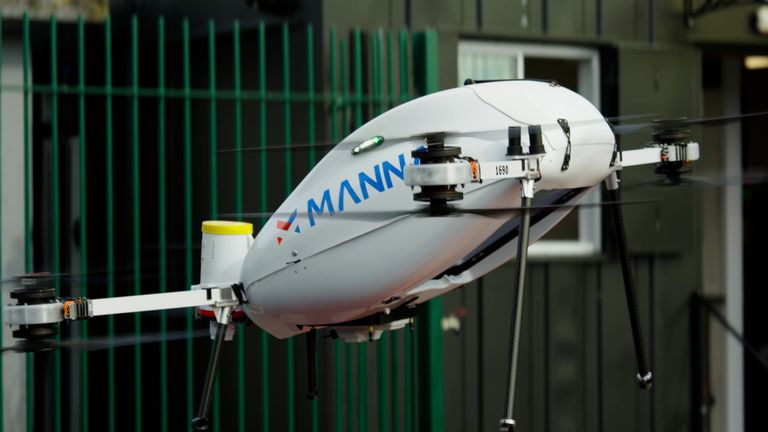
Manna Aero’s CEO, Bobby Healy, announced plans to launch a pilot scheme in the UK in 2026, calling it their most important European market. The drones, which cruise at ft (m), deliver various items like burgers, chips, and notably, coffee and fresh eggs, which are lowered via a biodegradable string. Manna touts the service as quicker, safer, and greener than traditional road-based alternatives.

AD: Capeesh Restaurant
However, the service has met resistance from residents in West Dublin, who have formed the group Drone Action Dublin . Locals complain the drone sound is “very stressful,” “tonal, sharp, pulsing,” and comparable to helicopters, particularly when the drones hover low to release cargo. Healy countered by citing a study that found low decibel levels, attributing the complaints to a natural “perception” issue with new, disruptive technology. The article concludes by noting the ongoing need for adequate regulation to balance technological innovation with the impact on residential communities.
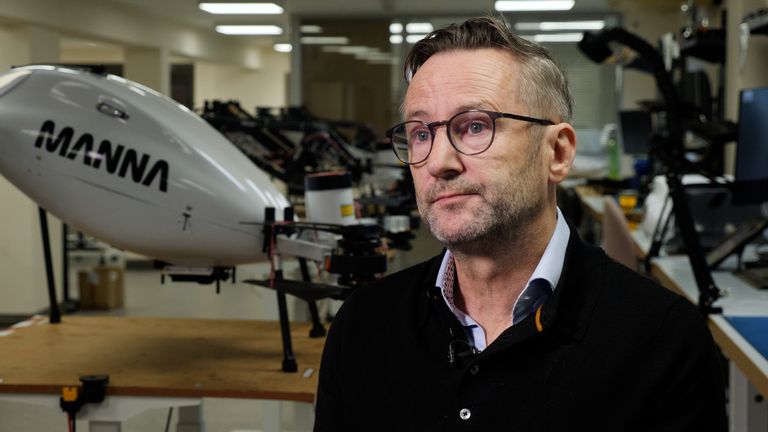
Manna Aero CEO Bobby Healy hopes to expand into the UK. Pic: Sky News
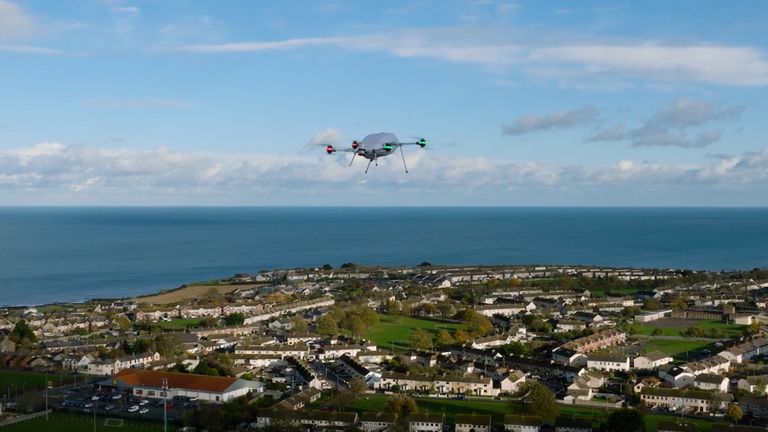
The company operates in west Dublin, Finland and Texas. Pic: Manna Aero
The fascinating data gathered from these transactions reveals exactly what suburban customers want immediately. High demand exists for prepared coffee—hot beverages constitute a significant portion of daily orders, proving that people rely on drones for that crucial morning boost. Consumers consistently order basic grocery items, including milk, eggs, and bread, when they realize they need one or two last-minute ingredients.
Pic: Manna Aero
Furthermore, non-prescription medicine is frequently requested, highlighting the essential role drones play in delivering minor necessities quickly. The convenience of Irish drone delivery is clearly substituting for quick trips to the local shop. Residents simply tap their phone screens, anticipating their order’s arrival in mere minutes.

AD: Oysterian Sea Food Restaurant And Bar
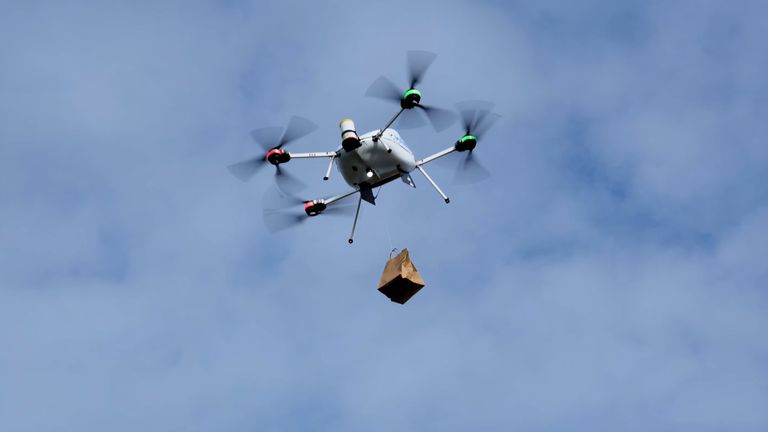
The packages are lowered to the ground using biodegradable string. Pic: Manna Aero
Significantly, the speed and low cost of the service encourage small, frequent orders rather than large weekly shops. This shift suggests a structural change in how people manage their short-term provisioning. Consequently, traditional retail outlets must adapt their local offerings to complement this rapid, automated network.
Customers appreciate the silence and efficiency of the operation, which avoids adding traffic to local roads. This level of adoption strongly indicates that the novelty has worn off; the service is now an integrated, reliable part of daily life.
The success seen in Ireland naturally raises questions about expansion, particularly across the Irish Sea into the UK market. Analysts suggest that the regulatory framework represents the main hurdle for widespread adoption in densely populated areas.
Irish regulators took an early and pragmatic approach to air traffic management for these small, low-altitude vehicles. They effectively created operational air corridors, which enabled the current expansion. This proactive stance contrasts sharply with the slower, more cautious regulatory pace observed in many other European nations.
Establishing similar comprehensive drone traffic management systems is necessary before British skies can support comparable services. Furthermore, any UK operation must integrate safely with existing air traffic, a complex logistical challenge for authorities.
The experience gained from Irish drone delivery offers invaluable real-world data regarding safety, noise impact, and flight reliability in varying weather conditions. Consequently, this operational history provides a vital blueprint for other countries hoping to scale up their delivery networks.
The next phase of development for Irish drone delivery involves increasing range and payload capacity to deliver hot meals and larger grocery baskets. Companies involved in this space often reference safety standards established by groups like the European Union Aviation Safety Agency (EASA). The success of this Irish trial proves that large-scale commercial drone logistics are viable and economically sustainable when supported by appropriate regulatory structures.

AD: Heritage And Restaurant Lounge Bar


