
By Aaron Miller
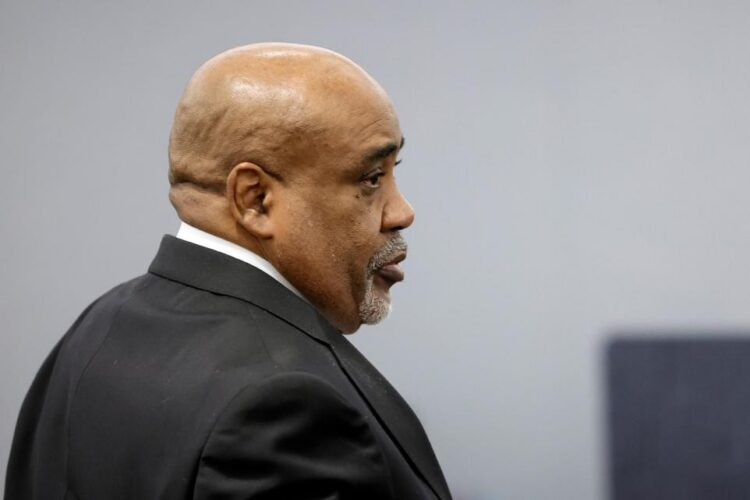
Nearly three decades after Tupac Shakur was gunned down on a Las Vegas street, a jury has found Duane “Keffe D” Davis guilty of orchestrating the killing of the legendary rapper, delivering the first conviction in one of hip-hop’s most enduring murder mysteries.
Davis, 63, was convicted on Monday of murder with a deadly weapon after jurors deliberated for less than three hours following a three weeks long trial in Las Vegas. He now faces the possibility of life in prison. The verdict marks a dramatic turning point in a case that for years was defined by reluctant witnesses, conflicting accounts, dead suspects and persistent questions over whether anyone would ever be held responsible for Shakur’s death.

AD: Capeesh Restaurant
Inside the courtroom, the verdict triggered an emotional response from Shakur’s family. His sister, Sekyiwa “Set” Shakur, cried and embraced prosecutors after Davis was found guilty. Davis’ son, who was also in the courtroom, covered his face with one hand as the decision was read.
Prosecutors never alleged that Davis personally fired the fatal shots. Instead, they argued that he was criminally responsible for organising the retaliatory attack of Tupac, by passing a gun to the men in the back seat of the white Cadillac that pulled alongside Shakur’s BMW on the night of Sept. 7, 1996. That fatal night was not long after Mike Tyson knocked out Bruce seldon in the first round.
Chief Deputy District Attorney Binu Palal told jurors that Davis and the men with him were seeking revenge after members of Shakur’s entourage and Death Row Records co-founder Marion “Suge” Knight had beaten Davis’ nephew, Orlando “Baby Lane” Anderson, at the MGM Grand earlier that evening. According to prosecutors, the confrontation transformed a long-running gang and music-industry rivalry into a deadly act of retaliation.

AD: Oysterian Sea Food Restaurant And Bar
“Who fired is not the question,” Palal told jurors during closing arguments.
The prosecution’s case instead centered on whether Davis helped make the shooting happen. Under Nevada law, a person who aids or assists another in committing murder can be held criminally responsible for the killing.The evidence prosecutors relied on most heavily came from Davis himself.
Over the years, Davis repeatedly acknowledged that he was inside the white Cadillac when it pulled alongside Shakur and Knight. In accounts given to investigators, filmmakers, journalists and in his 2019 memoir, “Compton Street Legend,” Davis described obtaining a gun and handing it toward the back seat shortly before the shooting.
His accounts changed in certain respects, particularly over who ultimately pulled the trigger. But prosecutors argued that the central elements of his story remained remarkably consistent. Davis placed himself inside the Cadillac, described the confrontation with Shakur and Knight, and acknowledged his role in supplying the weapon. “The core facts remain. The material facts remain,” Palal said.
One of Davis’ most consequential accounts came during a 2008 interview with law enforcement investigating the murder of Shakur’s rap rival, The Notorious B.I.G. Davis told investigators that he was sitting in the front passenger seat of the Cadillac with three other men, including Anderson. He said they spotted Shakur and Knight, made a U-turn and pulled alongside their BMW. Davis told investigators that if the Cadillac had been positioned differently, he would have fired himself. Instead, he said, he passed the gun to someone in the back seat.
“Tupac gave himself away; otherwise, they would have got away,” Davis could was heard saying in the incriminating recording.. If it had been on my side, I was going to blast,” Davis says on the recording. He says he then handed the gun to Smith, who didn’t want to shoot, so Anderson took the gun and fired.
“I saw a bullet go into Suge’s head. I thought he was dead,” Davis says on the recording. He goes on to describe Shakur diving toward the BMW’s back seat. Jurors also heard a 2009 Las Vegas Metro police interview and portions of a documentary on the killing.
 Rapper Tupac Shakur (Frank Wiese/AP)
Prosecutors argued that Davis’ later public statements strengthened rather than weakened their case. They pointed to his memoir and an interview in which he promoted the book as a source of the “real truth” about the shooting. Palal argued that although the memoir contained a disclaimer acknowledging that some details had been changed, the essential account remained intact.
The defense presented a sharply different interpretation.Attorney Michael Sanft argued that Davis’ statements were not reliable admissions but exaggerated stories told for money, attention and notoriety. He portrayed his client’s accounts as braggadocio and fiction, designed to enhance Davis’ reputation rather than reveal the truth about a nearly 30-year-old murder.
Sanft also challenged the lack of physical evidence directly connecting Davis to Las Vegas on the night Shakur was shot. He pointed to missing surveillance footage, the absence of phone records and other documentary evidence that could have placed Davis inside the Cadillac.
“They have nothing in this case that says that man was here in Las Vegas on Sept. 7, 1996,” Sanft told jurors during closing arguments. The defense also attacked the decades-old investigation, highlighting missing records, disputed police practices and the complications created by evidence collected in the 1990s. Prosecutors acknowledged that the age of the case had affected the evidence available to both sides, including hotel surveillance footage from the night of the shooting.
Nevertheless, the prosecution argued that Davis’ own statements did not require independent corroboration if jurors found them credible. Prosecutors also pointed to circumstantial evidence supporting his accounts, including the MGM Grand confrontation, the violent rivalry between the South Side Compton Crips and the Mob Piru, and testimony suggesting that people close to Shakur identified Davis and Anderson as suspects shortly after the shooting.
The case had remained unsolved for years partly because the people believed to have been involved either refused to cooperate or were no longer alive. Davis was the only surviving member of the four men prosecutors said were inside the Cadillac. The man prosecutors said originally supplied the gun to Davis had also died. That made Davis’ own words increasingly important as investigators revisited the case.
Davis had spoken to federal investigators in 2008 under an agreement that complicated the potential use of those statements against him. He also spoke with Las Vegas police in 2009. But as he continued discussing the killing publicly through documentaries, interviews and his memoir, prosecutors gained access to a series of statements they argued could be used to establish his role.
A renewed Las Vegas police investigation eventually led to Davis’ arrest in 2023, more than 26 years after Shakur was killed. Shakur, one of the most influential and commercially successful rappers of his generation, was 25 when he was shot. He had been riding in a BMW with Knight through Las Vegas when a white Cadillac pulled alongside the vehicle at a red light and gunfire erupted. Shakur was struck multiple times and died six days later from his wounds. Knight was also wounded but survived.
The shooting became one of the defining unsolved crimes in music history, fuelling decades of speculation about gang rivalries, the feud between Death Row Records and Bad Boy Records, and the violent circumstances surrounding the deaths of Shakur and The Notorious B.I.G. Monday’s verdict finally established criminal responsibility in court.
In a rebuttal to the defense’s argument that Davis had fabricated his stories, prosecutor Marc DiGiacomo pointed to a scrapbook Davis kept containing newspaper articles about Shakur.“This guy’s scrapbooking his murder, for God’s sake,” DiGiacomo told jurors. The jury consisted of 16 members, including four alternates. Over nine days of testimony, jurors heard from 24 prosecution witnesses and three defense witnesses before reaching their decision.
After the conviction, Judge Carli Kierny ordered Davis held without bail pending sentencing on Oct. 13. Davis asked the judge for the return of jewelry, a phone and other personal belongings before telling the court, “And I would like to appeal this matter.” Kierny told him that any appeal would come after sentencing.
Prosecutors also dismissed an additional gang-related sentencing enhancement after the verdict, citing logistical difficulties involving a witness. The dismissal meant jurors would not have to consider a separate phase of proceedings on that allegation. For nearly 30 years, Tupac Shakur’s murder existed largely in the realm of speculation and unanswered questions. Now, with Davis’ conviction, the case has reached its most consequential moment yet.
The verdict marks the first time a defendant has been convicted in court for the killing of one of hip-hop’s most enduring icons — bringing a measure of accountability to a case that had captured the public imagination for almost three decades.

AD: Heritage And Restaurant Lounge Bar