
By Gavin Mackintosh-
VENICE — Rupert Murdoch has spent much of his life deciding what millions of people read, watched and talked about, has approved of Guy Pearce taking on the role of the media mogul in a new film.
Guy Pearce, the Australian actor chosen to play Murdoch in Oscar winning director, Danny Boyle’s new film, Ink, told reporters at the Venice Film Festival that Murdoch’s daughter Elisabeth had told him her father was “very happy” that Pearce was portraying him. Murdoch had not yet seen the film when Elisabeth delivered the message, so Pearce,added, “So we’ll see,”

AD: Capeesh Restaurant
That small qualification may turn out to be one of the more important lines surrounding Ink, a film about the moment Murdoch first began turning himself from an Australian newspaper proprietor into something much larger: a global media power whose companies would eventually stretch from newspapers to television, publishing and satellite broadcasting, and whose editorial influence would become entangled with the politics of Britain, America and Australia.
The film opens this year’s Venice Film Festival, placing Murdoch’s early British adventure under the glare of one of the world’s grandest cinematic stages. It is an intriguing choice of subject for Boyle, the Oscar-winning director behind Trainspotting and Slumdog Millionaire, whose own political instincts are considerably to the left of Murdoch’s.
Boyle says he did not want to make a conventional portrait of the media baron as a monster.That is partly because the Murdoch who arrived in Britain in the late 1960s was not yet the towering political force audiences know today. He was an Australian outsider entering a British establishment that he regarded with suspicion and, what Boyle describes as ”outright hostility”.

AD: Oysterian Sea Food Restaurant And Bar
Murdoch had inherited a newspaper business from his father, Sir Keith Murdoch, who had been a prominent Australian journalist and publisher. The younger Murdoch was only 21 when his father died in 1952, leaving him a small newspaper empire and, more importantly, an appetite for expansion.
He had already absorbed a lesson that would define his career: newspapers were not simply vehicles for journalism. They were businesses, brands and instruments of influence. His first great laboratory was Australia. Murdoch bought struggling publications, revived them and developed a style of tabloid journalism built around the subjects that reliably grabbed attention: crime, scandal, sport, sex and celebrity. It was a formula he would carry to Britain, where it would help transform the country’s newspaper culture.
In 1969 he bought the struggling Sun. What happened next became one of the defining episodes in modern British media history. Under Murdoch and his first editor of The Sun, Larry Lamb, the newspaper was transformed from a struggling title into a mass-market powerhouse. Its blend of provocative headlines, celebrity, sport and sexualised imagery made it enormously popular and deeply controversial.
That relationship between Murdoch and Lamb provides the dramatic centre of Ink. Although Murdoch is the obvious star of the real-life story, Boyle has said the film is largely seen through Lamb’s eyes. It is an interesting decision because it shifts the story away from the billionaire as omnipotent mastermind and towards the newsroom where his ambitions had to be translated into something readers would actually buy.
And that is where the film’s more sympathetic interpretation begins to collide with Murdoch’s later reputation.Murdoch has been portrayed as a political kingmaker for decades — a man whose newspapers and television networks could help shape elections and pressure governments.His empire eventually came to encompass The Sun, The Times, Fox News, The Wall Street Journal and book publisher HarperCollins, among many other assets.
His political influence became so pervasive that the question was no longer merely what Murdoch’s newspapers thought. It was whether politicians could afford to ignore what they thought he wanted. In Britain, Murdoch’s newspapers backed conservative causes and became major players in the political battles surrounding Margaret Thatcher, Tony Blair and later Britain’s arguments over Europe.
In America, Fox News became one of the most powerful conservative media outlets in the country, helping create an intensely partisan television news environment.Murdoch’s relationship with Donald Trump became one of the most visible intersections between media power and political power in the modern era. Rupert’s influence has also extended beyond elections.
His media companies have been criticised for promoting climate scepticism and for helping amplify nationalist and populist arguments. His supporters, meanwhile, have argued that his newspapers gave voice to opinions and sections of society that traditional establishments ignored.
That contradiction is central to understanding Murdoch. He has spent much of his career attacking establishments while building one of the world’s largest media establishments himself.Boyle appears particularly interested in the first half of that contradiction.
He says Murdoch represented, in Britain at the time, a “breath of fresh air” in a rigid society and that he was dealing with prejudice because he was Australian. There was certainly an element of cultural outsider status to Murdoch’s arrival. He was not a product of the British newspaper establishment. He was an Australian publisher with an instinct for disruption and a willingness to take risks that more traditional proprietors might have avoided.
His hostility towards the British establishment is something Boyle says he personally shares. But the Murdoch story did not remain a story about an Australian outsider fighting the establishment.It became the story of an outsider becoming an establishment in his own right.That transformation is one reason Murdoch has proved irresistible to filmmakers and television writers.

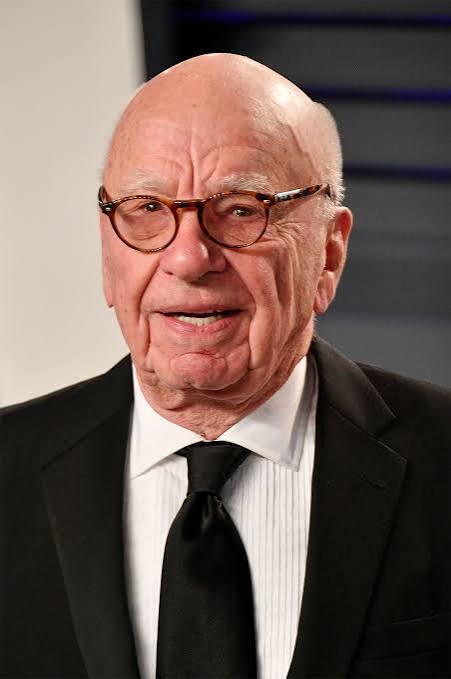
Media mogul Rupert Murdoch established a major media empire over several decades
The most famous fictional descendant of Murdoch is probably Logan Roy, the brutal patriarch of HBO’s Succession. The series never simply copied Murdoch, but its fictional Roy family was widely understood as drawing heavily on the Murdoch dynasty and the succession battle surrounding the family business. The resemblance has become even more striking as Murdoch’s real family dramas have entered the courts.
Murdoch has six children from his marriages and relationships, and the question of who would eventually control his sprawling empire became the subject of an extraordinary legal battle. Recent court proceedings revealed the extent of the family struggle over succession and over the future political direction of the companies. The dispute ultimately ended in a multibillion-dollar settlement, with Lachlan Murdoch emerging as the chosen successor.
It was a remarkable development for a family that had already become a kind of real-life television franchise. There have been biographies, documentaries and dramas. Netflix released Dynasty: The Murdochs earlier this year, examining the succession struggle and the family’s internal battles. And now comes Ink.
The timing gives Boyle’s film an unusual quality. Murdoch is no longer the young Australian outsider storming into Fleet Street. He is 95, his succession has been fought over in court, and the empire he built has become so enormous that its history is inseparable from the political history of the English-speaking world.
That makes Ink less a portrait of the Murdoch most people know than a return to the moment before he became that man. It asks what the young Murdoch looked like before the mythology hardened around him. Perhaps that is why the actor playing him matters so much.
Pearce is not an obvious caricature of a media tyrant. Known internationally for L.A. Confidential and more recently for The Brutalist, he brings a different kind of presence to the role — more actor than impersonator, more interested in the person than the headline.
Actor guy Pearce will be taking on role media mogul Rupert Murdorch in new filmc
And Murdoch, apparently, approves. Whether he will still be “very happy” after actually seeing the finished film is another matter. For a man who spent seven decades controlling headlines, Murdoch may discover that cinema is a rather different business. In newspapers, the proprietor gets the final say. On screen, the director does. And this time, the Murdoch story belongs to Danny Boyle.

AD: Heritage And Restaurant Lounge Bar