
By Ben Kerrigan-
At least 186 students and teachers have reportedly been killed in Iran amid a wave of military strikes that have drawn fierce condemnation from human rights groups and international bodies calling for an independent investigation into the violence. Iranian authorities say the dead include 168 victims from the Shajareh Tayyebeh girls’ school in Minab, a rural city in southern Iran’s Hormozgan province, where airstrikes struck classrooms filled with children during school hours. The education ministry also reports that about 20 education centres have been damaged or destroyed as the conflict intensifies.
The tragedy has sparked national and global outrage, with aid organisations, teachers’ unions and the United Nations urging a transparent inquiry into the circumstances that led to the deaths of so many young civilians and educators.

AD: Capeesh Restaurant
Iranian officials and allied groups have pointed to joint U.S.‑Israeli military operations as the cause of the strikes, though U.S. and Israeli spokespeople say they are investigating casualty reports and deny deliberately targeting schools.
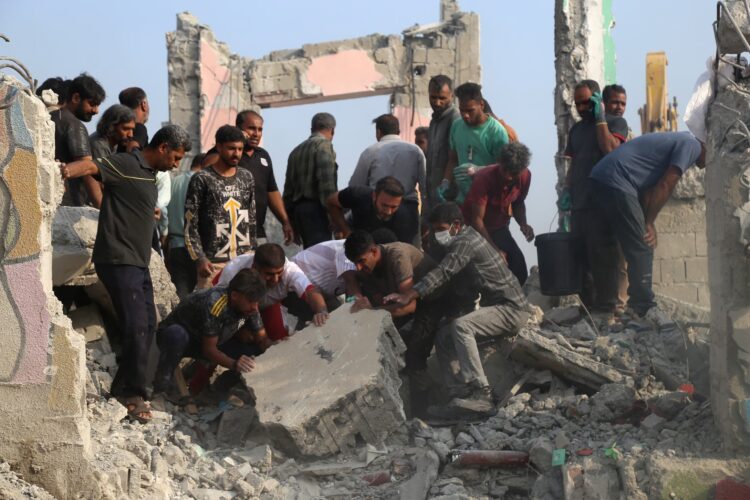
Photos and footage shared online from Minab show shattered classrooms, blood‑stained backpacks and parents sifting through debris in frantic searches for loved ones amid a funeral procession with thousands of mourners.
Local authorities emphasise that even if some victims were connected to military families, the school retained a civilian status under international humanitarian norms and should have been protected from attack.

AD: Oysterian Sea Food Restaurant And Bar
International responses have broadened in the wake of the Minab incident. The United Nations human rights office has called for a “prompt, impartial and thorough investigation” into the attack, urging parties responsible to disclose all relevant information and explaining that “children must be protected from war.”
The UN Committee on the Rights of the Child described the loss of life as “deeply disturbing,” particularly given the impact on educational infrastructure and the rights of students to learn in safety.
Humanitarian organisations such as Amnesty International have echoed these calls, demanding that all sides adhere to international law and protect civilians. Amnesty has underscored how indiscriminate or disproportionate attacks on civilian infrastructure including schools could constitute grave violations of international humanitarian norms.
Education advocates and union federations are also amplifying the call for accountability. Global Union Federations condemned the strikes that hit schools and medical facilities, labelling them violations of the UN Charter and international humanitarian law.
These groups emphasise that the civilian cost of the conflict including children killed or injured, teachers slain, and schools damaged represents a profound human tragedy.
Inside Iran, teachers’ unions recently urged a nationwide school strike to mourn the slain students and bring attention to the crisis, highlighting how the education sector has become entangled in broader conflict and instability.
The strike on the Minab school occurred on the first day of U.S.‑Israeli military operations against Iran, which Iranian authorities say were launched after escalating tensions in the region. The violence has not been confined to educational facilities; Tehran’s high schools and other civilian infrastructure have also been hit, resulting in additional casualties.
Iran’s foreign ministry and diplomatic representatives have condemned the attacks as “unjustifiable” and “criminal.” In a formal letter to the United Nations High Commissioner for Human Rights, Iran’s ambassador described the strike as a grave breach of humanitarian law and called for global solidarity and action. The Iranian government claims the offensive has caused casualties in more than 130 cities nationwide.
At funerals in Minab, families of the victims, local residents, and religious leaders voiced grief and anger, many draped in national flags or carrying photos of the children who perished.
The scenes have drawn comparisons to other catastrophic school attacks around the world, prompting international figures and organisations including UNESCO and activists like Malala Yousafzai to condemn the loss of young lives.
The international community’s calls for an independent probe now intersect with broader debates over the rules of engagement in conflict, the protection of civilians, and the enforcement of international humanitarian law.
Human rights organisations have long emphasised that attacks on schools, hospitals, and other civilian infrastructure constitute some of the gravest violations in modern warfare. In the case of Minab, where dozens of children and teachers were killed, the incident has reignited conversations about how global powers monitor and hold accountable actors in asymmetric conflicts.
Experts argue that even if military objectives are cited, indiscriminate or disproportionate attacks that result in civilian deaths are unacceptable under the Geneva Conventions and other international treaties.
The destruction of educational facilities not only leads to immediate loss of life but also interrupts schooling, threatens mental health, and undermines the social and economic stability of communities already living under duress.
With families in Iran, the grief is compounded by uncertainty and a lack of transparent information. Parents and guardians have described scenes of chaos as they tried to rescue their children from rubble, many documenting their despair through social media in an effort to draw global attention.
The psychological toll on survivors, witnesses, and the wider community is expected to be profound and long-lasting. Psychologists and aid organisations warn that without access to trauma counselling and educational continuity, an entire generation of children may face enduring consequences.
In parallel, local teachers and school administrators are grappling with the fear of returning to classrooms, confronting a scenario where the very institutions meant to nurture and protect their students have become targets of violence.
International advocacy groups have mobilised quickly, pushing for immediate humanitarian aid, safe access to educational and medical services, and independent verification of casualty figures.
United Nations officials, along with organisations such as Amnesty International, Human Rights Watch, and UNESCO, are urging all parties involved to provide transparent reporting and to permit neutral investigators to assess the circumstances of the attacks.
They stress that accountability is crucial not only for justice for the victims but also for deterrence, so that future conflicts respect established rules that safeguard children and civilians.
Some diplomats have proposed emergency sessions of the UN Human Rights Council to discuss sanctions, investigations, or protective measures, highlighting the urgency with which the international community views the situation.
At the same time, these calls for accountability are intertwined with geopolitical considerations. Nations allied with Iran, as well as those conducting operations in the region, face heightened scrutiny. Media coverage from around the world has amplified the human cost of the strikes, applying moral and political pressure on governments and military leaders.
Debates are emerging about the adequacy of existing international legal frameworks and whether mechanisms for civilian protection are sufficient in the face of increasingly technologically advanced warfare.
The tragedy in Minab has thus become a focal point in larger discussions about how to prevent civilian casualties, enforce international norms, and ensure that children can safely pursue education even amidst conflict.
Ultimately, the Minab school strike represents both an immediate humanitarian crisis and a test of global resolve. Families continue to mourn, communities are shaken, and advocacy groups push relentlessly for answers.
The world is watching closely to see whether an effective, independent investigation can be conducted and whether the lessons learned will translate into stronger protections for civilians, greater transparency from military actors, and a renewed commitment to uphold the sanctity of life in the midst of war.
The coming months may determine not only justice for the victims in Minab but also set precedents for the protection of children and teachers in conflict zones across the globe.

AD: Heritage And Restaurant Lounge Bar