
By Segun Ade-
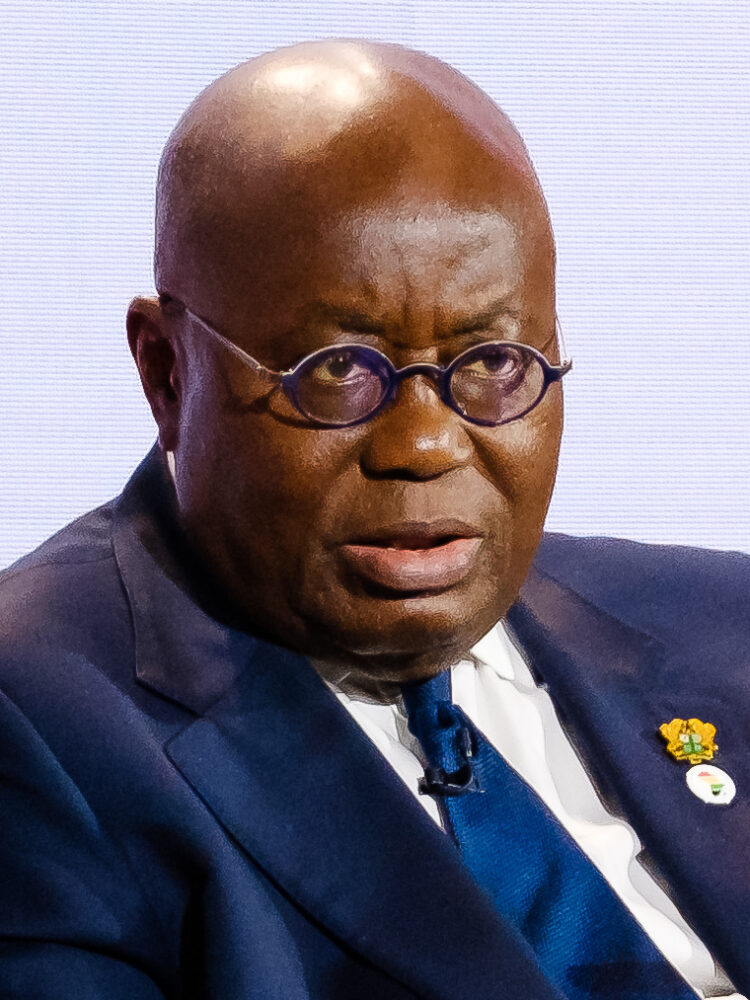
Fresh controversy has engulfed Ghana’s mining sector after international investors accused Engineers and Planners Limited (E&P), the mining company owned by businessman Ibrahim Mahama, younger brother of President John Dramani Mahama, Ibrahim Mahana(pictured) of orchestrating what they describe as a campaign of “industrial espionage” to wrest control of one of West Africa’s most valuable undeveloped gold assets.
Last week, a mining company owned by stinking rich Ibrahim, refused to give up a $100 million gold mine at the heart of an ownership dispute, ignoring rulings by an international arbitration court and an English court, according to a news report by Semafor. In a ruling in 2025, the International Chamber of Commerce’s International Court of Arbitration, sitting in London, ordered E&P to stop trespassing on, occupying or otherwise interfering with the Black Volta and Sankofa mine sites, but that ruling has so far been flouted with impunity.

AD: Capeesh Restaurant
The allegations, published by Miningmx and brought to the attention of the Eye Of Media.Com today, reportedly supported by leaked internal emails reviewed by the publication, centre on the ownership battle over Azumah Resources’ Black Volta gold project in northwestern Ghana. The project is widely regarded as one of the region’s most significant undeveloped gold deposits and has attracted substantial international investment. James Wallbank, managing partner of private equity firm Ibaera Capital, which backs the international investment in Azumah Resources, alleged that the leaked correspondence reveals coordinated efforts involving some Ghanaian directors of Azumah, the company’s legal adviser, executives of E&P and other influential individuals to undermine existing shareholders and facilitate E&P’s acquisition of the project. Wallbank estimates the investment at stake to be worth approximately US$250 million. According to Wallbank, the emails suggest that Azumah’s own legal adviser continued acting on behalf of the company while simultaneously preparing legal documents adverse to its interests. He alleged that confidential correspondence was shared with E&P executives, senior government officials and other influential figures during the dispute.
“But instead of supporting our investment in Azumah’s Black Volta mine, these Ghanaian directors, our legal counsel and others waged a campaign of industrial espionage and sabotage to seize our Black Volta gold mine and shares in our company worth US$250 million,” Wallbank said during the “Mining on Top” investment conference in Paris.
He further alleged that the company’s legal adviser breached fiduciary duties by secretly assisting legal action against Azumah while remaining on the company’s payroll.

AD: Oysterian Sea Food Restaurant And Bar

President’s son Ibrahim Mahana caught up in gold controversy
One of the email exchanges reviewed by Miningmx reportedly showed Azumah’s Ghanaian legal counsel informing recipients that an injunction had been served on Wallbank, preventing him from taking certain actions pending a court hearing. The lawyer allegedly suggested the injunction would provide additional time for E&P to secure financing for a proposed acquisition of Azumah. Minutes later, another recipient reportedly responded: “Thank you very much Sir Bobby. Excellent job.”
Miningmx reported that the correspondence appeared to show regular communication among Azumah directors, legal representatives, E&P executives and a director of South African mining company Gold Fields during the ownership dispute. However, the publication stated there are no allegations of wrongdoing against Gold Fields or the company director copied on the correspondence. Gold Fields declined to comment.
E&P has categorically rejected Wallbank’s allegations and denied any corporate wrongdoing.

President of Ghana: John Dramani Mahama
The dispute comes amid increasing scrutiny of the Mahama administration’s policy of promoting greater Ghanaian ownership and participation in the country’s mining industry. Political opponents have repeatedly accused President Mahama of implementing policies that disproportionately benefit businesses linked to his younger brother, Ibrahim Mahama, although the government has consistently defended its local participation agenda as necessary to ensure Ghanaians derive greater benefits from the country’s natural resources.
Earlier this year, E&P secured the operating rights to the Damang gold mine following the government’s decision not to renew Gold Fields’ mining lease, a move that generated significant debate within Ghana’s mining industry and among foreign investors over the country’s evolving resource nationalism agenda.
Addressing concerns raised by investors, Theophilus Agbenyezi of Ghana’s Minerals Commission acknowledged that mistakes had been made in the sector but said the government was committed to restoring investor confidence as part of President Mahama’s broader economic reset programme.
“Yes, the government has made mistakes,” Agbenyezi said. “It is absolutely important to work with international investors to bring money to Ghana.”
He added that authorities were working to address past shortcomings and rebuild confidence in Ghana’s mining sector.
“The challenge is to fix the problems. We are looking forward to working together,” he said.
An arbitration hearing in London is expected to examine aspects of the dispute between E&P and Azumah’s international investors in September. Wallbank argues that the case extends beyond a commercial disagreement and raises broader concerns about Ghana’s reputation as an investment destination.
“As a significant international investor, we expect the Government of Ghana to uphold the law and maintain fair play and a level playing field,” he said. “The Azumah experience has been bitter for everyone involved.” He questioned whether Ghana’s drive towards greater local ownership of mineral resources could be achieved while maintaining respect for the rule of law and protecting international investment.
The latest allegations add to longstanding public scrutiny surrounding the relationship between President John Dramani Mahama and his younger brother, Ibrahim Mahama, one of Ghana’s most prominent businessmen. Ibrahim Mahama’s companies, particularly Engineers and Planners Limited, have become major players in Ghana’s mining and construction sectors. Although opposition parties have frequently alleged that his businesses benefit from proximity to political power, neither President Mahama nor Ibrahim Mahama has been found by any court to have engaged in wrongdoing arising from those claims.
Questions about political influence and conflicts of interest involving relatives of senior public officials have surfaced under successive Ghanaian administrations. During the presidency of Nana Addo Dankwa Akufo-Addo, members of the opposition repeatedly criticised the government’s handling of contracts involving relatives and politically connected individuals, while the Akufo-Addo administration denied allegations of nepotism and corruption. Similarly, previous administrations led by both the National Democratic Congress (NDC) and the New Patriotic Party (NPP) have faced allegations concerning politically exposed persons, although many of those claims either remained unproven or became the subject of investigations without resulting in criminal convictions.
The latest dispute is therefore likely to intensify the broader debate over governance, transparency, resource nationalism and investor confidence in Ghana’s extractive sector, particularly as the country seeks to attract fresh foreign investment while expanding indigenous participation in its mineral wealth.