
By Gabriel Princewill-
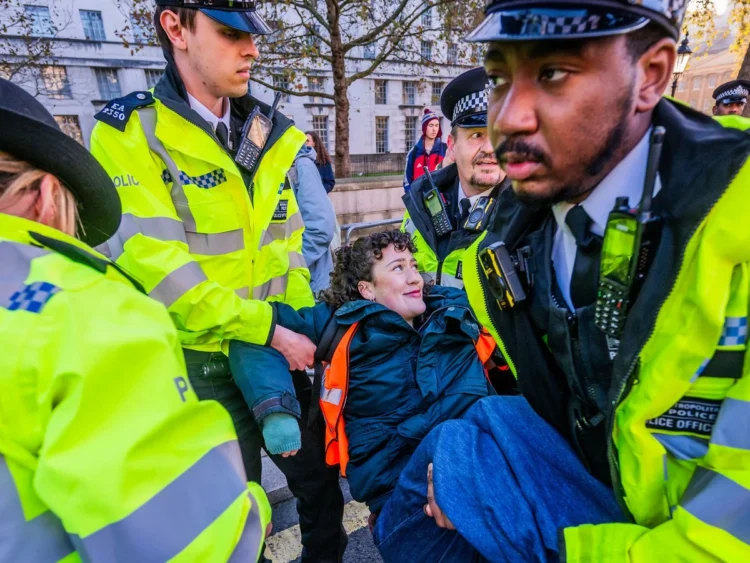
Britain’s top police officer has delivered a rare and stark warning that the current framework of human rights laws and public‑order legislation has made policing protests “untenable”, intensifying a national debate over civil liberties and law enforcement in the United Kingdom. In comments that have reverberated across Westminster and social media alike, Sir Mark Rowley, Commissioner of the Metropolitan Police Service, said that existing human rights protections especially those enshrined in the Human Rights Act 1998 are placing insurmountable legal constraints on police when dealing with demonstrations, even when public disorder is a substantial risk. His remarks have reignited fierce arguments over the boundaries between the right to protest and the right of the public to go about their daily lives without disruption.
Rowley’s intervention comes against a backdrop of increasing tensions on the streets of British cities, where protests from climate activism to international conflicts have at times provoked substantial disruption or clashes with police. In his assessments to government officials, Rowley has emphasised that officers are caught between two conflicting obligations: to uphold fundamental freedoms such as peaceful assembly, and to protect other citizens from serious disruption or harm.

AD: Capeesh Restaurant
That struggle, he warns, is being compounded by what he describes as legal interpretations of human rights protections that have left officers exposed to costly judicial reviews when they attempt to impose restrictions. The Commissioner’s critique has drawn attention to the practical and legal complexities surrounding protest policing but it has also sparked fierce debate among civil liberties groups, politicians, and rights advocates, who argue that policing should never trump the guaranteed freedoms of expression and assembly.
At the heart of Rowley’s argument is the assertion that public order legislation, when applied alongside human rights protections, has become unworkable in practice. Police commanders, he suggests, are increasingly restrained from imposing clear and enforceable restrictions on demonstrators because of the legal risk of being challenged in court.
Those judicial challenges often invoke Article 10 and Article 11 of the European Convention on Human Rights, enshrined in UK law, which guarantee freedom of expression and peaceful assembly.

AD: Oysterian Sea Food Restaurant And Bar
“The law as it stands doesn’t allow us to do our job in a way that keeps everyone safe,” Rowley reportedly told officials, highlighting that officers fear being overturned by courts when attempting to curb what they judge to be genuinely harmful behaviours.
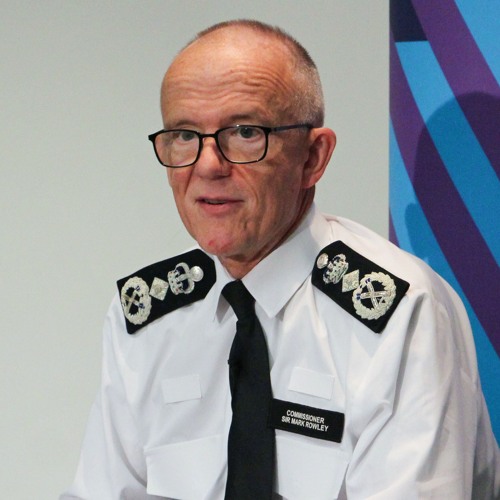
Sir Mark Rowley criticises Human Rights Laws in terms of effect on policing protests
Critics of protest legislation argue that such judicial scrutiny is vital for preserving democracy and preventing overreach, particularly in an era where governments are eager to restrict demonstrations that disrupt transport or target infrastructure. This debate has intensified since Parliament enacted the Police, Crime, Sentencing and Courts Act 2022, a controversial piece of legislation aimed in part at expanding police powers around protests by giving officers discretion to impose conditions on processions and assemblies that could cause “serious disruption” a term critics say is legally vague.
The controversy did not end there. In 2023, the Public Order Act 2023 introduced further measures aimed at tackling disruptive protest tactics, including new offences connected to “locking‑on” or obstructing transport again drawing pushback from civil liberties groups who warn of a chilling effect on lawful protest.
The problem, according to Rowley, is not merely the existence of laws, but the interpretation and application of human rights standards in judicial reviews that follow police decisions.
With officers on the ground or in command positions, weighing up risks becomes a fraught exercise: any decision that may infringe on a demonstrator’s rights even temporarily could be scrutinised or overturned by judges long after events have passed. In several recent high‑profile protests, police forces have faced legal challenges over whether they acted appropriately, adding to the sense among law enforcement that legal protections shield protesters at the expense of order.
Legal experts summarising the situation note that operational guidance from the National Police Chiefs’ Council (NPCC) already stresses that police must act in ways compatible with human rights obligations, even where full rights cannot be upheld in every circumstance. That dual responsibility to both protect rights and enforce the law is what critics argue leaves officers in a kind of legal limbo.
Rowley’s warning has been met with both endorsement and outrage across the political spectrum. On one hand, some Home Office officials and senior lawmakers have acknowledged the challenges police face when dealing with prolonged or highly disruptive demonstrations.
They argue that the current patchwork of statutes, judicial interpretations, and enforcement guidelines is inconsistent and lacks the clarity needed for effective policing in an era of increasingly sophisticated protest tactics. Notwithstanding this, civil liberties advocates have been quick to counter that Rowley’s comments risk undermining the very freedoms that define a democratic society.
Opponents of expanding policing powers have warned that the current focus on enforcement risks overshadowing the need for genuine political dialogue and respect for peaceful dissent, arguing that protest rights are a fundamental part of democratic engagement rather than a problem to be solved through ever‑tighter controls.
Amnesty International UK, for example, has criticised recent anti‑protest laws as ones that “only allow for protests that don’t bother anybody,” urging a full review and revision to ensure freedom of assembly and expression are genuinely protected rather than curtailed in practice.
Similarly, the Equality and Human Rights Commission (EHRC) has cautioned that proposed changes in the Crime and Policing Bill could produce a “chilling effect” on the ability of people to exercise their democratic rights, stressing that police discretion over imposing conditions on protest must not restrict peaceful assembly.
Legal reform charity JUSTICE has also expressed concern that broad new protest offences would exacerbate this chilling effect, eroding public trust in institutions and disproportionately affecting marginalised groups whose voices are already underrepresented.
Critics say that without safeguarding space for peaceful dissent through clearer laws and stronger engagement with protest organisers and communities, laws intended to protect order may instead silence dissent, deter civic participation and deepen distrust between the public and the state.
Human rights groups have previously criticised anti‑protest laws as having a “chilling effect” on democratic engagement, making it harder for activists to exercise legitimate rights without fear of punitive action.
There is also political pushback, which is that some MPs have accused Rowley of overstepping his role by implicitly calling for changes to law that only Parliament can authorise. Others argue that policing should adapt to evolving forms of protest rather than seek to circumvent civil liberties.
A number of legal scholars caution that tempting as it may be to amend protections in the name of order, such reforms could set dangerous precedents and potentially swing public opinion against law enforcement itself. With communities regularly affected by disruptive protests commuters, businesses, and residents Rowley’s message resonates as a plea for workable legal frameworks that allow police to maintain safety and daily life. Prolonged blockades of major transport routes or occupations of public spaces have at times frustrated ordinary citizens and heightened tensions between protest groups and the rest of society.
The response from human rights organisations and civil liberties advocates highlights that security does not have to come at the expense of rights.
They contend that clearer, more precise laws coupled with better training for police and stronger judicial deference to lawful assembly, could protect both public order and individual freedoms. Others argue that broader societal engagement understanding why people protest and addressing root causes is a vital complement to any legal or policing reform.
While the debate intensifies, Parliament itself is under pressure to clarify or reform existing laws governing protests and public order. Some lawmakers have called for new legislation to articulate clearer thresholds for when police can intervene or impose conditions on demonstrations.
Others caution that any effort to limit protest rights must be approached with extreme care, to ensure that Britain does not slide towards an overly securitised model that stifles legitimate dissent.
In the meantime, Sir Mark Rowley’s comments have thrust the tension between civil liberties and effective policing back into the spotlight, forcing a national reckoning with questions that are as old as democracy itself: How do we protect the right to dissent while ensuring that dissent does not harm others? And at what point does legal protection for protest become a barrier to public safety and order?
What remains clear is that neither side of this debate is willing to relent easily and the outcome may shape the landscape of protest, policing, and human rights in the UK for years to come.

AD: Heritage And Restaurant Lounge Bar