
By Isabelle Wilson-
In a historic breakthrough for space exploration, NASA’s Artemis II mission has propelled humanity farther from Earth than ever before, breaking a spaceflight record that stood unchallenged for more than half a century.
The four‑astronaut crew Commander Reid Wiseman, pilot Victor Glover, mission specialist Christina Koch and Canadian astronaut Jeremy Hansen surpassed the 248,655‑mile distance reached by Apollo 13 in April 1970, becoming the furthest‑travelled humans in history. The accomplishment was celebrated by the crew with tears and an emotional moment aboard their Orion spacecraft as they marked the achievement during a six‑hour lunar flyby on Monday.

AD: Capeesh Restaurant
At approximately 1:57 p.m. ET, the Artemis II spacecraft, following a free‑return trajectory that loops around the Moon and back toward Earth, continued past the lunar far side and eclipsed the mark set by the ill‑fated Apollo 13 mission.

Apollo 13’s record had been established during that spacecraft’s emergency free‑return around the Moon after an onboard explosion, which forced the crew to abandon its planned lunar landing and instead use the Moon’s gravity to slingshot back to Earth.
Moments after surpassing the record, Wiseman and his crewmates shared a touching tribute that underscored both the personal and collective journey of the mission. They radioed Mission Control to request the naming of two lunar craters Integrity, in honour of their Orion capsule, and Carroll, in memory of Wiseman’s late wife, who died in 2020.

AD: Oysterian Sea Food Restaurant And Bar
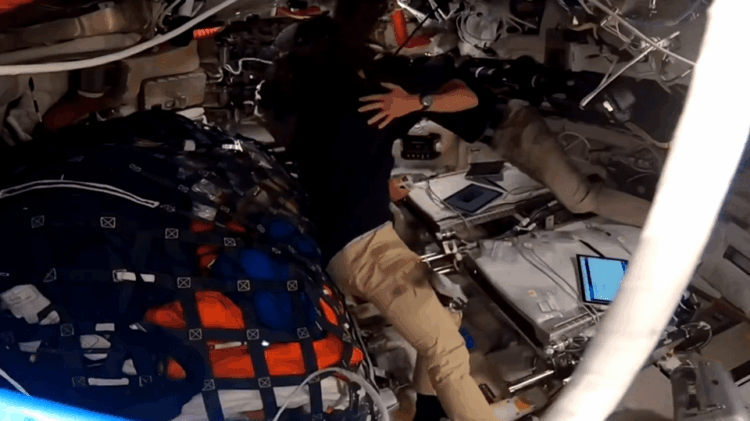
Wiseman’s voice, choked with emotion, and the crew’s embrace in microgravity highlighted the profound human dimension of the achievement, as well as the connection between past and present lunar explorers.
Artemis II’s record‑breaking journey represents a pivotal chapter in NASA’s Artemis program, which aims to return humans to the Moon and ultimately pave the way for crewed missions to Mars. This mission is the first crewed lunar flight since Apollo 17 in 1972 and was designed as a test of spacecraft systems, human endurance, and mission operations in deep space beyond low Earth orbit.
The Orion spacecraft’s path took advantage of celestial mechanics, using the gravitational pull of the Moon to extend its distance from Earth more than 4,100 miles beyond the Apollo 13 mark.
Before reaching the record distance, the crew received a pre‑recording from Apollo 13 commander Jim Lovell, who had welcomed Artemis II to “his old neighbourhood” a symbolic passing of the torch between generations of explorers.
During their passage around the Moon’s far side, Artemis II astronauts also encountered rare and breathtaking sights that few humans have ever seen.
The far side of the Moon, perpetually hidden from Earth’s view due to tidal locking, presented new terrain for the crew to observe and photograph, providing scientific and public interest in lunar features that were largely obscured during earlier Apollo missions.
The mission has been a blend of human drama and technological prowess. Orion’s communications were scheduled to drop out briefly as the capsule passed behind the Moon, exposing the crew to a period of silence that recalled similar blackouts experienced by Apollo astronauts decades ago.
Despite these challenges, the crew operated cameras and scientific instruments, capturing views of previously unseen lunar craters, basins and mountains.
Artemis II’s success has reignited global enthusiasm for space exploration. Moments after the milestone was confirmed, crews of mission control rooms around the world erupted in applause and emotional relief.
The achievement underscored NASA’s renewed leadership in human spaceflight and affirmed the enduring value of lunar exploration as a stepping stone toward longer, deeper journeys into the solar system.
The Human Side of the Journey
The milestone went beyond technical data and mission objectives. Inside the cramped quarters of the Orion capsule, far beyond the protective cocoon of Earth’s atmosphere and magnetic field, the crew experienced what many described as both exhilarating and humbling.
While the spacecraft swung past the Moon, the view of Earth from a distance, slung against the stars, reminded them and by extension the world of our planet’s fragility and unity.
“I just remember looking out the window and being struck by how our world appears as this tiny, vibrant orb amidst an immense void,” astronaut Christina Koch told Mission Control just after the record was confirmed. Her voice, reflective and quiet, echoed the profound sense of smallness and wonder that has accompanied human space travellers since the dawn of spaceflight.
Across social media and public broadcasts, images transmitted from the mission including Earthrise shots and lunar panoramas have captivated audiences around the globe. These photos, reminiscent of the iconic imagery from the Apollo era, serve as reminders that humanity’s aspirations to explore and understand our celestial neighbours remain undiminished.
The emotional impact of the milestone was perhaps best captured in the crew’s tribute to Wiseman’s late wife, Carroll. For Wiseman, the moment blended the personal with the historic a reminder that beyond scientific achievements, space exploration is deeply human, filled with personal stories of courage, loss and remembrance.
Artemis II continues toward its scheduled return to Earth, splashdown projections place the spacecraft back in the Pacific Ocean near San Diego later this week. The mission’s success will inform future Artemis flights, including Artemis III, which is slated to return astronauts to the lunar surface and mark the first human landing on the Moon’s south pole.
Beyond the technical achievement of breaking a long‑standing record, Artemis II’s journey has rekindled public imagination and underscored the intrinsic value of human spaceflight not just as an endeavour of science and engineering, but as a powerful symbol of shared curiosity and exploration that transcends borders and generations.
In capturing this moment, humanity has not only rewritten a record book; it has reaffirmed its enduring urge to push beyond the horizon. From the earliest days of space exploration through the Apollo era and now into the Artemis age, the impulse to venture farther remains a hallmark of our species, one that continues to unite scientists, dreamers, and everyday citizens alike.
Each mission, from the first tentative orbits around Earth to daring lunar flybys, embodies both a technological achievement and a deeply human story of courage, curiosity, and perseverance. Artemis II’s record‑breaking journey reminds us that exploration is not merely about distance or data, but about expanding the boundaries of knowledge, experience, and imagination.
While we witness humanity reaching farther into space, the mission inspires a new generation to ask “what lies beyond?” and to carry forward the spirit of discovery that has always defined our quest to understand the universe and our place within it.

AD: Heritage And Restaurant Lounge Bar