
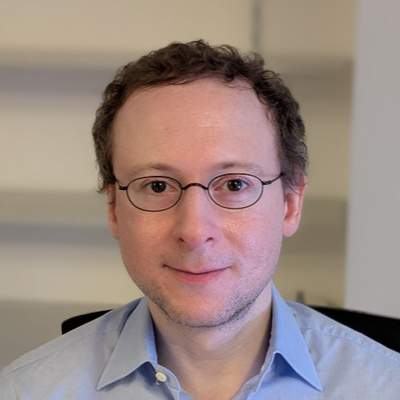
By Gavin Mackintosh-
The Cambridge professor who triggered the viral criticism of the late Jason Arday is an an ardent promoter of racial intelligence, it has been revealed. Nathan Cofnas(pictured) did not discover every concern surrounding Jason Arday. But he was the academic who turned a long-running, largely private dispute over Arday’s scholarship into a national controversy.
On July 21, Cofnas published a lengthy investigation on his newsletter alleging substantial plagiarism in Arday’s 2015 PhD thesis, awarded by Liverpool John Moores University. He said he had run the thesis through plagiarism-detection software and identified extensive similarities with a 2009 doctoral dissertation by Paula Zwozdiak-Myers of Brunel University. He reproduced side-by-side passages and argued that some material had been lifted with minimal editing. The allegations were not, however, born entirely with Cofnas.

AD: Capeesh Restaurant
Retired Plymouth Marjon University professor Dave Harris had previously raised concerns about Arday’s academic work, while Times Higher Education had investigated allegations as early as 2025. According to Retraction Watch, THE had prepared a 63-page dossier comparing Arday’s work before the story was abandoned after Arday’s lawyers intervened. Cofnas says he began his own investigation after being contacted by a Cambridge faculty member concerned about the university’s response.
It is more accurate to say that Cofnas was the person who publicly detonated the plagiarism controversy, rather than claiming he was the first person ever to identify concerns about Arday. It also matters because Cofnas is not a neutral figure in Britain’s increasingly bitter argument over race, meritocracy and diversity.
The philosopher has described himself as a “race realist” and has published extensively on hereditarian theories and alleged racial differences in intelligence. His academic work has argued that research into group differences in intelligence should not be suppressed or dismissed simply because its conclusions may be uncomfortable. His public interventions have gone considerably further.

AD: Oysterian Sea Food Restaurant And Bar
Cofnas is a self-described “race realist” whose academic research focuses on the philosophy of biology and ethics. In February 2024, he published a post on Substack in which he claimed that race is linked to intelligence and that without DEI initiatives there would be no black academics at Harvard and that “under a colour-blind system” Black people “would disappear from almost all high-profile positions outside of sport and entertainment
In his July article about Arday, Cofnas wrote that Britain has more than a thousand Black people with IQs above 140 who would be capable of serious work in sociology of education. He argued that Cambridge could have found a qualified Black professor without compromising academic standards. He presented Arday’s appointment as evidence of what he regards as the damaging influence of diversity, equity and inclusion policies.
Cofnas has also argued for what he calls a “hereditarian revolution” and has criticised what he calls the “DEI devil”. In January 2026, Varsity reported that he advocated preserving racial distinctions and argued that talent is not distributed equally within or across groups.
Those views have already placed Cofnas himself at the centre of a Cambridge free-speech controversy. In 2024, Emmanuel College ended its relationship with him following controversy over his writing about race. Cambridge subsequently investigated complaints against him. The university announced in October 2025 that its inquiry had concluded that, although his published views were regarded by many as offensive, they did not breach the law or university regulations governing free speech.
That background does not invalidate his evidence about Arday. It does, however, make the provenance of the allegations an essential part of the story.Journalists should neither dismiss evidence because it comes from someone with controversial views nor present the allegations as though they emerged from a politically neutral academic process. The proper response is to examine the underlying documents.
And there is substantial material to examine. Cofnas identified similarities between Arday’s thesis and Zwozdiak-Myers’ earlier dissertation. He also identified similarities with other published work. His article further pointed to corrections subsequently made to some of Arday’s journal publications. In one 2018 paper, the journal added citations and revised sections to clarify the relationship between Arday’s work and earlier research. Yet, it remains crucial to use the correct language.
Arday denied plagiarism. Liverpool John Moores University had previously investigated allegations and cleared him. Cambridge later began a new investigation after additional information emerged. Arday resigned from Cambridge in August 2026 without a final Cambridge finding that he had committed plagiarism. So has another professor been found to have plagiarised a PhD thesis to the same extent?
There are important comparisons, but journalists should be wary of claiming that there is an identical precedent when the evidence does not support it.
One striking case is Martin Stone, a philosophy professor at the Catholic University of Leuven. In 2010, Times Higher Education reported that Stone was accused of plagiarising the PhD thesis of Finnish politician and academic Ilkka Kantola. Kantola said that tens of pages of Stone’s published work were identical or nearly identical to his thesis. Leuven’s scientific-integrity commission investigated the allegation, and Stone resigned from his Belgian university post.
Another case involving a professor is Robin DiAngelo, author of White Fragility. A complaint in 2024 alleged 20 instances of plagiarism in her 2004 doctoral thesis. But the University of Washington dismissed the complaint. It therefore cannot fairly be presented as proof that DiAngelo plagiarised her thesis. That is precisely the lesson from the Arday affair:-allegation, investigation and finding are three different things.
The tragedy surrounding Arday’s death makes that distinction even more important. He died at 41 shortly after resigning from Cambridge following the intense controversy. Police have said his death was unexpected but not suspicious. His family has blamed a sustained campaign of misinformation and harassment, while Cambridge has announced an independent review of his appointment and conduct.
There should be no attempt to turn his death into evidence that the allegations were either true or false. But there should be a serious examination of how the story developed. Cofnas’s ideological record deserves scrutiny because it provides essential context. His evidence deserves scrutiny for precisely the opposite reason: controversial beliefs do not make evidence false.
The real test is whether the passages he identified constitute plagiarism under accepted academic standards, whether previous investigations properly considered them, and whether Cambridge applied the same standards it would have applied to any other professor.
That is the public-interest story.
Not “Cofnas exposed a Black professor.”
And not “a racist fabricated a scandal.”
Rather: a controversial academic uncovered—or helped bring into the open—serious allegations about a Cambridge professor, allegations that had already been raised privately and investigated in part. The evidence must now be separated from the politics of the person who found it. But it must also matter a lot that other professors who have committed plagiarism did not receive the same level of media exposure. The question must be why different standards were applied to similar cases. That is a standard both Cambridge and the media should be prepared to meet.

AD: Heritage And Restaurant Lounge Bar