
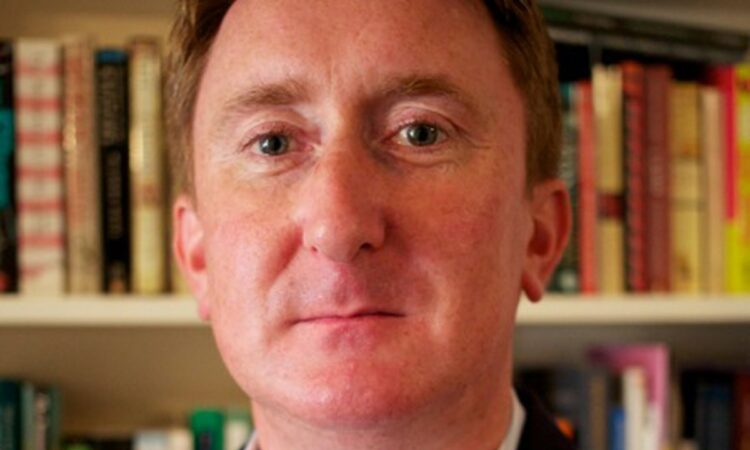
By Gabriel Princewill-
A Cambridge professor kept his job in 2023, despite findings of plagiarism against himThe controversy surrounding former Cambridge professor Jason Arday has raised a question that reaches beyond the allegations against one academic. Whether all cases of academic plagiarism treated equally by universities and the media?
That question is legitimate, particularly because Arday’s case became a national story. Arday, who in 2023 became Cambridge University’s youngest Black professor, resigned this month amid allegations concerning plagiarism in his doctoral thesis and questions about aspects of his academic record.

AD: Capeesh Restaurant
He denied plagiarism. Liverpool John Moores University, where he completed his PhD, had previously investigated allegations and cleared him. Cambridge subsequently launched its own investigation after additional material emerged. The controversy intensified dramatically after philosopher and self professed ‘racial realist’, Nathan Cofnas, publicly published comparisons between passages in Arday’s thesis and earlier academic work. The allegations were then taken up by national newspapers and became the subject of sustained scrutiny.
Arday has since died at 41, shortly after his resignation. Police have said his death was unexpected but is not being treated as suspicious. His family has accused the media of subjecting him to a campaign of misinformation and harassment. Those claims should be investigated, but they should not be confused with proof that the plagiarism allegations themselves were either true or false. The more uncomfortable question is what happens when the same standards are applied elsewhere.
Cambridge already has a remarkable comparison
In 2023, Cambridge’s student newspaper Varsity reported that an investigation had upheld a complaint against Dr William O’Reilly, an associate professor of early modern history.The allegation was not trivial.

AD: Oysterian Sea Food Restaurant And Bar
More than 12 pages of an article published under O’Reilly’s name were found to have been lifted almost word-for-word from two essays written by one of his undergraduate students. O’Reilly had been the student’s supervisor and had praised the essays for their originality. The university investigation concluded that the plagiarism complaint was upheld.
But the tribunal also found that the offence resulted from negligent acts rather than deliberate misconduct. Most strikingly, O’Reilly kept his job.
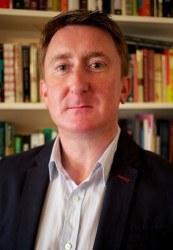
Cambridge professor: Dr William O’Reilly kept job despite plagiarism
That does not mean the two cases are identical, because they are not. Arday’s allegations concern his doctoral thesis and other academic material, whereas O’Reilly’s case concerned published material taken from a student’s work. But the comparison is still highly relevant because they both relate to plagiarism- a matter which affects the integrity of any academic.
O’Reilly’s case involved an established Cambridge academic, a student whose work was allegedly appropriated by his own supervisor, and an institutional finding that the plagiarism complaint was upheld.Yet it never became a national scandal on the scale of the Arday affair.
Another striking international example worthy of note exists.
In 2010, Times Higher Education reported that Martin Stone, a British professor of philosophy at the Catholic University of Leuven, had been accused of plagiarising the PhD thesis of Finnish politician and academic Ilkka Kantola.
Kantola said that tens of pages of his 1994 thesis were identical or nearly identical to material published by Stone ,without his name being mentioned. The university’s Commission on Scientific Integrity investigated the allegation, and Stone resigned from his position. That case provides an important comparison with Arday because the alleged source material was itself a doctoral thesis.However, Mr stone was not subjected to anywhere near the same level of scrutiny as the late former Cambridge professor. Why? Certainly, not because the UK press chose to give his story a miss, but more likely because there was no big trigger coming from the likes of Nathan Cofmas
Martin Stone’s case also did not receive much exposure primarily because it lacked the high-profile societal or political cultural hooks that typically drive mainstream news cycles. While his case became infamous within academic circles, it remained a niche story largely confined to higher education and specialised academic integrity platforms
Mainstream media outlets are known to heavily prioritise stories that touch on polarising national topics, such as diversity, equity, inclusion (DEI), identity politics, or elite governance scandals. For comparison, the massive media storms surrounding other high-profile plagiarism controversies—such as those involving Harvard’s Claudine Gay or Cambridge’s Jason Arday—were propelled to the national front pages because they intersected with broader socio-political debates. Stone’s misconduct was viewed purely as an insular case of academic fraud devoid of identity politics or modern culture war elements, national news desks largely ignored it
Before the latest controversy, Liverpool John Moores University had investigated the allegations and concluded that Arday had not committed plagiarism. Arday told the Guardian that he supported fair investigations and said previous academic-misconduct investigations had found no plagiarism or misconduct. The new allegations therefore deserved examination — but they did not automatically constitute proof There is an obvious answer that has little to do with race: Arday was unusually newsworthy.
He was a Cambridge professor. He was described as the university’s youngest Black professor. His personal story — including his childhood developmental difficulties and remarkable rise through academia — had previously received extensive publicity. The same qualities that made his appointment an inspirational story also made the subsequent controversy exceptionally powerful news. But there is another factor that cannot simply be dismissed.
The most prominent public critic of Arday’s academic record, Nathan Cofnas, is himself a highly controversial figure in debates over race and intelligence and diversity, equity and inclusion. The Guardian has described him as a self-defined “race realist”. Cambridge previously investigated complaints concerning Cofnas’s own writings about race and Black academics, ultimately concluding that although his views were regarded by many as offensive, they did not breach the relevant rules.
That background does not disprove Cofnas’s allegations. Evidence does not become false because the person presenting it holds controversial opinions. But it is unquestionably relevant to the story. A journalist reporting the allegations should tell readers who brought them forward, what evidence was presented, what Cofnas’s public positions are , and whether independent experts agree with his interpretation.
The real double-standard question
The strongest criticism of the media is therefore not that it reported the Arday allegations.It is that journalists should ask why some cases of academic misconduct become national morality plays while others remain confined to university disciplinary procedures.
O’Reilly’s case is particularly uncomfortable because it happened at Cambridge itself. The university found that a plagiarism complaint against a professor had been upheld. The material allegedly came from the work of a student whom he supervised. Yet the professor remained in his position. That does not prove that Arday was treated unfairly.
But it provides exactly the sort of comparator that journalists should investigate. How many professors have faced plagiarism complaints, been formally investigated, found responsible, and remained in their jobs? Without those numbers, claims of a racial double standard remain allegations rather than demonstrated facts.
What the media should have done
The correct approach was neither to protect Arday from scrutiny nor to presume his guilt.Journalists should have published the disputed passages, sought independent academic assessments, reported the earlier Liverpool John Moores investigation and given Arday a meaningful opportunity to respond.
They should also have examined the backgrounds and motivations of those making the allegations. Most importantly, they should have searched for comparators.
If a white Cambridge professor had faced an equivalent allegation, how was it handled? If plagiarism was established, did the university treat it as deliberate misconduct, negligence or something else? Those are questions that can be answered with documents rather than political assumptions. There is currently no sound basis for claiming that another professor has been proven to have committed exactly the same alleged doctoral-thesis plagiarism as Arday.
There is, however, clear evidence that professors have faced serious plagiarism findings without receiving anything approaching the same national media attention.
William O’Reilly is the most relevant Cambridge example. Martin Stone is an important historical comparison involving allegations of copying from a doctoral thesis. The lesson is not that Arday should never have been investigated. Rather, it is that academic integrity must be judged by consistent standards.
If plagiarism is serious enough to justify destroying one academic’s reputation, the public deserves to know whether universities and journalists apply the same seriousness when the academic is white, politically conservative, less famous, or simply less useful to a wider cultural argument.
And that is ultimately the most important story emerging from the Arday affair. The question is not whether Cambridge should investigate allegations of plagiarism. It should. The question is whether Cambridge — and the media — investigate everyone with the same determination, proportionality and scepticism.
Until that question is properly answered, claims of a double standard will rightfully remain open, and the Arday controversy will continue to expose uncomfortable weaknesses not only in academic governance, but in the way Britain decides which scandals deserve to bec.ome national new

AD: Heritage And Restaurant Lounge Bar