
By PA News Agency-
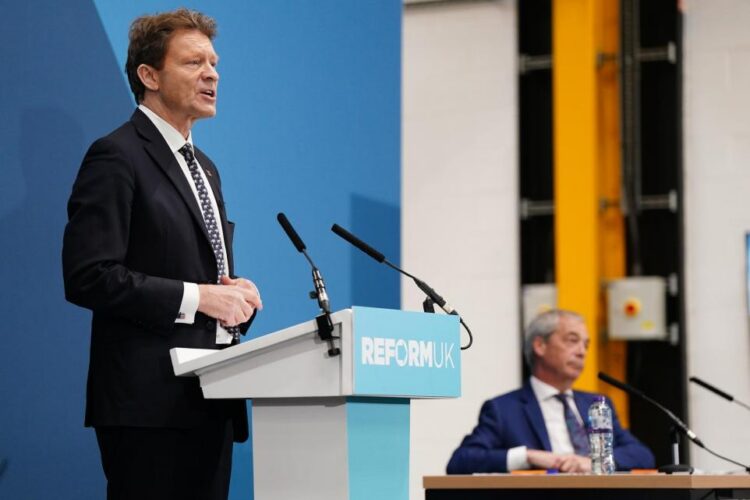
Reform UK deputy leader Richard Tice is facing an investigation by Parliament’s standards watchdog over an allegation that he failed to declare an interest before taking part in a parliamentary debate, triggering renewed questions about transparency, accountability and the rules governing MPs’ conduct.
The investigation was opened last Tuesday by the Parliamentary Commissioner for Standards, Daniel Greenberg, who confirmed on the parliamentary website that a formal inquiry had begun into allegations concerning the former businessman and senior Reform UK figure.

AD: Capeesh Restaurant
The investigation centres on an alleged “failure to declare an interest”, although the precise details of the complaint and the evidence being examined have not yet been made public by the standards commissioner.
Tice has responded publicly to the investigation, claiming that the complaint relates to whether he should have referred to his entry in the Register of Members’ Financial Interests at the beginning of a debate concerning UK democracy and Israeli influence.
Writing on X, formerly known as Twitter, Tice criticised the complaint and claimed it had originated from what he described as an “anti-Semitic anti-Israel lobby group”. He did not identify the organisation involved.

AD: Oysterian Sea Food Restaurant And Bar
“Contrary to garbage in media: Standards Commissioner is considering complaint by anti-Semitic anti-Israel lobby group over whether I should have referenced my register of interests at the start of a debate on UK democracy and Israeli influence,” he wrote.
Tice also raised questions about another MP, claiming that a separate organisation had failed to raise concerns about an alleged undeclared donation involving Ayoub Khan MP and a pro-Palestinian group.
The allegations made by Tice have not formed part of the standards commissioner’s published statement, and the investigation remains focused on whether parliamentary rules relating to declarations of interest were followed.
The opening of the investigation does not represent a finding of wrongdoing. Parliamentary standards investigations are designed to establish whether MPs have complied with the rules and whether further action is required.
The Register of Members’ Financial Interests exists to ensure transparency by requiring MPs to declare financial interests, outside roles, gifts, donations and other benefits that could reasonably be perceived as influencing their parliamentary work.
The rules are intended to protect public confidence by ensuring that voters can understand any relevant connections that may exist between an MP’s activities and their decisions or contributions in Parliament.
Failure to declare an interest, if proven, can result in findings against an MP and possible sanctions depending on the seriousness of the breach. However, the process allows MPs the opportunity to respond to allegations and provide explanations before any conclusions are reached.
The investigation comes at a significant moment for Reform UK, which has rapidly expanded its influence in British politics under the leadership of Nigel Farage. Tice, who has served as the party’s deputy leader, has played a prominent role in promoting Reform UK’s policies on issues including taxation, immigration, business and government reform.
A former property developer and businessman, Tice entered frontline politics after becoming one of the leading figures associated with the Brexit campaign. He later became leader of Reform UK before Farage returned to lead the party. His role within Reform UK has placed him at the centre of the party’s efforts to establish itself as a major force in Westminster politics.
The investigation also highlights the wider scrutiny facing politicians over declarations of interest, particularly as public concern about political transparency continues to grow. Parliamentary rules require members to be open about relationships, financial arrangements and external interests that could influence—or appear to influence—their parliamentary responsibilities.
The principle behind the rules is not that MPs cannot hold outside interests or express opinions on controversial issues, but that the public should have access to information that allows them to judge potential conflicts.
Political ethics experts have frequently argued that transparency is central to maintaining trust in democratic institutions.
Professor Robert Hazell, an expert in constitutional affairs, has previously highlighted the importance of clear standards for MPs, arguing that public confidence depends not only on politicians behaving properly but also on ensuring their conduct can be independently scrutinised.
The latest investigation follows a series of controversies involving MPs from across the political spectrum in recent years, demonstrating that parliamentary standards procedures apply regardless of party affiliation.
The Parliamentary Commissioner for Standards investigates complaints relating to MPs’ conduct and advises the Committee on Standards, which can recommend sanctions where breaches are established. The commissioner’s role is independent and does not determine guilt simply because an investigation has been launched. The investigation represents another test of Reform UK’s relationship with Westminster’s established accountability systems.
The party has frequently positioned itself as challenging traditional political structures, criticising what it describes as failures of the existing political establishment. However, as Reform UK has gained parliamentary representation, its own politicians have become subject to the same rules and oversight mechanisms that apply to all MPs.
Supporters of Tice argue that politicians should be protected from what they view as politically motivated complaints and that standards investigations must be conducted fairly. Transparency rules exist precisely because MPs hold public office and that declarations of interest are essential to maintaining confidence in democratic decision-making.
The outcome of the investigation will depend on the evidence considered by the standards commissioner and any response provided by Tice.
Until that process is complete, no conclusion can be drawn about whether parliamentary rules were breached. However, the case has already reignited a broader debate about political accountability, the responsibilities of elected representatives and the importance of openness when MPs participate in parliamentary debates on sensitive issues.
As the investigation continues, attention will remain focused on whether Richard Tice complied with Parliament’s requirements for declaring relevant interests—and whether the episode becomes another chapter in the continuing debate over standards and trust in British politics.

AD: Heritage And Restaurant Lounge Bar