
By Tim Parsons-
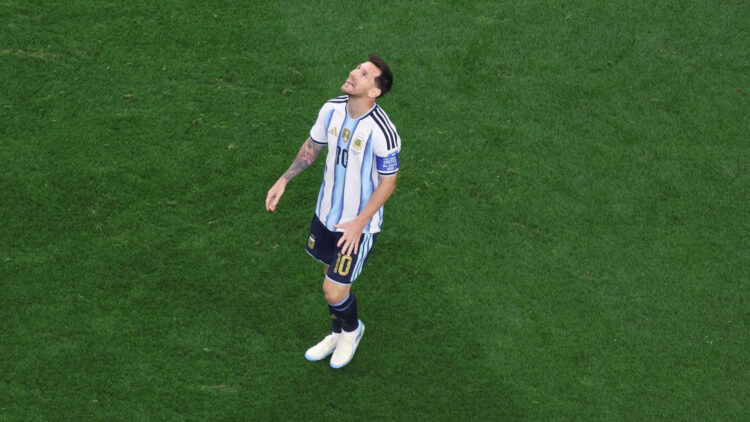
Lionel Messi has once again rewritten the history books, scoring his 17th World Cup goal for Argentina and becoming the all-time leading scorer in the tournament’s history, surpassing Germany’s Miroslav Klose.
The milestone came during Argentina’s group-stage clash against Austria at the 2026 FIFA World Cup, a moment that instantly echoed across stadiums, living rooms, and footballing capitals around the globe.

AD: Capeesh Restaurant
The goal arrived in the 38th minute, a sharp finish following a flowing Argentina move, and it capped yet another chapter in a career already considered one of the most decorated in sporting history. According to reports, Messi’s strike confirmed him as the outright leader in men’s World Cup goals, moving beyond Klose’s long-standing record of 16 goals set in 2014 .
With Argentina fans inside the stadium and millions watching worldwide, the moment felt less like a statistic and more like destiny unfolding. Messi had already entered the match tied at the top of the scoring chart after a blistering start to the tournament, but this goal separated him from every other player who has ever stepped onto football’s biggest stage.
What made the milestone even more striking was the journey behind it. Messi’s World Cup career has stretched across two decades, six tournaments, and countless defining moments, from heartbreak to triumph, culminating in a record that now stands alone in football history .

AD: Oysterian Sea Food Restaurant And Bar
This latest achievement also reinforced a remarkable statistical reality: Messi has now scored in six consecutive World Cup matches, a run that places him among the most consistent performers the tournament has ever seen. At 38 years old, he continues to defy expectations, not just competing at the highest level but shaping it.
When Messi first appeared at the World Cup in 2006 as a teenager, few could have predicted the longevity and dominance that would follow. That tournament introduced a shy, explosive talent to the global stage. Two decades later, he stands alone at the summit of its most coveted scoring chart.
His path to 17 World Cup goals has been built across multiple eras of football. From the physical battles of the late 2000s to the tactical evolution of the 2010s and the high-intensity modern game of the 2020s, Messi has adapted at every stage. His ability to evolve is part of what has kept him relevant while generations of players have come and gone.
Messi’s latest goal also came during a tournament in which he had already made headlines with a hat-trick against Algeria, a performance that immediately placed him level with Miroslav Klose’s long-standing World Cup record of 16 goals. The treble marked the moment Messi drew level with Klose and set up a historic chase for the outright record.
Entering the next stage of the tournament, Messi stood on 16 World Cup goals after that performance, with anticipation building around whether he would break the record in the following match. That earlier display had already signaled that history was within reach; the next match simply confirmed it.
Argentina’s tactical structure has increasingly revolved around Messi’s movement and vision, even in the later stages of his career. While younger teammates provide pace and energy, Messi remains the focal point the player who turns possession into decisive moments.
His 17th goal was no exception, coming after a sequence of passes that highlighted Argentina’s cohesion and his own enduring intelligence in finding space where others see none.
The significance of the record is not just numerical. Messi’s World Cup legacy is defined by persistence across eras, having competed against shifting generations of defenders, goalkeepers, and tactical systems while maintaining elite output . That consistency places him in a category few athletes ever reach: not just excellence, but sustained dominance over time.
The milestone also underscores a broader shift in football history. In years, Miroslav Klose’s 16 goals stood as an almost unbreakable benchmark, a record shaped by efficiency rather than spectacle. Messi’s 17th goal now redefines that ceiling, pushing the standard into a new era where longevity and evolution matter as much as peak performance.
Messi’s World Cup story is not only about goals but about emotional arcs that have defined global football culture. From early exits to near-misses, from heartbreak in 2014 to ultimate triumph in 2022, his journey has been marked by persistence under immense pressure.
Now, in 2026, he is writing what may be the final and most statistically significant chapter of his international career. His record-breaking goal adds another layer to a legacy already shaped by a World Cup title, multiple Golden Ball awards, and countless decisive performances.
Further statistics, Messi’s impact is measured in moments. The way stadiums react when he touches the ball. The expectation that follows every free kick, every run, every glance toward goal. His presence changes the rhythm of matches in ways few players in history have achieved.
Reports from Reuters highlighted that his latest strike came amid emotional undertones surrounding his personal life, adding depth to a moment already charged with significance . Despite such pressures, Messi delivered once again, reinforcing his reputation as a player who thrives under the weight of expectation.
His record also places him ahead of modern rivals and legends alike in the World Cup scoring hierarchy. Players like Ronaldo, Mbappé, and others continue to chase history, but Messi now occupies a space beyond competition a reference point against which future generations will be measured.
Statistically, he now stands alone at the top of the World Cup scoring list, a position once thought permanently shared or unreachable. The significance of that achievement is amplified by the fact that it comes in an era of increased defensive organisation and higher competitive balance compared to earlier tournaments.
Football analysts have long debated what defines greatness: trophies, influence, or numbers. Messi’s 17th World Cup goal adds another argument endurance at the highest level across twenty years of global competition. Fans in Argentina celebrated and neutrals around the world reflected on the moment, one truth became increasingly clear: this is not just a record, but a landmark in sporting history.
Whether this is Messi’s final World Cup or not, his legacy is already sealed. The records he has broken, the finals he has shaped, and the generations he has inspired ensure that his influence will extend far beyond the pitch.
Messi’s career has been defined by moments that transcend football itself, and his latest achievement continues that pattern. In the end, the 17th goal is more than a number. It is a punctuation mark on one of the greatest careers in sport and a reminder that some legends do not fade with time. They expand it.

AD: Heritage And Restaurant Lounge Bar