
By Tim Parsons-
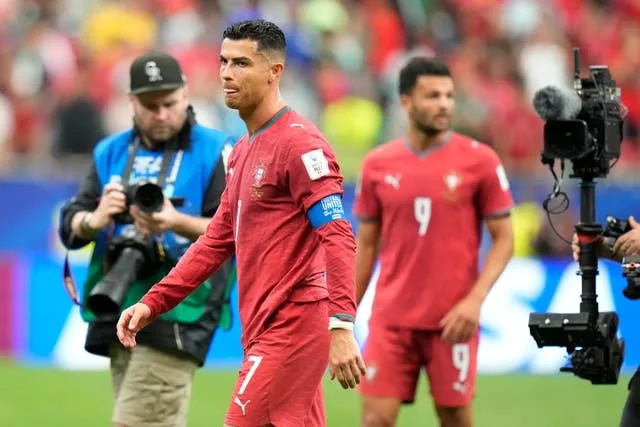
A packed World Cup stadium witnessed an unexpected stalemate as Cristiano Ronaldo and Portugal national football team were held to a 1–1 draw by the spirited DR Congo national football team in a match that combined tactical discipline, physical intensity, and late drama.
What had been billed as a routine group-stage victory for Portugal instead turned into one of the tournament’s most talked-about surprises, as Congo’s resilience blunted Portugal’s attacking firepower and forced a result that reshapes the group standings at this stage of the FIFA World Cup.

AD: Capeesh Restaurant
Portugal began their World Cup opener with their trademark high-tempo approach, immediately asserting control of possession and pushing DR Congo deep into their own defensive third. Portugal dominated the ball in the early stages, circulating it patiently through midfield while attempting to stretch Congo’s defensive block and create openings between the lines .
Cristiano Ronaldo, deployed centrally as the focal point of attack, operated largely inside the penalty area and was heavily involved in the opening exchanges, with Sports Mole highlighting that he was expected to lead the line and occupy advanced positions throughout Portugal’s attacking phases .
During this spell, he tested the defensive structure with early efforts, including attempts from close range and from the edge of the box, as Portugal’s midfield trio anchored by Bruno Fernandes and Bernardo Silva dictated the tempo and recycled possession to probe for gaps in Congo’s shape.

AD: Oysterian Sea Food Restaurant And Bar
Despite this sustained pressure, DR Congo maintained a disciplined and compact defensive organisation, well-drilled unit that could shift into a deep block to deny central space and limit penetration in dangerous areas . Their two tight defensive lines held firm, frustrating Portugal’s attempts to convert territorial dominance into clear-cut chances and forcing them into wider, less threatening areas of the pitch.
Congo’s game plan was clear from the outset: absorb pressure, stay compact, and break quickly when opportunities arose. Their first real warning to Portugal came midway through the first half when a swift counterattack exposed space behind the Portuguese full-backs. Although the move ended with a shot dragged wide, it signalled that Congo were not content to merely defend.
Portugal eventually broke the deadlock in the 28th minute. A slick passing sequence involving Bernardo Silva and Bruno Fernandes sliced open the Congolese midfield, allowing the ball to be slipped into Ronaldo inside the box.
The forward, showing his trademark composure, finished low into the corner, sending the Portuguese supporters into celebration. It was a classic Ronaldo goal efficient, decisive, and seemingly in line with Portugal’s growing control of the match.
Yet the goal did not dismantle Congo’s resolve. Instead, it appeared to sharpen their focus. Portugal continued to dominate possession for the remainder of the first half, but Congo’s defensive resilience, combined with disciplined pressing in midfield, prevented further damage. While the half-time whistle blew, the expectation remained that Portugal would eventually extend their lead.
However, the tone of the match had subtly shifted, with Congo increasingly confident they could exploit space if Portugal became too aggressive.
Congo’s resilience sparks a stunning equaliser and reshapes group dynamics
The second half began with a noticeable change in intensity from DR Congo national football team. Rather than sitting deep, they pressed higher up the pitch, forcing Portugal into uncharacteristic errors in build-up play. The shift paid immediate dividends in terms of territory and confidence, even as Portugal retained more possession on paper.
Ronaldo continued to look dangerous, dropping into pockets of space and attempting to link play, but Congo’s central defenders remained physically uncompromising.
Every aerial duel was contested fiercely, and Portugal found themselves increasingly forced to rely on speculative shots from distance rather than clear-cut chances. The match began to resemble a test of patience for Portugal, who were unable to convert their technical superiority into a decisive second goal.
The turning point arrived in the 67th minute, when DR Congo capitalised on a loose Portuguese pass in midfield and quickly turned defence into attack. Match reporting from Fox Sports’ live boxscore and play-by-play coverage confirms that Congo were increasingly effective at winning midfield duels and triggering fast transitions in the second half, repeatedly exploiting space left behind Portugal’s advanced shape.
Congo broke rapidly down the right flank, with wide players pushing forward into space as Portugal struggled to recover their defensive structure. Live match report similarly highlights Congo’s ability to strike quickly in transition, noting how their attacking move unfolded at pace after regaining possession in central areas .
A low, driven cross was then delivered into the penalty area, bypassing Portugal’s centre-backs and finding Yoane Wissa arriving at speed to finish clinically past the goalkeeper. Live match tracking and highlights feed also describe the equaliser as a well-worked counterattacking move, with Wissa applying a composed finish after Congo’s rapid progression into the final third .
The goal stunned the Portuguese players and shifted momentum sharply, with Congolese substitutes and staff celebrating enthusiastically on the touchline. Against the run of play in terms of possession and territorial control, Congo had punished Portugal’s defensive vulnerability in transition and restored parity at a crucial moment in the match.
The remainder of the match became increasingly tense. Portugal pushed forward with urgency, introducing fresh attacking options and increasing the tempo of their passing. Ronaldo had a late chance from a free kick just outside the penalty area, but the effort was deflected over the bar. Another opportunity came in the closing minutes when a cross found him unmarked, but his header drifted narrowly wide.
Congo, meanwhile, showed remarkable composure in the final stages. Rather than retreating entirely, they continued to threaten on the counterattack, forcing Portugal to remain cautious about overcommitting players forward. The final whistle confirmed a 1–1 draw that felt like a victory for Congo and a missed opportunity for Portugal.
The draw also has significant implications for the group standings at the FIFA World Cup, tightening the race for qualification and ensuring that both teams remain firmly in contention heading into their remaining fixtures. Analysts noted after the match that Portugal’s dominance in possession while impressive was not matched by clinical finishing or defensive control during transitions.
Speaking in the aftermath, Portugal’s coaching staff emphasised the need for sharper decision-making in the final third. While Ronaldo’s goal added to his already remarkable international record, the lack of a second goal proved costly. With Congo, the mood was one of pride and belief, with players highlighting their discipline and unity as key factors in securing the draw.
Football observers widely agreed that Congo’s performance could be one of the defining underdog stories of the tournament if they build on this result. Their ability to withstand pressure, adapt tactically, and capitalise on limited chances reflects a team growing in confidence at the right time.
The match reinforces the unpredictable nature of the World Cup, where established powers can be tested by emerging teams capable of executing disciplined, high-intensity game plans. Portugal remain favourites to progress, but the draw ensures that their path forward is no longer straightforward.

AD: Heritage And Restaurant Lounge Bar