
By Samantha Jones-
A former Nottinghamshire Police officer has been found guilty of gross misconduct following a collision that claimed the life of 80-year-old Trevor Bartlett, a retired news photographer.
The disciplinary ruling has reignited debate about police accountability and the pressures faced by officers tasked with urgent operational duties, raising uncomfortable questions about how the UK’s forces balance speed, duty, and public safety.

AD: Capeesh Restaurant
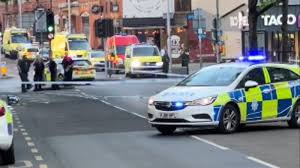
The disciplinary hearing, held on Friday 5 June and chaired by Chief Constable Steve Cooper, concluded that ex-Police Constable Steven Allcock, 34, committed gross misconduct when he struck Mr Bartlett with a police van on the A52 Derby Road at Beeston, Nottingham, on 19 December 2023. Mr Bartlett was confirmed dead at the scene.
The panel determined that Allcock’s conduct constituted a serious breach of professional standards, specifically discreditable conduct, and that his actions had caused a fatality. It emphasised that the officer’s behaviour had undermined trust in the police, a key factor in public confidence.
The panel noted that, had Allcock remained a serving officer, he would have been dismissed immediately. Instead, he resigned from Nottinghamshire Police on 31 May 2026 and will now be placed on the barred list, preventing future employment in policing.

AD: Oysterian Sea Food Restaurant And Bar
Earlier this year, Allcock had admitted causing Mr Bartlett’s death by careless driving. In February 2026, he appeared at Derby Magistrates Court and was sentenced to 180 hours of community service, alongside a two-year driving ban.
The Independent Office for Police Conduct (IOPC) revealed that Allcock was a newly qualified response driver at the time of the incident. He was transporting a detainee following a domestic incident, during which the prisoner had been self-harming and shouting. The collision occurred while traffic lights at the crossing were red, underscoring the fatal misjudgment made by the officer.
“Police may drive through red lights where necessary, but they should not endanger the safety of other road users,” said IOPC Director Emily Barry. “PC Allcock failed to consider the potential hazards, with fatal consequences, and he has now been held accountable for his actions. Our sympathies remain with Mr Bartlett’s family and everyone affected by this tragic death.”
The IOPC investigation, completed in December 2024, led to the referral of a file of evidence to the Crown Prosecution Service, which authorised charges against Allcock for gross misconduct. The disciplinary hearing therefore represents the final stage of a two-year process, highlighting both the thoroughness and the complexity of police accountability procedures in fatal incidents.
The case has sparked renewed discussion about the broader culture of policing in the UK. According to Home Office figures, there were 6,538 complaints about police misconduct in England and Wales in 2023, with 1,058 classified as serious. In Nottinghamshire specifically, 165 complaints were recorded that year, 17 of which resulted in formal misconduct hearings. While the majority of officers uphold professional standards, cases like Allcock’s can severely erode public trust.
Fatal collisions involving police vehicles are relatively rare, but their consequences are severe. A 2019 IOPC review found 56 fatal police vehicle collisions in England and Wales over a five-year period, with several cases revealing officers who failed to adequately assess risks to other road users. The Allcock case fits into this troubling pattern, underscoring the ongoing tension between urgent operational duties and the fundamental duty to protect the public.
The pressures faced by newly qualified response drivers have been highlighted repeatedly in internal reviews. In 2016, an assessment of Nottinghamshire Police noted weaknesses in supervision and training for officers transporting detainees, particularly when detainees were distressed or self-harming. The fatal collision involving Allcock has prompted calls for even stricter protocols and enhanced training for officers in high-stakes driving roles.
Community reaction has been marked by grief and frustration. Residents of Beeston, where Mr Bartlett lived, described him as a “gentleman and a consummate professional” whose life was cut tragically short. Local campaigners have urged the force to ensure that all officers, particularly those transporting vulnerable individuals, are fully equipped to assess risk in real time, even under pressure.
Experts warn that cases like Allcock’s reveal persistent systemic challenges. The College of Policing reported in 2025 that 12% of formal misconduct hearings involved officers whose behaviour had eroded public confidence. While disciplinary mechanisms exist, critics argue that there remains a gap between accountability and prevention. “We need to ensure that officers aren’t just punished after mistakes, but supported and trained to prevent them in the first place,” said Dr. Emily Turner, a policing policy analyst.
The tragedy also comes amid a wider climate of misconduct concerns in Nottinghamshire. In a separate but striking case, a police detention officer was recently found guilty of gross misconduct for sending unsolicited sexualized photographs, videos, and inappropriate messages to a woman. While unrelated to the fatal collision, the incident underscores the spectrum of professional failures that continue to challenge the integrity and public trust of the force.
The Allcock ruling also raises difficult questions about how the public perceives police risk-taking. Driving through red lights is permitted in emergencies, but only when officers take all necessary precautions. In this case, the disciplinary panel concluded that Allcock had failed to adequately assess the risks posed to other road users, leading to a fatality. It is a stark reminder that even split-second decisions can have irreversible consequences.
The ruling represents both accountability and a moment for reflection. The panel’s decision to bar Allcock from future policing ensures he cannot return, yet it cannot undo the harm caused. For the force, it is a call to redouble efforts on driver safety, supervision, and operational decision-making, particularly for newly qualified officers handling vulnerable detainees.
A Nottinghamshire police spokesperson told The Eye Of Media.Com: ‘Apart from disciplinary outcomes, the case has wider implications for public confidence in policing. Fatal incidents involving officers are rare, but each one is a high-profile reminder of the responsibility police hold and the scrutiny under which they operate. Ensuring transparency and rigorous adherence to professional standards is essential if the force is to maintain community trust.
‘The death of Trevor Bartlett is a sobering reminder of the stakes involved. While the disciplinary hearing establishes formal accountability, the human cost felt most keenly by his family, friends, and local community cannot be measured in hours of community service or professional sanctions.
”Our most hearfelt prayers go to the family friends of Mr.Bartlet. Nottingham police will learn a lot of lessons from this tragedy and prevent future loss and restore faith in the institutions sworn to protect the public.
The Allcock case crystalises the challenge facing UK policing: how to reconcile the need for rapid response with uncompromising standards of safety and professionalism. It is a reminder that trust is fragile, accountability is essential, and vigilance must never waver.

AD: Heritage And Restaurant Lounge Bar