
By Ben Kerrigan-
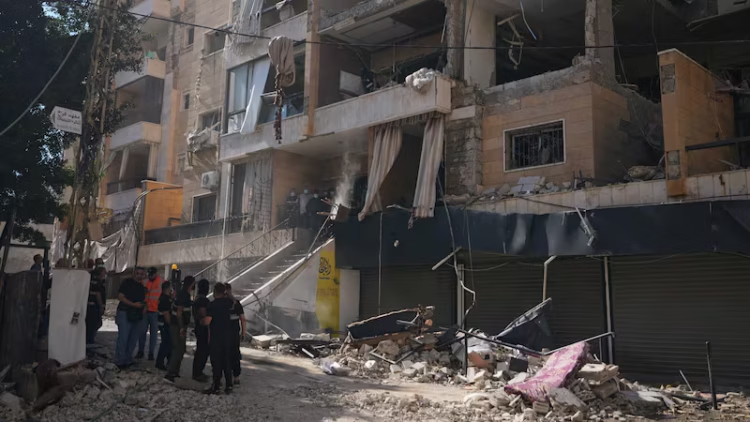
Israel launched airstrikes on Beirut’s southern suburbs on Sunday, just days after a U.S.-supported ceasefire agreement aimed at reducing hostilities between Israel and Hezbollah, raising fears that the fragile deal could unravel before it takes hold. The strikes targeted the Dahiyeh district, a Hezbollah stronghold in the southern outskirts of the Lebanese capital, marking one of the most significant escalations since Washington announced a new framework for de-escalation earlier this month.
Lebanese authorities reported casualties and damage to residential areas, while Israeli officials said the operation was directed at what they described as Hezbollah command facilities responsible for attacks against Israeli territory. According to reports Israeli Prime Minister Benjamin Netanyahu and Defense Minister Israel Katz said the strike was carried out in response to Hezbollah attacks and targeted a “terrorist headquarters” in Beirut’s southern suburbs.

AD: Capeesh Restaurant
The attack came less than a week after U.S.-led negotiations produced a ceasefire arrangement intended to halt cross-border violence and create conditions for broader diplomatic talks. The agreement, announced following discussions in Washington, called for a cessation of hostilities and increased security coordination along the Israel-Lebanon frontier.
Despite the diplomatic breakthrough, tensions had remained high. Israeli officials repeatedly warned that any attacks on northern Israel would trigger a forceful response. Earlier this week, Defence Minister Katz stated that Beirut’s southern suburbs could become a target if Hezbollah continued military operations against Israel. Witnesses in Beirut reported hearing multiple explosions shortly after dawn, with plumes of smoke rising above the Dahiyeh district. Emergency crews rushed to the scene as residents searched through damaged buildings and debris.
Lebanon’s state-run media reported that at least two people were killed and several others wounded in the strikes. Reports indicated that the attack occurred despite American efforts to prevent military action against the Lebanese capital. The Israeli military said the operation was intended to neutralize Hezbollah infrastructure allegedly linked to recent attacks on Israeli territory. Israeli officials argued that Hezbollah had violated the terms of the ceasefire, making military action necessary to deter future strikes.

AD: Oysterian Sea Food Restaurant And Bar
Hezbollah has not immediately provided a detailed response, though the group has consistently accused Israel of violating previous truce arrangements and targeting civilian areas.
The renewed violence has heightened concerns among diplomats and regional observers who hoped the ceasefire would mark the beginning of a broader effort to stabilise Lebanon and reduce the risk of a wider regional conflict involving Iran and its allies. The latest strike threatens to complicate ongoing negotiations between Washington and Tehran and could undermine months of diplomatic work aimed at preventing further escalation across the Middle East.
Ceasefire Under Pressure
The ceasefire agreement emerged after weeks of intense fighting between Israel and Hezbollah that displaced large numbers of civilians on both sides of the border and caused significant destruction in southern Lebanon. U.S. officials had portrayed the deal as an important step toward restoring calm, though analysts cautioned that the arrangement remained vulnerable to violations and mutual mistrust.
Even before Sunday’s strike, reports indicated that hostilities had not fully ceased. Israeli forces continued conducting operations in southern Lebanon, while Hezbollah maintained a military presence in areas near the border. Lebanese officials repeatedly accused Israel of breaching the spirit of the agreement, while Israeli leaders insisted that Hezbollah had failed to halt attacks completely.The situation became increasingly fragile when an Israeli strike in southern Lebanon on Friday killed members of the Lebanese armed forces, including a senior officer.
Lebanese officials condemned the attack and warned that continued military actions could jeopardise efforts to preserve the ceasefire. Israel said it was investigating the incident and maintained that its operations were directed at Hezbollah rather than the Lebanese military. Sunday’s strike on Beirut represented a significant escalation because the Lebanese capital had largely been excluded from the ceasefire’s most sensitive provisions. Reports from regional media suggested that U.S. officials had specifically urged Israel to avoid targeting Beirut in order to preserve diplomatic momentum and prevent a broader confrontation.
The attack immediately drew criticism from Lebanese political leaders, who accused Israel of undermining the agreement and threatening civilian lives. International humanitarian organizations also expressed concern about the potential impact on densely populated urban neighborhoods already affected by months of conflict.
Residents of Dahiyeh described scenes of panic as families fled damaged buildings and emergency vehicles moved through crowded streets. Many civilians in the area had already experienced repeated displacement during earlier phases of the conflict and feared that the latest strike could signal a return to sustained bombing campaigns. Reports from local authorities indicated that rescue operations continued throughout the day as crews searched damaged structures. Further in Lebanon, the strike has intensified fears of a broader regional confrontation involving Iran, Hezbollah’s principal backer. Iranian officials reacted sharply to the attack, warning that continued Israeli operations in Beirut could trigger retaliation and further destabilize the region. Several Iranian lawmakers publicly threatened consequences for both Israel and U.S. interests if attacks on Lebanon continue.
The timing is particularly sensitive because Washington has been pursuing parallel diplomatic efforts aimed at reducing tensions with Tehran. U.S. officials have sought to separate negotiations over regional security from ongoing military confrontations, but renewed violence in Lebanon risks complicating those efforts. Analysts warn that any significant escalation between Israel and Hezbollah could quickly draw additional regional actors into the conflict.
WithTrump administration, the latest developments represent a setback to efforts to showcase diplomacy as a path toward regional stability. While U.S. officials have acknowledged Israel’s security concerns, they have also emphasised the need to preserve ceasefire arrangements and prevent humanitarian conditions in Lebanon from deteriorating further.
The strike also highlights the persistent challenge facing international mediators attempting to broker lasting agreements in the region. Previous ceasefires between Israel and Hezbollah have repeatedly collapsed amid accusations of violations, retaliatory attacks and disagreements over implementation mechanisms. The current arrangement was viewed as an opportunity to break that cycle, but Sunday’s events have cast fresh doubt on its durability. Diplomatic efforts continue, attention will focus on whether Hezbollah chooses to retaliate and whether Washington can persuade both sides to return to the ceasefire framework. The coming days are expected to be critical in determining whether the latest violence remains a limited flare-up or becomes the beginning of another prolonged phase of conflict.
The airstrikes on Beirut’s southern suburbs have underscored the precarious nature of the ceasefire and the difficulty of achieving lasting peace in a region where military action and diplomacy continue to collide. With tensions rising once again and regional powers exchanging warnings, the prospects for stability appear increasingly uncertain, even as international mediators work to prevent a broader war from emerging from the latest crisis.

AD: Heritage And Restaurant Lounge Bar