
By Ben Kerrigan-
A senior police chief has issued an apology to the family of a teenager killed in a high-profile stabbing case, acknowledging “profound distress” caused by the force’s handling of the incident, while political tensions have escalated after Reform UK leader Nigel Farage was accused of exploiting the tragedy for political gain.
The apology came after widespread criticism of Hampshire police’s initial response to the death of 18-year-old Henry Nowak, who was reportedly handcuffed while seriously injured after being stabbed. The Independent Office for Police Conduct has opened an investigation into the actions of officers at the scene, amid public outrage over bodycam footage and claims the victim was initially treated as a suspect.

AD: Capeesh Restaurant
The case has quickly become politically charged, with Prime Minister Sir Keir Starmer condemning violence linked to subsequent protests and warning against attempts to politicise the incident. He said the victim’s family should be allowed to grieve in peace, while urging calm as tensions rose across Southampton following demonstrations that turned violent and left police officers injured.
Chief Constable Alexis Boon of Hampshire Police publicly apologised to the Nowak family, describing the incident as an “absolute tragedy” and acknowledging the distress caused by the way officers responded when the teenager was found critically injured.
The apology follows intense scrutiny of whether officers failed to properly assess the situation at the scene, including claims that emergency response protocols were not followed appropriately.

AD: Oysterian Sea Food Restaurant And Bar
According to reports, officers initially believed Nowak may have been involved in the altercation before the full circumstances became clear, leading to accusations of serious misjudgment. The force has faced growing pressure from MPs and community leaders, while the Independent Office for Police Conduct continues to examine whether procedural failures contributed to the handling of the case.
The incident has also reignited broader debate over policing standards and decision-making in fast-moving violent crime scenes. Officials have stressed that no conclusions have yet been reached, but the apology from senior leadership has been seen as an acknowledgment that the force’s initial response fell short of public expectations.
The case has sparked wider unrest, with protests erupting in Southampton and clashes between demonstrators and police leading to multiple injuries. Authorities have urged restraint as tensions remain high and investigations continue.
Farage accused of political exploitation as tensions rise
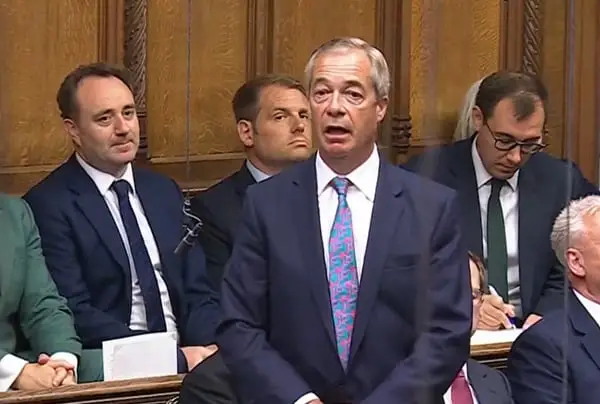
The political fallout intensified after Reform UK leader Nigel Farage was accused by opponents of exploiting the tragedy for political purposes, with critics arguing that his comments risk inflaming community divisions at a sensitive time for the victim’s family.
Farage has faced backlash for remarks linked to the case, with senior political figures condemning what they describe as attempts to turn a personal tragedy into a broader political argument about policing and race. Prime Minister Keir Starmer directly criticised Farage in Parliament, saying the family’s wishes should be respected and accusing political figures of using the case to deepen division.
The controversy comes amid an already heated national debate over policing, race, and public trust in law enforcement, with the incident becoming a flashpoint in wider arguments about institutional accountability and political rhetoric.
Supporters of Farage argue he is raising legitimate questions about policing standards and public safety, but opponents say his intervention risks escalating tensions and undermining efforts to allow the legal process and investigations to proceed without interference.
As inquiries continue, officials have repeatedly urged restraint from political leaders and campaigners alike, warning that further escalation could deepen public anger and prolong distress for the victim’s family, who have asked for privacy and for the tragedy not to be politicised.
The Independent Office for Police Conduct (IOPC) is expected to publish initial findings in the coming months, which could prove pivotal in determining whether disciplinary action or procedural reforms are required within the force.
Those early conclusions are likely to focus on how officers interpreted the situation at the scene, including whether the victim was initially misidentified, how quickly information was relayed between responding units, and whether existing guidance for dealing with serious violent incidents was followed appropriately under pressure.
Investigators are expected to examine body-worn camera footage, emergency call recordings, and radio communications between officers to reconstruct the timeline of events in detail. That evidence will be central to assessing whether decision-making in the critical first minutes of the response met the standards expected under national policing protocols.
Particular attention is likely to be given to whether officers prioritised scene safety over immediate medical intervention, and whether any delay in recognising the victim’s condition contributed to the distress highlighted by the family and public.
If the IOPC identifies potential failings, it could recommend disciplinary proceedings against individual officers or senior decision-makers involved in the initial response. In more serious cases, findings may be referred to the Crown Prosecution Service if there is evidence suggesting misconduct in public office or breaches of professional duty.
However, such outcomes remain rare, and investigators typically distinguish between errors made under extreme operational pressure and conduct that falls below acceptable professional standards. In addition to personal responsibility, the investigation is anticipated to look into broader procedural issues, such aswhether existing training sufficiently equips officers to handle fast-changing violent situations involving numerous peopleand ambiguous threat levels.
Policing experts have previously warned that such situations often unfold within minutes, leaving little time for confirmation of identity or intent, which can increase the risk of misinterpretation and delayed medical response.
The case has already prompted renewed discussion within policing circles about how forces communicate internally during critical incidents. Analysts suggest that fragmented communication systems and competing priorities at the scene can sometimes contribute to confusion, particularly when officers are responding to both potential threats and casualty care simultaneously.
Any recommendations emerging from the IOPC report could therefore extend beyond Hampshire Constabulary, potentially influencing national guidance issued to all UK police forces. With the victim’s family, the publication of the initial findings is expected to represent an important step in establishing accountability, even if it does not immediately result in disciplinary action.
Their legal representatives have indicated that clarity over what happened in the moments following the stabbing will be essential not only for understanding the circumstances of the death, but also for assessing whether systemic failures contributed to the outcome.
Politically, the findings are likely to be closely scrutinised, particularly given the heightened attention the case has already received. Any suggestion of procedural failings could intensify calls for reform, while conclusions that largely exonerate officers may still prompt debate about public confidence in policing and how incidents are communicated in real time to the public.
The IOPC’s early report is expected to set the tone for how the case is understood in the months ahead, shaping whether it becomes a catalyst for targeted reforms within the force or a broader national conversation about policing standards, accountability, and the pressures faced by officers responding to life-threatening emergencies.

AD: Heritage And Restaurant Lounge Bar