
By Theodore Brown-
An Utah judge has ruled that a crucial upcoming evidentiary hearing in the case of the man accused of killing conservative activist Charlie Kirk will be open to the public and press, rejecting defence efforts to close proceedings amid arguments over media exposure and fair trial concerns.
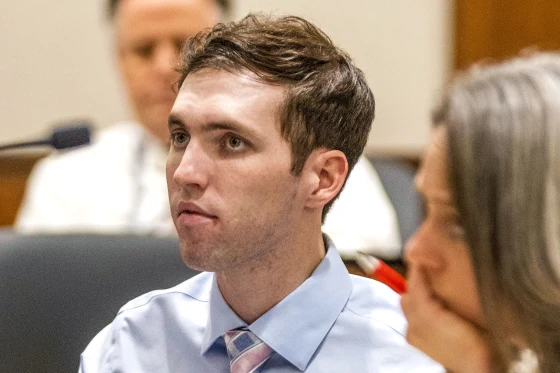
The decision, issued Monday by Fourth District Judge Tony Graf, ensures that the preliminary hearing for 23-year-old Tyler Robinson will proceed publicly from July 6–10, marking what prosecutors say will be the most significant presentation of evidence in the case so far.

AD: Capeesh Restaurant
Robinson is charged with aggravated murder in connection with the September 10, 2025 shooting at Utah Valley University, where Kirk was fatally shot during a public event. Prosecutors have indicated they intend to seek the death penalty if he is convicted. He has not yet entered a plea.
According to court filings and reports, Robinson’s defence team asked the court to restrict access to portions of the key hearing, arguing that extensive media coverage could prejudice potential jurors and compromise his right to a fair trial.
The motion sought limits on public and press access to certain evidence and proceedings, citing concerns over pretrial publicity in a case that has already drawn national attention. Judge Tony Graf rejected the request, ruling that there is a strong presumptive right of public access to court proceedings and that the defense had not shown sufficient justification to close the hearing or restrict attendance.

AD: Oysterian Sea Food Restaurant And Bar
“The public and the media enjoy a presumptive right to access court proceedings, including preliminary hearings,” Graf said. The ruling places renewed focus on one of the most closely watched criminal cases in the United States, where tensions between transparency, media scrutiny, and due process rights have repeatedly surfaced since Robinson’s arrest following a statewide manhunt.
The upcoming July hearing is expected to be a detailed evidentiary presentation in which prosecutors must demonstrate sufficient cause for the case to proceed to trial. Court documents suggest the state intends to present forensic evidence, surveillance footage, witness statements, autopsy findings, and alleged communications from Robinson that investigators say may link him directly to the crime.
Reports indicates that prosecutors plan to introduce multiple categories of evidence, including DNA analysis and alleged written statements attributed to Robinson describing intent and opportunity. Defence attorneys have pushed back strongly against broad media access, arguing that intense publicity surrounding the case risks contaminating the jury pool.
They requested restrictions on courtroom coverage and selective sealing of exhibits that could later be introduced at trial. Judge Graf, however, allowed the hearing to remain open while agreeing that some evidentiary materials may be restricted from copying or distribution.
The judge’s decision continues a consistent pattern in the case favouring transparency over closure. Earlier rulings in related proceedings have also leaned toward public access, including decisions allowing cameras in the courtroom during certain hearings.
Media organisations have strongly supported open proceedings, arguing that the case given its political sensitivity and national attention requires heightened transparency. The court has similarly acknowledged that while publicity risks exist, they do not automatically outweigh the constitutional presumption of open justice.
However, maintains that repeated media coverage has already shaped public perception. In earlier filings, attorneys described reporting on alleged evidence as “incomplete and prejudicial,” though prosecutors countered that public statements have been necessary to correct misinformation circulating in early stages of the investigation.
Judge Graf has previously addressed similar concerns in the case, noting in earlier rulings that restrictions on cameras and recordings must be justified by concrete evidence of harm, not speculative concerns about publicity.
A High-Profile Case Amid Political and Legal Scrutiny
The killing of Charlie Kirk, a prominent conservative political commentator and activist, on September 10, 2025, at Utah Valley University in Orem, Utah, drew widespread national attention and prompted renewed discussion about political violence in the United States.
Kirk, the founder of Turning Point USA and a well-known figure in conservative political circles, was fatally shot while speaking at a public event during his “American Comeback Tour,” an incident described in reporting as a targeted attack that shocked the political landscape.
The assassination led to swift law enforcement action and investigations at both state and federal levels, while also fuelling broader debate about polarisation, media scrutiny, and public safety at political events.
Robinson, who was arrested shortly after a multi-agency manhunt, has remained in custody since his indictment. Prosecutors have outlined what they describe as substantial forensic links between Robinson and the crime scene, including ballistic evidence and alleged digital communications.
Defence attorneys have not yet publicly presented a full account of their case but are expected to challenge both the strength and interpretation of the state’s evidence during the July hearing.
The judge’s ruling also comes amid broader scrutiny of how high-profile criminal cases are handled in the digital era, where courtroom proceedings are frequently subject to real-time reporting, online commentary, and viral dissemination of evidence and allegations.
In prior hearings, Judge Graf has emphasised the importance of maintaining both fairness and transparency, stating in earlier rulings that open proceedings are a foundational element of the justice system unless compelling reasons justify closure. That position has been cited in multiple prior court decisions involving media access disputes in this case.
Legal analysts say the upcoming hearing may become a pivotal moment in the case, not only for the prosecution’s ability to establish probable cause but also for shaping public understanding of the evidence. Because preliminary hearings often involve detailed evidentiary presentations, they can influence perceptions even though they do not determine guilt or innocence.
The decision to keep proceedings open also ensures continued media scrutiny in a case already marked by extensive national coverage. Courtrooms in Provo are expected to see significant public and press attendance during the multi-day hearing in July, with restrictions likely limited to the handling of sensitive exhibits rather than the proceedings themselves.
With the victim’s family and supporters, the ruling has been viewed by some as an affirmation of transparency in a case that has drawn intense public interest. With the defence, it represents another setback in efforts to limit pretrial publicity.
The case moves toward its most significant evidentiary phase yet, the balance between open justice and fair trial rights remains at the center of judicial oversight. Judge Graf’s ruling signals that, at least for now, transparency will take precedence in one of the most closely watched murder trials in recent U.S. legal history. With the July hearing approaching, both sides are preparing for a detailed and potentially contentious presentation of evidence that could shape the trajectory of the case heading toward trial.

AD: Heritage And Restaurant Lounge Bar