
By Kenneth Williams-
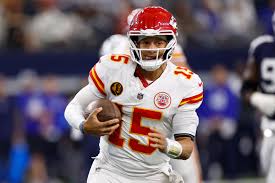
Kansas City Chiefs quarterback Patrick Mahomes took a major step in his recovery this week, returning to voluntary offseason workouts just over five months after undergoing surgery to repair serious ligament damage in his left knee.
The sight of Mahomes back on the practice field even while wearing a protective brace immediately lifted the mood around the franchise and reignited optimism that one of the NFL’s biggest stars could be fully ready by the start of the 2026 season.

AD: Capeesh Restaurant
The three-time Super Bowl champion joined teammates during the Chiefs’ first organised team activities (OTAs), participating in throwing drills and light movement work as coaches cautiously monitored his progress. While the practice session was closed to media members, clips released by the team showed Mahomes moving comfortably through drills and firing passes with his trademark arm strength.
The return marked Mahomes’ first on-field participation since suffering a season-ending ACL tear against the Los Angeles Chargers on December 14, 2025, later confirmed to also involve damage to his LCL, an injury that ended Kansas City’s postseason hopes and snapped their long playoff streak dating back to 2014.
According to multiple reports, the quarterback has remained ahead of schedule throughout rehabilitation, with Chiefs officials and coaches praising his commitment and noting consistent progress in his recovery work with team trainers.

AD: Oysterian Sea Food Restaurant And Bar
A franchise that has built its identity around Mahomes’ brilliance, his presence alone represented more than a routine offseason update. It was a signal that the Chiefs may once again be preparing to contend after a season defined by injuries, inconsistency, and frustration.
Chiefs See Encouraging Progress
Chiefs coach Andy Reid has repeatedly emphasised patience throughout Mahomes’ rehabilitation process, but his comments in recent weeks have reflected growing confidence that the quarterback is on track for a Week 1 return.
Earlier this month, Reid said Mahomes was “in a good position” physically and capable of participating in controlled football activities as the team gradually increases intensity during the offseason program. Team officials have remained careful not to overexpose the quarterback too early, especially considering the severity of the injury and the long-term importance of protecting the face of the franchise.
Mahomes suffered the injury in the closing minutes of a December 2025 loss that effectively eliminated Kansas City from playoff contention. He underwent surgery the following day in Dallas to repair both the ACL and LCL in his left knee.
Many analysts questioned whether the former MVP would be available for the start of the 2026 season. Instead, Mahomes attacked rehabilitation aggressively.
Reports throughout the spring documented his steady progress, including videos posted to social media showing the quarterback planting, throwing, and working through mobility drills. In March, footage emerged of Mahomes throwing passes during individual training sessions, fueling speculation that his recovery timeline could move faster than originally expected.
The Chiefs have still approached the situation carefully. Mahomes wore a large stabilizing brace during workouts this week, and there is no indication that Kansas City intends to rush him into full-contact football anytime soon. Yet even limited participation matters significantly this early in the offseason.
The quarterback’s involvement allows him to reconnect with receivers, rebuild timing within the offence, and reestablish leadership in the locker room after months spent away from active practices. Those details are especially important for a Chiefs team attempting to rebound from a rare losing season.
Kansas City’s struggles in 2025 exposed just how dependent the franchise remains on Mahomes. Before the injury, he threw for 3,587 yards with 22 touchdowns while also posting a career-high 422 rushing yards. But the offence never found consistent rhythm, and injuries across the roster compounded the problems. The organisation responded aggressively during the offseason.
The Chiefs added quarterback depth by acquiring Justin Fields in a trade and selecting LSU’s Garrett Nussmeier in the seventh round of the 2026 NFL Draft, moves widely viewed as reinforcement behind Patrick Mahomes as he continues his recovery from a serious knee injury.
Both players are expected to provide insurance and developmental depth in a quarterback room structured around Mahomes, with Fields serving as a veteran backup and Nussmeier developing as a long-term option.
Mahomes’ Return Changes the Outlook in Kansas City
Even in a controlled offseason environment, Mahomes’ return immediately altered the tone surrounding the Chiefs. In months, uncertainty hovered over the franchise. Questions persisted about whether Mahomes would return to his elite form, whether the knee would fully recover, and whether Kansas City’s championship window had begun to close after years of AFC dominance.
Optimism has returned around Patrick Mahomes’ recovery, with head coach Andy Reid and teammates praising his work ethic and consistency throughout rehabilitation. Reid has repeatedly emphasised Mahomes’ daily presence at the Chiefs’ facility, where he has spent the vast majority of his offseason instead of training independently in Texas as he typically does.
Reports indicate he has been completing the bulk of his rehab under the supervision of Kansas City’s medical staff, allowing for a structured recovery plan and continuous monitoring by team trainers.
Around the league, Mahomes’ recovery is already being viewed as remarkably fast considering the nature of the injury. Torn ACL and LCL combinations typically require lengthy rehabilitation periods, particularly for quarterbacks who rely heavily on movement outside the pocket. Mahomes’ game has always depended on improvisation, balance, and the ability to throw accurately while escaping pressure.
The Chiefs do not necessarily need him sprinting at full speed in May. What matters is that he appears comfortable enough to participate, move laterally, and throw without visible hesitation. That progress alone changes expectations for the upcoming season.
Kansas City opens the 2026 campaign against division rival Denver on Sept. 14 in a nationally televised matchup that could quickly become one of the league’s most anticipated season openers. While the Chiefs have avoided making guarantees, every indication suggests Mahomes is targeting that game as his official return.
The broader AFC landscape also adds urgency to his comeback. The conference continues to feature elite quarterback competition, including Joe Burrow, Josh Allen, and Lamar Jackson. Kansas City’s dynasty aspirations depend heavily on Mahomes remaining both healthy and explosive. Now, the Chiefs appear encouraged by every stage of the process.
Mahomes has maintained confidence from the beginning of his recovery. In his first public comments following surgery, he said his goal was to be ready for Week 1 “with no restrictions,” emphasising that returning for the season opener remained the target despite the uncertainty of rehab.
In May 2026, he was seen participating in organised team activities in a limited capacity, marking his first on-field work since the injury and reinforcing optimism within the organisation about a potential Week 1 return timeline.
In many ways, the image of Mahomes back on the practice field represented something larger than a routine rehab update. It symbolized resilience for both the quarterback and the franchise itself. After years of dominance, the Chiefs finally experienced adversity in 2025. Injuries mounted, losses accumulated, and playoff football disappeared from Kansas City for the first time in the Mahomes era. The road back was never going to begin in September.
It started quietly this spring, with voluntary workouts, cautious drills, and a quarterback wearing a knee brace while rebuilding toward the future. With the Chiefs, that future suddenly looks far brighter.

AD: Heritage And Restaurant Lounge Bar