
By Aaron Miller-
The Trump administration has deferred $1.3 billion in Medicaid reimbursements to California amid allegations of widespread fraud in the state’s healthcare system, escalating a growing confrontation between federal officials and Democratic-led states over oversight of public health funding.
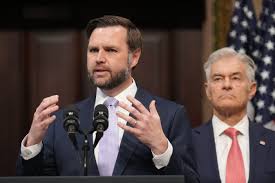
Vice President JD Vance announced the move Wednesday as part of a broader White House initiative aimed at cracking down on fraud in Medicare and Medicaid programs. Federal officials said the payment freeze is tied to concerns surrounding suspicious billing patterns involving hospice and home healthcare providers operating within California’s Medicaid system, known as Medi-Cal.

AD: Capeesh Restaurant
Speaking at the White House, Vance accused fraudulent providers of exploiting vulnerable patients and taxpayers through unnecessary treatments and questionable billing practices. “These fraudulent healthcare providers are getting rich by giving people medications they don’t even need,” he said during the announcement.
The deferred funds represent one of the largest federal actions taken against a state Medicaid program in recent years and deepen tensions between Washington and Gavin Newsom, whose administration has already faced mounting scrutiny over healthcare spending and immigration-related medical coverage policies.
Federal officials said the Centers for Medicare and Medicaid Services, led by Mehmet Oz, identified “outlier payments” and unusual reimbursement trends requiring further investigation before funds would be released. Oz described the action as “the largest deferral we’ve ever made” involving Medicaid reimbursements.

AD: Oysterian Sea Food Restaurant And Bar
California’s Medi-Cal program is among the largest public healthcare systems in the United States, serving roughly 15 million low-income residents. State and federal funding for the program is projected to exceed $220 billion in the upcoming fiscal year.
Although federal officials emphasized that patient services would continue uninterrupted, the deferral immediately intensified fears among healthcare advocates and providers already grappling with staffing shortages, rising costs and uncertainty over future federal support.
The administration’s action comes alongside a nationwide six-month freeze on new Medicare enrolments for hospice and home healthcare providers. Officials said the moratorium is intended to prevent fraudulent operators from entering federal reimbursement systems while investigators conduct deeper reviews of existing providers.
Under the new policy, existing providers can continue operating, but new applicants in the affected sectors will temporarily be blocked from billing Medicare. The Centers for Medicare and Medicaid Services also announced expanded use of data analytics and targeted investigations to identify suspicious claims and remove providers suspected of fraud.
Federal investigators have increasingly focused on California’s hospice and home healthcare industries after uncovering what authorities describe as networks of shell companies and fraudulent providers submitting millions of dollars in questionable claims.
In recent months, state and federal agencies suspended licenses for hundreds of hospice facilities and dozens of home healthcare agencies in Southern California.
A recent California Attorney General investigation alleged that multiple defendants participated in a $267 million Medi-Cal hospice fraud operation involving stolen identities and fake patient enrollments. Federal prosecutors have separately pursued cases involving hospice companies accused of billing Medicare for patients who were not terminally ill.
The administration’s aggressive enforcement push has been framed by Republicans as an effort to protect taxpayer money at a time of growing concern over healthcare costs and federal spending. Vance, who has become one of the administration’s leading voices on domestic policy, has repeatedly highlighted anti-fraud initiatives during political appearances ahead of the November elections.
Political Clash Over Healthcare Oversight
California officials have not formally responded in detail to the latest deferral announcement, though critics of the administration argue the move reflects a broader political strategy targeting Democratic-led states rather than a purely neutral anti-fraud campaign.
Healthcare analysts note that California is not the only state facing heightened scrutiny. Earlier this year, the administration halted more than $240 million in Medicaid funding to Minnesota over separate fraud concerns and ordered state officials to submit corrective action plans.
The White House has also warned all 50 states that failure to adequately investigate Medicaid fraud could result in additional funding freezes or federal intervention.
Some policy experts say fraud within Medicare and Medicaid remains a legitimate and longstanding problem, particularly in sectors such as hospice care, durable medical equipment and home health services, where reimbursement systems can be vulnerable to abuse.
Tricia Neuman, executive director of the Medicare policy program at KFF, told reporters that temporary enrolment freezes have historical precedent and can provide regulators time to strengthen oversight. She noted that similar moratoriums were used during previous administrations, including under President Bill Clinton.
Still, critics argue the administration’s tactics risk harming legitimate healthcare providers while creating instability for patients dependent on federally funded services.
Healthcare industry groups have warned that broad payment freezes and enrollment moratoriums may discourage providers from participating in Medicaid and Medicare programs, particularly in underserved rural and low-income communities already facing physician shortages.
Civil rights organisations and Democratic lawmakers have also accused the administration of politicizing healthcare oversight by disproportionately focusing enforcement efforts on blue states.
A recent analysis by Stateline found that most high-profile Medicaid fraud investigations launched under the current administration have centered on Democratic-led states, fuelling accusations of selective enforcement.
Federal officials reject those claims, arguing the investigations are driven by evidence and billing data rather than politics. CMS officials say advanced analytics have identified geographic “hot spots” where fraud risks appear especially concentrated.
Questions about the administration’s methods have also emerged following previous errors in federal fraud probes. Last month, CMS acknowledged it had relied on incorrect figures during part of a separate Medicaid fraud investigation involving New York. The admission prompted criticism from state officials who accused federal agencies of making public allegations before fully verifying data.
California Republicans have seized on the latest development to intensify criticism of Newsom’s healthcare policies. Earlier this year, Representative Young Kim demanded that California repay $1.3 billion in Medicaid funds allegedly used improperly for non-emergency healthcare services involving undocumented immigrants.
That dispute added another politically charged dimension to ongoing debates over immigration, healthcare access and state spending priorities.
However, the immediate concern centers on operational uncertainty. Industry leaders warn that prolonged reimbursement delays could strain hospitals, nursing services and clinics already operating on thin financial margins.
The administration insists the payment deferral is temporary and says California will have the opportunity to justify disputed claims and cooperate with federal investigators. No timeline has yet been provided for when the funds might be released.
Meanwhile, federal investigators continue expanding healthcare fraud enforcement nationwide through newly established strike forces operating in California, Nevada and Arizona. Authorities say the effort will combine criminal investigations, civil enforcement actions and advanced data monitoring aimed at identifying fraudulent billing schemes more rapidly.
The confrontation now unfolding between Washington and California reflects a broader national debate over how aggressively the federal government should police public healthcare spending and how far it should go when suspicions of fraud collide with the realities of delivering medical care to millions of vulnerable Americans.
With billions of federal dollars hanging in the balance, California’s response to the allegations could shape not only the future of Medi-Cal oversight but also the political battle over healthcare funding ahead of the 2026 midterm elections.

AD: Heritage And Restaurant Lounge Bar