
By Kenneth Williams-
A long-awaited sequel nearly two decades in the making has stormed the global box office. The Devil Wears Prada 2opened to an estimated $77 million in North America, securing the No. 1 spot in its debut weekend and delivering one of the strongest opening performances of the year for a female-driven film.
The film’s international rollout proved even more powerful, pushing its global debut to more than $230 million, according to studio estimates reported by multiple outlets.

AD: Capeesh Restaurant
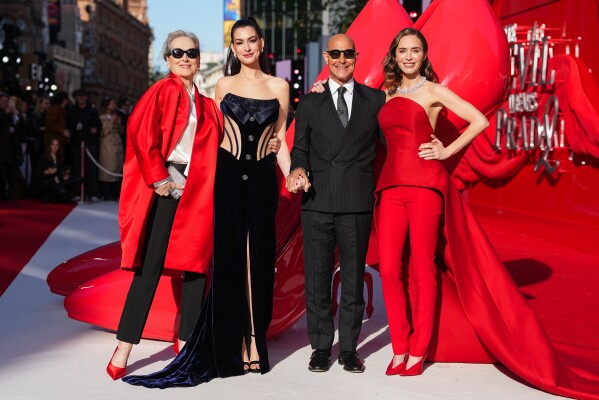
The result marks a significant cultural and commercial moment for Hollywood, underscoring the continued strength of legacy sequels and nostalgia-driven releases. Released twenty years after the original 2006 hit, the film reunites Meryl Streep, Anne Hathaway, Emily Blunt, and Stanley Tucci in a modern continuation of the fictional Runway magazine universe.
Early audience turnout suggests that the franchise’s cultural imprint has not faded, with strong interest driven by returning fans and a new generation discovering the original film on streaming platforms in the lead-up to the sequel’s release.
Industry analysts say the film’s debut reflects a broader shift in audience behaviour, where familiar intellectual property increasingly dominates theatrical success. Recent box office reporting shows that legacy franchises, biopics, and animated sequels are driving much of the year’s revenue, while original mid-budget films continue to struggle for visibility in theatres.

AD: Oysterian Sea Food Restaurant And Bar
One of the defining features of the film’s opening weekend has been its audience composition. Studio data and exit polling indicate that women made up a significant majority of ticket buyers, reinforcing long-standing assumptions about the franchise’s appeal.
Analysts have pointed out that few major studio releases consistently attract such a strong female audience at scale, making the debut particularly notable in a crowded summer release window.
Directed by returning filmmaker David Frankel, the sequel revisits the high-fashion, high-pressure world of magazine publishing in a transformed media landscape.
The story follows Hathaway’s character, Andy Sachs, as she returns to the orbit of Streep’s iconic Miranda Priestly, now navigating the collapse and reinvention of traditional print journalism. Early reviews have been mixed but generally positive, with critics praising the performances and nostalgic appeal even as some question whether the sequel fully captures the cultural impact of the original.
Behind the scenes, the film’s marketing campaign leaned heavily into nostalgia, with global press tours, fashion tie-ins, and coordinated social media engagement designed to reintroduce iconic moments from the original film. The strategy appears to have paid off, generating strong pre-release awareness and translating into immediate ticket sales across multiple international markets.
The film’s success also reflects a broader industry trend in 2026, where audiences have shown a strong appetite for “escapist entertainment,” according to box office analysts tracking recent releases.
Hollywood leans further into franchise strategy
The strong opening weekend has already sparked renewed debate in Hollywood about the future of original storytelling versus franchise expansion. Studios are increasingly relying on established intellectual property to guarantee box office returns, a trend that has accelerated in the post-pandemic recovery period and continues to define release strategies in 2026.
The performance of The Devil Wears Prada 2 places it among the top openings of the year, with a $77 million domestic debut and rapid ascent among 2026’s highest-grossing films.
Industry analysts say its success driven largely by nostalgia and returning audiences reinforces confidence in legacy sequels as a commercially reliable model, and could accelerate further development of revivals tied to early-2000s cultural properties with strong global recognition and streaming longevity.
Internationally, the film has also benefited from broad appeal, with strong turnout reported across Europe and parts of Asia. Early estimates suggest that overseas markets contributed more than half of the film’s opening weekend total, continuing a long-standing pattern where fashion-forward and character-driven dramas perform well outside North America.
Despite competition from other major releases, the film easily outpaced its nearest rival, a major musical biopic, which held steady in its second weekend but could not match the sequel’s opening momentum. That performance gap underscores the continuing dominance of brand recognition in theatrical performance.
The Devil Wears Prada 2 stands as one of the year’s defining box office stories a reminder that in an increasingly competitive entertainment landscape, familiarity, nostalgia, and star power remain some of Hollywood’s most bankable assets.
Its opening success has reinforced a pattern that studios have been leaning into for years: audiences are far more likely to turn out in large numbers for stories they already recognise, especially when those stories are anchored by returning stars and cultural touchstones.
In this case, the reunion of Meryl Streep, Anne Hathaway, and Emily Blunt provided not just continuity, but a sense of event viewing that helped elevate the film beyond a typical sequel.
The film’s performance also reflects the growing importance of cross-generational appeal in modern box office strategy. Younger viewers, many of whom discovered the original The Devil Wears Prada through streaming platforms, joined longtime fans who remember its original theatrical run.
This blending of audiences has become increasingly valuable in an era where theatrical attendance is more selective, and where films must justify the cost and effort of a cinema visit. By tapping into an established cultural identity while updating its themes for a contemporary audience, the sequel managed to bridge that gap effectively.
Industry analysts say the success underscores how streaming has quietly strengthened older intellectual properties rather than diminishing them.
Films that once lived primarily in DVD collections or cable reruns have found new life on digital platforms, allowing studios to reintroduce them to global audiences before launching sequels. In that sense, the success of The Devil Wears Prada 2 is not just about nostalgia, but about sustained cultural visibility.
Film’s strong debut is likely to influence studio decision-making in the months ahead. Executives are expected to double down on projects tied to recognisable brands, particularly those rooted in early-2000s pop culture that continues to resonate internationally.
While this strategy may limit opportunities for original storytelling, it offers a level of financial predictability that studios increasingly prioritise in an uncertain market.
The film’s performance highlights a central tension in today’s film industry. While audiences continue to demand fresh stories, their box office choices consistently reward familiarity.With this result, The Devil Wears Prada 2 may serve as both a commercial triumph and a case study in the enduring power of nostalgia in shaping Hollywood’s future.

AD: Heritage And Restaurant Lounge Bar