
By Ben Kerrigan-
A suspected outbreak of hantavirus aboard a cruise ship in the Atlantic Ocean has left three people dead and several others ill, prompting an urgent international health response and raising fresh concerns about disease containment in confined travel environments.
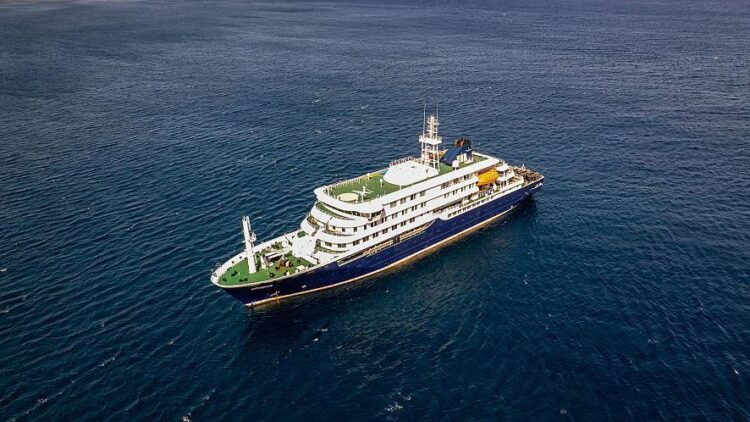
The World Health Organization (WHO) confirmed that at least one case of hantavirus infection has been laboratory verified, with several additional suspected cases still under investigation. The outbreak occurred aboard the MV Hondius, a Dutch-operated expedition cruise vessel traveling from Argentina toward Cape Verde, carrying roughly 150 passengers and dozens of crew members.

AD: Capeesh Restaurant
Among the victims were a 70-year-old passenger who reportedly fell ill and died onboard, his wife who later died after being evacuated to South Africa, and a third passenger whose death occurred during the voyage. A fourth individual, a British national, remains in intensive care in Johannesburg, highlighting the severity of the illness.
Health officials say the outbreak is still being assessed, with WHO coordinating closely with national authorities and the ship’s operators to conduct laboratory testing, contact tracing, and risk analysis for those still aboard. Two symptomatic passengers are in the process of being medically evacuated, as authorities attempt to contain any further spread of the disease.
Hantavirus is a rare but potentially fatal disease typically transmitted through exposure to infected rodent urine, droppings, or saliva. In some cases, it can lead to severe respiratory illness, including hantavirus pulmonary syndrome, which can rapidly become life-threatening if not treated promptly.

AD: Oysterian Sea Food Restaurant And Bar
Investigations Underway as Global Health Concerns Grow
The emergence of a suspected hantavirus outbreak on a cruise ship has triggered a complex international response, as public health officials race to understand how the virus spread in such a setting. Cruise ships, with their close quarters and shared facilities, have long been recognised as environments where infectious diseases can spread quickly, though hantavirus outbreaks in such settings are extremely rare.
The WHO has launched a full epidemiological investigation, including virus sequencing and environmental assessments, to determine whether the infections originated from onboard exposure or were introduced prior to embarkation.
Early indications suggest the virus may have been linked to environmental exposure, possibly involving rodents or contaminated materials, though no definitive source has yet been confirmed.
Authorities are also examining the ship’s recent itinerary, which included stops in remote and environmentally sensitive regions, to determine whether passengers may have been exposed during excursions or through supply chains. The vessel was last reported docked in Praia, the capital of Cape Verde, where local and international health teams are continuing their investigation.
The WHO has emphasised that while hantavirus is not commonly transmitted between humans, rare cases of person-to-person spread have been documented, particularly in severe outbreaks. This possibility has heightened concerns among health officials, who are closely monitoring all passengers and crew for symptoms.
Governments including those of the United Kingdom and the Netherlands have said they are monitoring the situation closely, given that some of the affected passengers are believed to be their nationals. Diplomatic channels have been activated to assist with medical evacuations and provide support to those impacted.
Cruise Industry Faces Renewed Scrutiny
The outbreak is likely to reignite scrutiny of health protocols within the global cruise industry, which has faced repeated challenges in managing infectious disease risks. While outbreaks of norovirus and COVID-19 have previously highlighted vulnerabilities, the emergence of a rare and potentially deadly virus such as hantavirus presents a new and more complex challenge.
Experts say the incident underscores the importance of environmental health controls, including pest management and sanitation, particularly on vessels operating in remote or ecologically diverse regions. Given that hantavirus is primarily associated with rodent exposure, investigators are expected to focus heavily on whether any breaches in these controls may have occurred.
The outbreak raises broader questions about preparedness for less common infectious diseases. While cruise operators have developed extensive protocols for well-known pathogens, rare diseases may not be as thoroughly anticipated, potentially complicating early detection and response efforts.
Passengers aboard the MV Hondius now face an uncertain situation, as authorities determine whether the ship can safely continue its journey or must remain under observation. For many, the experience has transformed what was intended as an expedition voyage into a medical emergency.
With the global health community, the incident serves as a stark reminder that even rare pathogens can have serious consequences when introduced into high-density environments. Officials hope to identify the source of the outbreak and implement measures to prevent similar incidents in the future.
In the meantime, the World Health Organization has urged vigilance, noting that while hantavirus infections remain uncommon, their potential severity demands swift and coordinated action. The coming days are expected to provide greater clarity on the scale of the outbreak, the effectiveness of containment efforts, and the risks posed to those still on board.
Health authorities are now prioritising comprehensive testing of passengers and crew, alongside continued monitoring for symptoms that may take days or even weeks to fully emerge. This cautious approach reflects the uncertainty that often surrounds rare infectious diseases, particularly in confined environments where early detection can be difficult.
International coordination is also intensifying, with health agencies in multiple countries working alongside the WHO to track passengers who have already disembarked or been evacuated for treatment. Contact tracing efforts are expected to extend beyond the ship itself, potentially involving airports, hospitals, and transit hubs linked to the vessel’s recent itinerary.
Officials say this broader response is essential to ensure that any secondary cases are identified quickly and contained before further spread can occur.
Medical teams are also reviewing treatment protocols and preparedness measures in case additional severe cases are confirmed. While there is no specific cure for hantavirus, early supportive care particularly respiratory support can significantly improve survival rates.
This has prompted hospitals receiving patients from the ship to remain on high alert, with isolation measures and specialist care units prepared to respond if conditions worsen.
The incident is likely to prompt renewed discussion within the global health community about surveillance systems for rare diseases.
Experts say outbreaks like this highlight the importance of rapid information sharing and international cooperation, particularly when cases emerge in transit or across borders. The response to this outbreak may ultimately shape how similar health threats are managed in the future.

AD: Heritage And Restaurant Lounge Bar