
By Kenneth Williams-
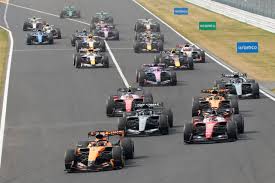
Formula One roars back into action this weekend at the Miami Grand Prix after an unusual five-week hiatus, but the spotlight is not only on the racing. Instead, much of the anticipation surrounds a series of rule changes introduced by the FIA that could reshape how the 2026 season unfolds from this point forward.
The race, held at the Miami International Autodrome, marks the fourth round of a campaign already disrupted by geopolitical tensions that forced the cancellation of scheduled events in the Middle East. The unexpected break has given teams time to regroup, develop upgrades and adapt to a sweeping new technical framework that has drawn both excitement and criticism in equal measure.

AD: Capeesh Restaurant
Heading into Miami, Mercedes has emerged as the early frontrunner, led by teenage sensation Kimi Antonelli, while rivals such as Ferrari, Red Bull and McLaren are hoping the reset provided by the break and the rule adjustments can shift the competitive balance.
The 2026 Formula One season began with one of the most ambitious regulatory overhauls in the sport’s history, centred on new hybrid power units and a near-even split between electric and combustion energy. However, the early races exposed unintended consequences, including inconsistent power delivery and what drivers described as unnatural “lift and coast” racing tactics.
In response, the FIA moved quickly to introduce targeted adjustments, many of which will debut in Miami. These changes are not a wholesale rewrite of the rules, but rather a series of refinements designed to address specific concerns raised by teams and drivers.

AD: Oysterian Sea Food Restaurant And Bar
Among the most significant tweaks are revisions to energy deployment systems. The FIA has reduced the maximum battery recharge allowed during qualifying sessions, a move intended to encourage more consistent, flat-out driving rather than strategic energy conservation.
New limits on power boost and deployment are aimed at reducing dangerous speed differentials between cars an issue that had raised safety concerns, particularly on straights where one car might be deploying full electrical power while another is conserving energy.
Race start procedures are also being adjusted on a trial basis, reflecting concerns about congestion and visibility in the opening moments of races. Additional measures targeting wet-weather safety and overtaking dynamics are expected to be evaluated over the coming rounds.
The overarching goal, according to officials, is to make racing both safer and more competitive. Through smoothing out extremes in performance and improving predictability, the FIA hopes to deliver closer wheel-to-wheel action an outcome that has become a central priority as Formula One seeks to maintain its global popularity.
The changes have not been universally welcomed. Critics argue that the growing complexity of the rulebook risks alienating fans and even confusing participants, with some drivers admitting they struggle to fully understand the intricacies of the evolving regulations.
A Reset Moment for Teams and Title Contenders
The Miami Grand Prix represents something of a soft reset for the championship itself. The enforced break caused by the cancellation of races in Bahrain and Saudi Arabia has disrupted momentum and given teams an unusual window to refine their cars.
Several teams are arriving in Miami with significant upgrades, hoping to capitalise on both the downtime and the regulatory tweaks. McLaren, for example, is introducing a heavily revised car, while Ferrari and Red Bull are expected to bring performance improvements aimed at closing the gap to Mercedes.
The race also marks a milestone for Cadillac, the American-backed team making its home debut on U.S. soil. Its presence adds another layer of intrigue to an already evolving grid, as Formula One continues to expand its footprint in the United States.
With drivers, the return to racing comes after a period of physical and mental reset. Some used the break for training and development work, while others took advantage of the rare downtime to step away from the relentless travel schedule that typically defines the F1 calendar.
Yet the pause has also heightened uncertainty. With only a handful of races completed, the competitive order remains fluid, and the impact of the new rules is still largely theoretical. Miami, therefore, becomes a testing ground not just for the revised regulations, but for the direction of the season as a whole.
Weather could add another unpredictable element. Forecasts of potential rain and thunderstorms have raised the possibility of delays or interruptions, which would further complicate teams’ efforts to evaluate the new rules under stable conditions.
What emerges from the weekend may offer the first clear indication of whether the FIA’s mid-season adjustments have achieved their intended effect. If the changes succeed, they could stabilise a season that began with uncertainty and criticism. If not, further revisions may be inevitable as the sport continues to grapple with the challenges of its ambitious new era.
Miami stands as both a return and a turning point a moment where Formula One attempts to balance innovation with practicality, and spectacle with safety. The race will not only determine who wins on the track, but also whether the sport’s latest experiment in regulation can deliver on its promise.
That tension is particularly visible under the stewardship of the FIA, which has pushed through rapid adjustments to the 2026 technical framework in response to early-season instability. The ambition behind the new hybrid regulations was clear: create faster, more efficient cars while keeping racing close and unpredictable.
Yet the opening rounds exposed how difficult that equilibrium is to achieve in practice, with teams reporting unpredictable energy deployment and drivers forced into conservative strategies that dulled on-track battles.
Miami therefore becomes more than a race weekend; it is a live stress test of whether those corrections are meaningful. Engineers across the paddock will be watching closely to see whether revised power unit limits and energy management rules actually translate into more natural racing rhythms.
Even small improvements could reshape how teams approach the remainder of the season, particularly in areas such as qualifying strategy and race pace management.
Formula One has spent years expanding its global audience, particularly in the United States, where events like the Miami Grand Prix are central to its commercial growth. But that expansion depends heavily on maintaining clarity and excitement in the product. If rules become too complex or races too engineered, there is a risk that the very spectacle the sport is trying to enhance could be diluted.
Within the paddock, there is also a sense that Miami could mark a psychological reset. After weeks away from competition, teams arrive not only with upgrades but with recalibrated expectations about where they stand in the pecking order. A strong performance here could set the tone for the next phase of the championship, while a misstep may force a reassessment of development paths already underway.

AD: Heritage And Restaurant Lounge Bar