
By Ben Kerrigan-
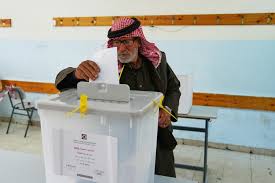
Palestinian authorities have described recent local elections held across parts of the Israeli-occupied West Bank and in a single community in Gaza as a success, presenting the vote as a modest but symbolically significant step toward reviving democratic processes in territories that have not held full national elections in nearly two decades.
The elections, held on 25 April 2026, covered municipal councils responsible for local services such as water, sanitation, electricity distribution and infrastructure maintenance. Officials from the Palestinian Authority (PA) said voting proceeded relatively smoothly despite political fragmentation, logistical constraints and ongoing instability across the region.

AD: Capeesh Restaurant
Early figures indicated stronger turnout in the West Bank, alongside limited participation in Gaza’s Deir al-Balah area, where residents were able to vote in what is widely described as the first municipal election in the enclave in about 20 years.
The PA has framed the process as a “pilot” that could pave the way for broader national elections, including long-delayed presidential and legislative polls.
While officials emphasise the administrative success of the vote, analysts note that participation remained uneven and politically constrained, reflecting deep divisions between Gaza and the West Bank and widespread public scepticism about whether local elections can translate into meaningful national political change.

AD: Oysterian Sea Food Restaurant And Bar
The most closely watched aspect of the vote was the limited electoral participation in Gaza, where Deir al-Balah became the only area to hold polling stations under the municipal framework. According to reports, this marked the first time in roughly 20 years that any part of Gaza has taken part in a local election, making it a rare symbolic moment amid prolonged conflict and humanitarian crisis.
Turnout in Gaza was significantly lower than in the West Bank, with officials citing displacement, damaged infrastructure, outdated voter registries and restricted mobility as key contributing factors. Even so, election organisers said the fact that voting took place at all represented an administrative milestone, given the enclave’s political isolation and years of instability.
In the West Bank, participation was substantially higher, with some estimates placing turnout above 50 percent in several districts. Preliminary results suggested strong performances by Fatah-aligned candidates, reinforcing the Palestinian Authority’s continued dominance in areas under its control.
Despite these outcomes, the elections were far from comprehensive. Hamas did not formally participate in most of the electoral process, and the broader political split between Gaza and the West Bank remained unresolved. Observers note that while local councils were elected to manage essential services, the vote did not address the wider question of national representation or political unity.
International reports has highlighted that the elections were conducted under significant constraints and should be viewed more as a limited administrative exercise than a full democratic mandate.
Beyond the immediate results, the elections have reignited longstanding debates over governance, legitimacy and political fragmentation within Palestinian institutions. The Palestinian Authority, led by President Mahmoud Abbas, has not held presidential elections since 2005, and legislative polls have been repeatedly postponed amid internal divisions and wider geopolitical instability.
Officials in Ramallah have portrayed the local vote as a foundational step toward rebuilding democratic structures, arguing that functioning municipal councils are essential for maintaining basic services and restoring public trust in governance. They say the success of the elections, even in a limited form, demonstrates that electoral mechanisms can still operate despite political and logistical challenges.
However, analysts caution that the vote highlights rather than resolves the structural divide between Gaza and the West Bank. The absence of unified participation across all Palestinian territories continues to undermine the prospect of a coherent national electoral system.
While municipal councils may improve local governance, they do not address broader questions of leadership, sovereignty or political representation.
International reactions have been measured, with observers acknowledging the administrative achievement of conducting elections under difficult conditions while also noting their limited scope. Some see the vote as a small step toward institutional continuity, while others argue it reflects the entrenched limitations of the current political framework.
Results are finalised and newly elected councils prepare to assume office, attention is already shifting to whether this partial electoral exercise can generate momentum for broader political reform. While Palestinian authorities are calling the vote a success, the deeper challenges of unity, legitimacy and national elections remain unresolved, leaving the political future uncertain.
Officials in Ramallah have suggested that the smooth conduct of municipal voting could serve as a practical foundation for expanding democratic participation, arguing that functioning local institutions are a prerequisite for rebuilding confidence in governance.
Yet the gap between local administrative progress and national political deadlock remains wide, with no clear roadmap for how or when broader elections might be held.
In Gaza and the West Bank, the political reality on the ground continues to reflect a fragmented system of authority. The limited nature of the vote has underscored how governance is still divided, with different political and administrative structures operating in parallel rather than under a unified national framework.
This division has repeatedly stalled previous attempts at electoral reconciliation, and there is little indication that the current process has fundamentally altered that dynamic.
International observers have noted that while the elections demonstrate a degree of organisational capability, they do not resolve the underlying structural barriers to comprehensive Palestinian elections.
These include political rivalry between major factions, restrictions on movement and campaigning in certain areas, and the absence of a mutually agreed electoral framework that can be applied across all territories.
The results are therefore being interpreted in dual terms: as a rare instance of electoral participation under difficult conditions, but also as a reminder of how far the political system remains from national representation.
Local councils may now take up their roles in managing essential services, but their authority is limited to administrative matters and does not extend to resolving questions of national leadership or sovereignty.
Regional and international stakeholders are also watching closely to see whether this process can be built upon. Some diplomatic voices have suggested that incremental steps, such as local elections, could eventually contribute to wider political reform if supported by sustained negotiations and institutional rebuilding.
Others are more sceptical, arguing that without addressing core political divisions, particularly between Gaza and the West Bank, any electoral progress will remain partial and fragile.
While newly elected councils prepare to assume office, they do so in a context defined as much by political uncertainty as by administrative renewal. The success of the vote in logistical terms has not yet translated into clarity about the future direction of Palestinian politics.
Instead, it has reinforced a familiar tension: between the desire to demonstrate governance capacity and the persistent inability to achieve national political unity.

AD: Heritage And Restaurant Lounge Bar