
By Kenneth Williams-
At CinemaCon in Las Vegas, Disney unveiled the opening sequence of The Mandalorian and Grogu, giving theater owners an extended first look at the long-awaited Star Wars theatrical return and positioning the film as one of Lucasfilm’s biggest big-screen swings in years.
The presentation, led by director Jon Favreau, featured the first major footage from the film and showcased a fast-paced, large-scale action sequence that immediately signals a cinematic expansion of the Disney+ series.

AD: Capeesh Restaurant
The reveal comes as Disney continues to lean heavily on its franchise slate to drive theatrical momentum in 2026, with The Mandalorian and Grogu set for release on May 22, 2026, marking the first Star Wars film in seven years.
Industry attendees at CinemaCon described the footage as a high-energy opening battle that transitions quickly into a sprawling chase sequence across snowy terrain, AT-AT walkers, and Imperial remnants.
The opening sequence shown at CinemaCon begins in the aftermath of the Galactic Empire’s fall, with Din Djarin played by Pedro Pascal tracking an Imperial holdout across a hostile, snow-covered landscape.

AD: Oysterian Sea Food Restaurant And Bar
According to descriptions of the footage, the sequence immediately launches into combat as Djarin engages stormtroopers using blasters, close-quarters combat, and flamethrowers, while Grogu contributes using the Force in brief but impactful bursts.
The action escalates rapidly as the pair pursue their target into an AT-AT walker, turning the massive Imperial machine into a moving battleground.
Inside and around the walker, Djarin continues the fight while Grogu attempts to assist, creating a blend of tactical combat and character-driven humor that has become a hallmark of the franchise. The sequence then expands outward, shifting from tight interior combat to wide, cinematic chase shots that emphasise scale and motion.
Collider reports that The Mandalorian and Grogu footage shown at industry events is structured like an extended opening sequence rather than a standard trailer, effectively serving as a cinematic reintroduction to the post-Empire galaxy and its fractured political landscape.
The coverage notes that Din Djarin and Grogu’s story continues within a New Republic era still shaped by scattered Imperial remnants and emerging warlord factions, reinforcing the film’s mission-driven narrative approach while expanding the scale beyond the Disney+ series.
CinemaCon reactions suggest the tone remains consistent with the Disney+ series but with noticeably increased scale, including more elaborate set pieces, larger battle sequences, and expanded use of large-format cinematography.
Reports indicate that Favreau emphasised the film’s ambition during the presentation, highlighting that the transition to cinema allows for more complex action staging and visual effects than episodic television production.
Disney positions Star Wars return As major theatrical event
The CinemaCon reveal is part of Disney’s broader effort to rebuild momentum for theatrical Star Wars storytelling after a multi-year gap between film releases.
The studio has framed The Mandalorian and Grogu as both a continuation of the hit streaming series and a gateway back into cinema for the franchise, with Favreau and Lucasfilm aiming to bridge television and film storytelling in a unified narrative approach.
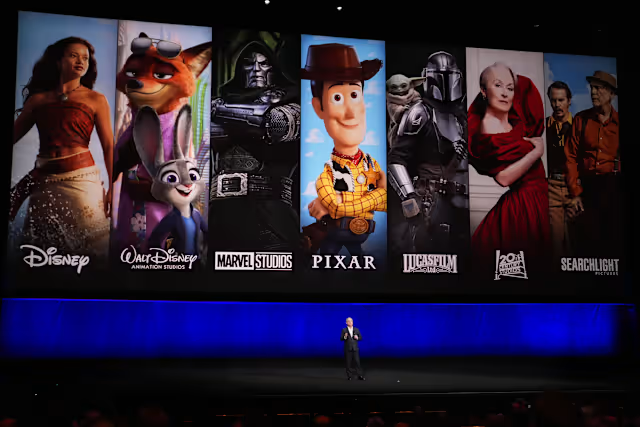
Industry coverage of CinemaCon presentations notes that the event is primarily aimed at reassuring theater owners about the strength of upcoming studio slates, with Disney in particular using the platform to showcase its franchise pipeline across Marvel, Pixar, Lucasfilm, and other major brands in order to reinforce confidence in long-term theatrical supply and box office stability.
The strategy reflects CinemaCon’s broader role as an exhibitor-focused industry showcase, where studios highlight future releases to signal sustained investment in theatrical distribution rather than streaming-first output.
Reports from the event also emphasise that Disney’s use of extended, unreleased footage rather than a standard marketing trailer is a deliberate choice to distinguish theatrical projects from streaming content and to underscore scale, exclusivity, and cinematic presentation.
Across recent CinemaCon showcases, Disney and other major studios have increasingly leaned on longer-form clips and early scene reveals to demonstrate confidence in their upcoming films and to strengthen exhibitor enthusiasm for theatrical releases.
The film continues the story of Din Djarin and Grogu following their adventures in the Disney+ series, which followed their journey through a post-Empire galaxy filled with competing factions and lingering Imperial influence. Now operating under the New Republic, the duo is drawn into new conflicts involving warlords, political instability, and emerging criminal power structures.
Disney’s CinemaCon presentation also reflects broader industry trends, where studios increasingly rely on immersive convention footage to generate early buzz for franchise tentpoles. With theatrical attendance still recovering from pandemic-era declines, large-scale genre films like The Mandalorian and Grogu are being positioned as key drivers of box office recovery.
While the anticipation builds ahead of its May 2026 release, the CinemaCon footage suggests a film that leans heavily into spectacle while preserving the character-driven core that made The Mandalorian a streaming success.
The extended scenes shown to exhibitors reportedly emphasise large-scale set pieces, expanded action choreography, and a broader visual palette that takes advantage of theatrical presentation formats, signalling a deliberate shift from episodic streaming structure to cinematic storytelling built for immersion.
Industry reactions from CinemaCon attendees suggest that the film is being positioned to deliver both familiarity for fans of the Disney+ series and heightened stakes that justify its move to the big screen.
The message was clear: this is not just another continuation of a Disney+ story, but a full-scale cinematic event designed for the big screen. The presentation strategy reflects a broader industry push to reframe franchise extensions as premium theatrical experiences rather than streaming spin-offs, particularly at a time when studios are competing to draw audiences back into cinemas with recognisable intellectual property.
Through showcasing unreleased footage instead of a conventional trailer, Disney appears to be signalling confidence in the film’s box office potential while reinforcing its commitment to theatrical exhibition as a core release strategy.
The footage also underscores how The Mandalorian and Grogu is being shaped as a bridge between television storytelling and blockbuster cinema, retaining the emotional focus on Din Djarin and Grogu’s bond while expanding the scale of their journey across a destabilised galaxy.
This balance between intimacy and spectacle has been a defining feature of the franchise’s success, and early previews suggest that the film will attempt to amplify both elements rather than choosing between them.
While the CinemaCon response indicates strong exhibitor interest, not only in the film itself but in Disney’s broader strategy for revitalising Star Wars in theaters.
With franchise fatigue often cited as a concern in Hollywood, the emphasis on cinematic scale, exclusivity, and event-driven storytelling is being viewed as a key test case for how streaming-era properties can successfully transition back into the theatrical marketplace.

AD: Heritage And Restaurant Lounge Bar