
By Theodore Brown-
The Trump administration has agreed to restore federal funding for a key Manhattan subway expansion project after New York officials successfully challenged a months-long funding freeze in court, ending a legal dispute that had stalled construction and sparked political backlash across the state.
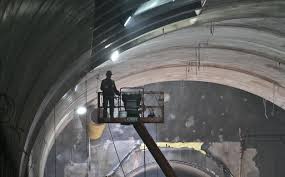
The decision will allow the Metropolitan Transportation Authority (MTA) to resume reimbursement for work on the Second Avenue Subway extension, a multibillion-dollar infrastructure project designed to expand transit access on Manhattan’s East Side and into Harlem.

AD: Capeesh Restaurant
The reversal came just as both sides were preparing for a federal court hearing in Washington, underscoring the intensity of the dispute and the broader stakes tied to federal infrastructure funding.
According to court filings and agency statements, the U.S. Department of Transportation said it had completed its review of the project and would restart payments that had been paused for months, effectively lifting a freeze that had halted roughly $60 million in reimbursements.
The conflict had become a flashpoint in ongoing tensions between New York State officials and the Trump administration over infrastructure spending, regulatory oversight, and federal authority in major urban transit projects.

AD: Oysterian Sea Food Restaurant And Bar
New York leaders, including Governor Kathy Hochul and MTA officials, argued that the funding freeze was unlawful and politically motivated, claiming it jeopardised a critical expansion meant to serve more than 100,000 daily riders.
The Second Avenue Subway is widely described as one of New York City’s most significant ongoing transit expansions and a major infrastructure investment in the United States, aimed at extending the Q line deeper into East Harlem and improving access in neighbourhoods long underserved by subway service.
The current phase will add new stations at 106th, 116th, and 125th Streets, strengthening connectivity between East Harlem, the Upper East Side, and major transfer points such as the Lexington Avenue Line.
The project is part of a broader $7.7 billion expansion effort that officials have called one of the largest single transit investments in decades, reflecting its scale and long-term importance to the city’s transportation network.
The broader Second Avenue Subway plan has been under discussion for more than a century, with early proposals dating back to the early 20th century and repeated attempts to begin construction stalled by financial crises, political disagreements, and shifting infrastructure priorities.
Over the decades, funding gaps and citywide fiscal instability repeatedly delayed progress, including major interruptions during New York’s 1970s financial crisis that halted work and left partially completed tunnels unused.
Even in modern phases, the project has continued to advance in stages, with construction requiring complex tunnelilng beneath densely built Manhattan infrastructure and extensive coordination between city, state, and federal agencies.
In recent years, the project has moved forward through federal transit funding agreements administered by the Federal Transit Administration, which has provided major capital investment support for Phase 2 of the expansion as part of its infrastructure grant programs.
Construction has remained politically sensitive, with ongoing disputes between New York officials and federal authorities over funding priorities and compliance requirements, reflecting the broader challenge of delivering large-scale transit megaprojects in a highly regulated and politically contested funding environment.
The legal challenge that triggered the reversal was filed by the Metropolitan Transportation Authority in federal court, alleging that the Department of Transportation had improperly withheld funds that were already allocated for construction.
State officials argued that the freeze created unnecessary delays, increased costs, and risked derailing a project that already carries a multibillion-dollar price tag and long-term federal commitment.
Court filings indicate that the dispute centered on the federal government’s review of whether the MTA’s contracting practices complied with policy requirements, including disputes over diversity, equity, and inclusion provisions cited by the administration as part of its justification for pausing payments.
The MTA maintained that it had met federal conditions and warned that continued withholding of funds would force construction delays across multiple contracts already underway.
While the case moved toward litigation, pressure mounted on both sides to reach a resolution. Transit officials warned that prolonged uncertainty could destabilise contractor schedules and inflate costs for one of New York’s most important infrastructure investments.
Meanwhile, federal officials maintained that the review process was necessary to ensure proper use of taxpayer dollars, even as critics accused the administration of using funding leverage to influence local policy decisions.
The eventual agreement to restore funding came shortly before the court hearing was expected to proceed, effectively avoiding a prolonged legal battle that could have drawn in broader questions about federal authority over state transit systems. Legal experts noted that the timing suggested both sides were eager to prevent an unfavourable ruling that might set a precedent for future infrastructure disputes.
The decision has been welcomed by transit officials, who say it will allow construction to resume at full pace on the Second Avenue Subway extension. MTA leadership described the outcome as a necessary correction that will enable long-delayed transit improvements to continue serving growing demand in Manhattan’s East Side and Harlem communities.
The episode reflects a broader national pattern in which major infrastructure projects have become increasingly entangled in political and legal disputes between state governments and Washington. Similar conflicts have emerged in recent years over large-scale rail and tunnel projects in the Northeast corridor, highlighting the fragile balance between federal funding authority and local infrastructure priorities.
With funding now restored, attention shifts back to construction timelines and delivery expectations. While officials have emphasised that the project will move forward, the months-long delay has already underscored how vulnerable even fully approved infrastructure programs can be to political shifts and legal intervention.
With New York commuters and planners alike, the resolution provides immediate relief but also reinforces a longer-term uncertainty: that the future of major transit development may depend as much on courtroom outcomes as on engineering plans and public budgets. The restoration of funding means stalled work can resume and the risk of further delays at least in the near term has been reduced.
But the episode has also shown how quickly large infrastructure projects can become entangled in legal disputes, where administrative decisions over funding eligibility or policy compliance can halt progress even on already-approved construction.
The concern is less about this single dispute and more about what it signals for future projects. Large-scale developments such as subway expansions, rail corridors, and tunnel upgrades require long-term financial stability and predictable federal partnerships.
When funding streams are paused or challenged in court, contractors face uncertainty that can ripple through scheduling, labour allocation, and material procurement. Even short interruptions can increase costs significantly, especially in dense urban environments like Manhattan where construction staging is complex and tightly coordinated.
The broader policy environment adds another layer of unpredictability. Federal infrastructure funding is often tied to shifting regulatory priorities and administrative reviews, meaning that projects can be affected by changes in interpretation of compliance rules or evolving political agendas.
In this case, disagreements over administrative authority can escalate quickly into litigation, forcing courts to intervene in what are fundamentally infrastructure planning decisions.
The dispute reflects a broader national pattern in which infrastructure has become increasingly politicised. Major transit projects across the United States have faced delays not only from engineering or budgeting challenges, but also from legal and political disputes between state and federal authorities. This has raised concerns among urban planners that even well-established funding commitments may not be immune to interruption.
While the immediate restoration of funding allows construction to proceed, the experience leaves a lingering question for cities like New York: as to whether the pace and reliability of future transit expansion will be determined in engineering offices and construction sites, or increasingly in courtrooms where the rules governing public investment are contested and redefined.

AD: Heritage And Restaurant Lounge Bar