
By Tony O’ Reilly-
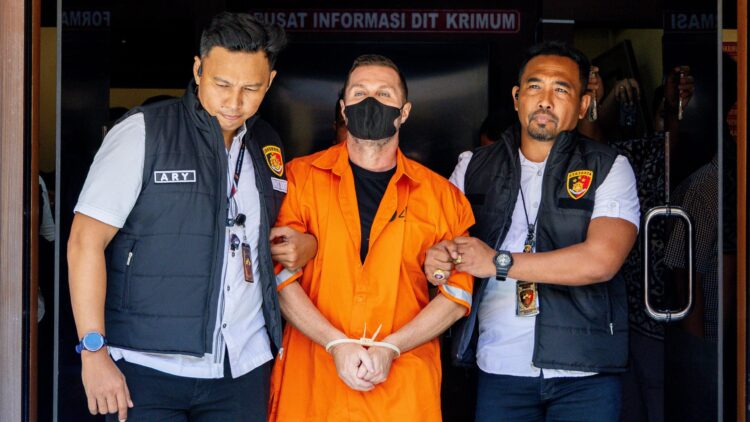
Scottish crime boss, Steven Lyons, 45, was arrested on the Indonesian resort island of Bali on Saturday, ending months on the run and triggering what authorities describe as “a decisive blow” against a major transnational criminal network.
The arrest took place at Ngurah Rai International Airport shortly after Lyons arrived from Singapore, when immigration officials identified him through an Interpol Red Notice issued at Spain’s request.

AD: Capeesh Restaurant
Lyons, long sought by both Spanish and UK authorities on a string of serious charges including organised crime, drug trafficking, money laundering and alleged involvement in a 2024 murder was taken into custody as Bali’s immigration system flagged him during routine entry procedures.
“This individual was a fugitive from justice,” said an Indonesian official during a brief press statement, underscoring the coordinated efforts between Indonesian, Spanish and Scottish police that led to his capture.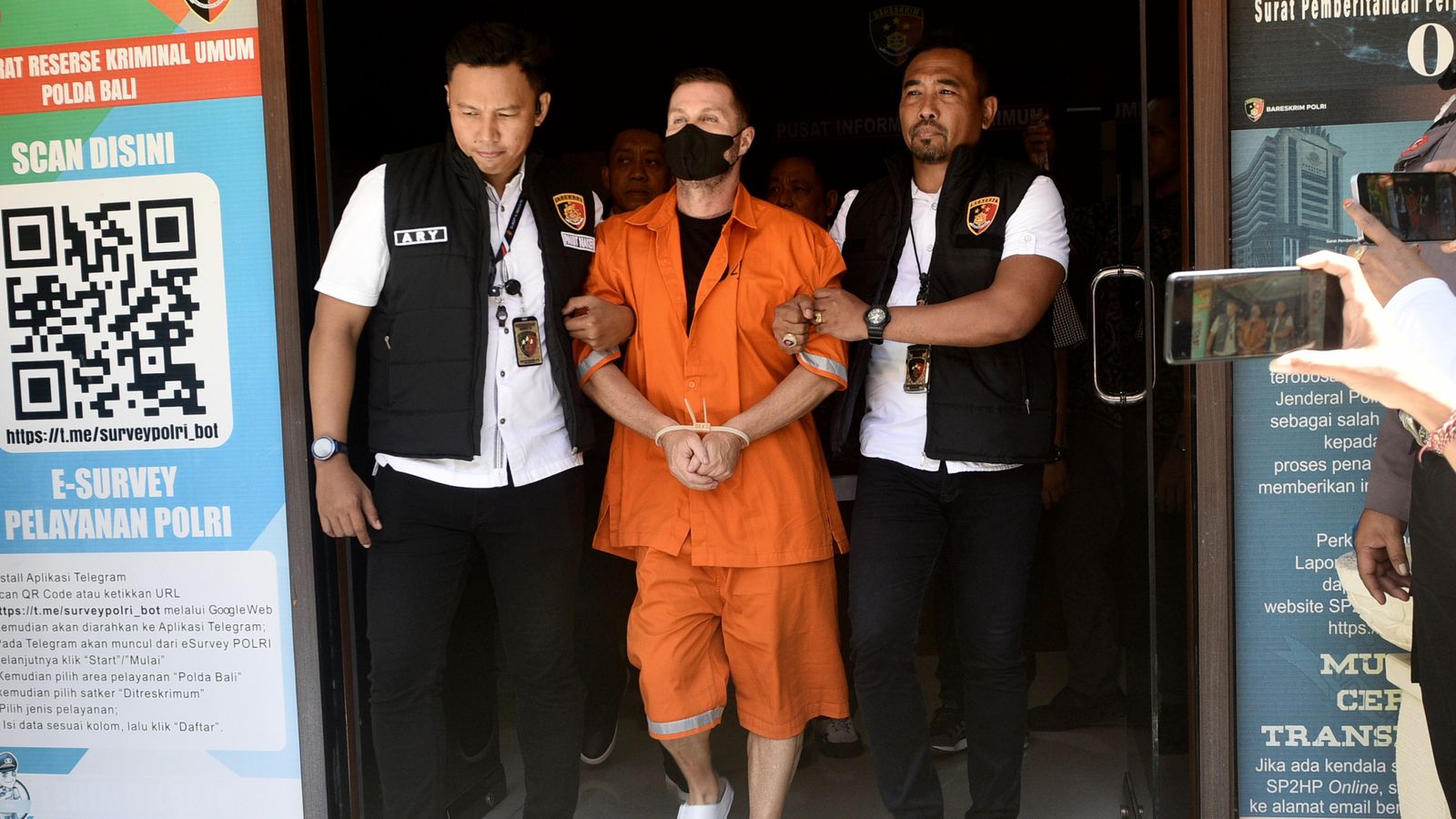
Stephen Lyons accompanied by security staff

AD: Oysterian Sea Food Restaurant And Bar
Indonesian authorities have since confirmed that Lyons is due for extradition to Spain to face formal charges, although the timing of his departure has shifted in recent days amid procedural deliberations.
Captured in an orange detainee jumpsuit and escorted by local police into custody in Denpasar, Lyons’s arrest marks a high‑profile moment in an extensive global investigation targeting the so‑called Lyons crime syndicate, a group accused of orchestrating criminal enterprises across multiple continents.
The Interpol Red Notice that alerted authorities to Lyons’s presence is an international request to law enforcement worldwide to locate and detain individuals wanted for prosecution a tool frequently used in complex organised crime cases. Indonesian officials emphasised that his detention was “a testament to international cooperation” in tackling cross‑border criminality.
Lyons is expected to be flown to Spain, where prosecutors are prepared to pursue a suite of serious charges, including murder and large‑scale drug trafficking.
Spanish investigators reportedly believe the syndicate under Lyons’s influence established a sophisticated network of shell companies and illicit narcotics routes running through Europe and the Middle East, funnelling drugs and laundered proceeds between Spain, the UK and beyond.
International Crime Network and Legal Battle Ahead
Law enforcement sources say Lyons has been on Spain’s wanted list for roughly two years, particularly in connection with a 2024 homicide case in Spain that placed him at the centre of Europe’s most violent and entrenched gang conflicts.
According to investigators, Lyons’s organisation specialised in drug trafficking operations that moved significant quantities of narcotics from Spain into the United Kingdom. The network also allegedly engaged in complex money‑laundering schemes, utilising a series of shell companies spread across Spain, Scotland, England, Dubai, Qatar, Bahrain and Turkey to mask the flow of illicit funds.
The arrest coincided with coordinated raids across Europe. Authorities in Scotland and Spain reportedly apprehended numerous suspects believed to be linked to the syndicate in simultaneous operations that drew in Europol and law enforcement partners in countries including the Netherlands, Turkey and the United Arab Emirates.
Despite Lyons’s detention, two of his known associates identified by Spanish and Indonesian authorities managed to slip away just prior to the arrest and are now subjects of an active international manhunt.
In a related strand of the investigation, Lyons’s wife was reportedly taken into custody in Dubai, adding another legal dimension to the sprawling multi‑nation inquiry into the Lyons crime family’s activities.
Back in the UK, police have remained publicly cautious about commenting on the specifics of the domestic case against Lyons, but have affirmed their cooperation with Spanish prosecutors and international partners in ensuring he faces justice for all alleged offences.
Legal experts note that Lyons, a British citizen, may mount an extradition challenge once formal proceedings begin in Indonesia. Such challenges can prolong the timeline before he is handed over to Spanish custody, with defence attorneys typically seeking to contest procedural grounds or human‑rights issues before local courts prior to any transfer.
The arrest has drawn commentary from organised‑crime analysts, who say Lyons’s capture underscores the increasing sophistication and global reach of both criminal networks and the law enforcement responses aimed at dismantling them. “This case highlights that even those who think they can evade justice by crossing borders must ultimately answer to it,” one expert said.
Officials in Spain have been preparing a comprehensive indictment that, if upheld in court, could see Lyons face decades behind bars on charges that span murder, drug offences and organised‑crime leadership. Some analysts believe the case could set legal precedents in how transnational criminal leaders are pursued and prosecuted across jurisdictions.
Meanwhile, in Scotland, the Lyons clan and its rival factions have been linked to a series of violent incidents that have contributed to a broader narrative of gangland unrest in parts of Glasgow and beyond. These feuds, which have at times turned deadly, have been the subject of protracted police operations aimed at curbing organised crime’s influence in local communities.
While Lyons remains in Indonesian custody awaiting extradition, law enforcement agencies across Europe continue their investigations, hoping that his prosecution will unravel further layers of a complex criminal network that has spanned borders and outpaced authorities for years.
The unfolding legal proceedings, from Lyons’s detention in Bali to the anticipated courtroom battles in Spain, are expected to capture significant international attention, highlighting both the challenges and the evolving strategies in combating transnational organised crime.
Legal experts and law enforcement officials alike have underscored that this case represents more than just the prosecution of a single individual; it exemplifies the growing complexity of global criminal networks and the necessity for coordinated responses across multiple jurisdictions.
Lyons’s alleged operations spanned Europe, the Middle East, and North Africa, demonstrating how organised crime syndicates now operate with sophisticated logistical, financial, and technological frameworks that often exploit gaps in international law enforcement cooperation.
Observers note that the case could set important precedents for extradition and prosecution, particularly regarding high-profile figures who possess dual citizenship or who have sought refuge in countries outside the European Union.
Indonesia’s willingness to cooperate with Spain and uphold an Interpol Red Notice demonstrates an increasing willingness of non-European countries to participate in joint anti-crime operations, signalling a shift toward more robust global policing. Furthermore, the case illustrates the pivotal role of intelligence sharing, digital surveillance, and multi-agency task forces in dismantling intricate networks.
Lyons’s arrest and prosecution may also have wider societal implications. Experts predict that dismantling his network could destabilise other linked criminal operations, potentially reducing violence and criminal activity in certain European regions, particularly in Scotland and Spain, where rival gang activity has long been a concern.
Analysts caution that removing one high-profile figure rarely eradicates organised crime entirely, highlighting the ongoing need for systemic reform and sustained international cooperation.
The Lyons case is a litmus test for how the global community manages criminal figures who operate across borders, testing the effectiveness of extradition treaties, the robustness of international legal frameworks, and the ability of policing bodies to act decisively in an era where crime increasingly transcends national boundaries.

AD: Heritage And Restaurant Lounge Bar